Top tips: helping families develop a reading habit during a child’s early years
BookTrust’s National Family Survey 2026 identified five conditions that make shared reading easier for families. Drawing on these, here are some simple, practical ways practitioners can support families to enjoy books and stories together, helping children experience the lasting benefits of shared reading.
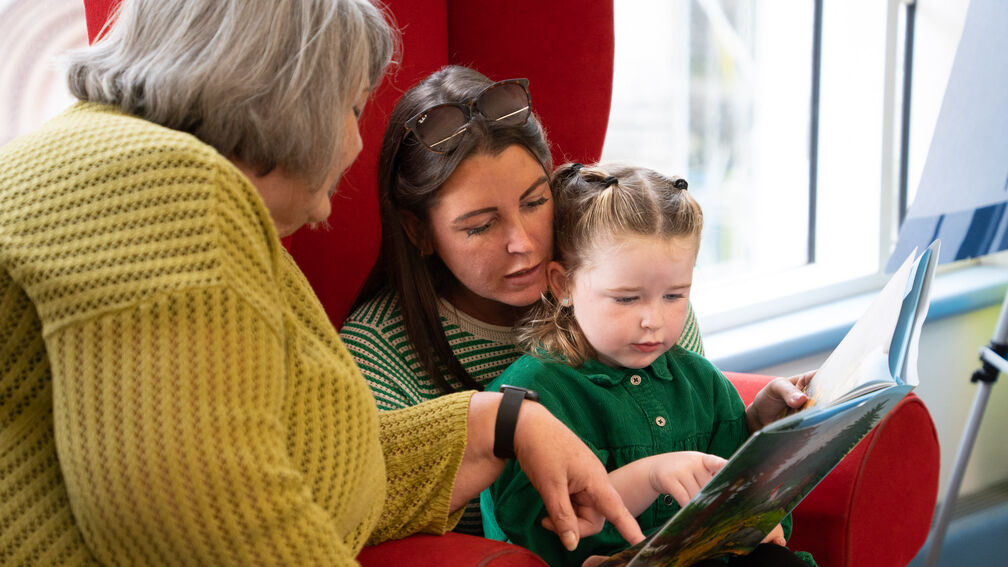
Routine stability
Finding the most practical moments in a family’s life for sharing books
Support this by: inspiring families to find what works for them.
- When using Bookstart programmes with parents and carers, ask them when they think they might like to explore the packs together at home. This can help start up a non-judgemental conversation about reading routines, and any challenges.
- Acknowledge that family life is busy and reassure them shared reading doesn’t always need to happen for a long time for it to be worthwhile.
- Talk about how sharing a book out loud can be a fun way to spend time together during the day, and a great way to bond, even if just looking at the pictures together. Equally, describe how sharing a book can be a calming part of their sleep routine. It’s about finding which of these best suits each family’s lifestyle.
- Encourage them to carry the books from the Bookstart programmes with them in a pram or their bag, to read on the bus or while out for the day. Dipping into a couple of pages for a few minutes as and when they can is fantastic – and sets the groundwork for a routine to develop.
We find that parents and carers respond particularly well when practitioners model that book sharing can be informal, flexible and part of everyday routines, rather than a formal or time-consuming activity.
Danielle Summersby-Ingram, Family Hub Manager at Dudley Central Family Centre
-

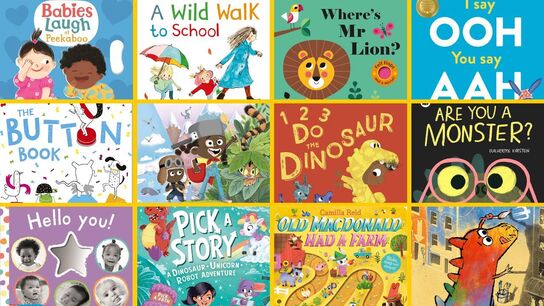
From getting dressed to having lunch, brushing teeth to reading a bedtime story, here is a selection of lovely picture books that highlight the everyday moments of a little one’s life and help them with familiar daily activities and routines.
Shared responsibility
Reading does not have to rest with one parent or carer alone
Support this by: helping families recognise the different people and places that can support a child’s positive experiences of books and stories.
- Talk to parents and carers about how anyone can raise a reader, even if they’re not a confident reader themselves. Children benefit from every opportunity to have a book shared with them by a trusted adult. Encourage families to invite grandparents, aunties, uncles, friends and older siblings to open their BookTrust book their child and talk about the illustrations, or describe the story in their own language.
- Every opportunity a child has to hear from a different storyteller is excellent. Encourage families to make use of wider opportunities to share stories, such as storytelling sessions at libraries – like Bookstart Storytime – family hubs or other early years settings. Emphasise that these events are welcoming and it’s fine for children to make noise and interact.
- Plan and deliver a session at your setting using one of the Bookstart books as the basis/theme. Invite parents and carers and open up their packs with them at the start to encourage them to explore the book along with you. When you share books with children, you are not only supporting the child directly, but also showing families different ways books and stories can be enjoyed together.
We run story times using the Bookstart Toddler books before the families take them home. Sometimes we’ll do a story time with the same book three or four times. Children like to know the story. We’ll ask them questions about the story and get them talking to each other.
Martina Hannon, Health Visitor, Glenbrook Sure Start, Belfast
0:01
Sharing books can do loads of things. It can support relationships and connection. It can help speech and language development, thinking and
0:10
learning, well-being, and of course, readiness for school. And what’s so exciting is that all of that is happening for children here today. I’m
0:17
Julia Donaldson and I’ve been here with the illustrator Axel Sheffller. We’re in Bath Central Library entertaining a
0:24
nursery class. I’m a mother and a grandmother now. And um I used to love reading stories to my own children. It’s
0:32
a chance especially at bedtime to snuggle up. And it’s not just the story, it’s that closeness to your children that’s so special. And it’s the same
0:40
with the grandchildren. If the responsibility of sharing books with a child is shared by more adults in their life and their community, then this
0:48
really expands the opportunities they have to feel encouraged to want to engage and connect with books. And we
0:55
know that this shared responsibility is a real enabling factor in embedding reading in a child’s daily life during the early years. Libraries, librarians,
1:04
and other trusted people in the community can create those additional opportunities for children to encounter books, experience them, ultimately
1:12
connect with stories, whatever their family circumstances. All of this really matters because children benefit when books and stories become a positive,
1:21
familiar part of their lives. Libraries are absolutely vital for children because they can choose their own books.
1:27
They can go with their parents or with a librarian and find out about uh lots and lots of different books uh which they
1:35
might not have at home. So libraries are very very crucial for the development of children. I think there’s so many children’s books out
1:43
there and librarian is invaluable because they can learn what children like, individual children like and
1:50
recommend books. So I’m the biggest fan there is of libraries. It doesn’t have to have a lot of text. You know, sometimes you can more talk about the
1:59
pictures and then I think rhyme can help. It makes it easier to read and it it makes it more memorable.
2:06
I think pictures are a very important part of understanding the world and experience the world for for a small child. And they’re called picture books
2:14
for a reason. Images play an important role for readers that might not be confident be it the parent or the child.
2:21
It gives you a different access to to a story and to plot and there are usually lots of things to discover that might not be in the text as well, especially in my illustrations.
2:30
Sometimes sharing books with children can change adults relationships with reading too. Book Trust’s recent research found that 48% of parents and
2:38
carers said sharing books and stories with their child had actually helped them enjoy reading and book sharing more themselves, including those where books
2:45
and reading had not been a big part of family life growing up. Every additional opportunity a child is given to enjoy books, to engage with them, and to
2:53
interact with stories can help make reading a more familiar and ultimately positive part of their life.
2:59
I think it’s important for children to experience different ways of telling stories and hear different voices and different readers and maybe not just
3:06
their parents at bedtime, but to have a a session in the library with somebody else. It enriches the children to have different ways of telling stories.
3:15
Today we want to take a moment to appreciate how story times like this very special one with the creators of Gruff Granny present an exciting
3:24
additional chance for children to have a story shared with them. This kind of thing at the library today gives children another opportunity to really
3:31
experience the enjoyment and the connection that can come from sharing a story with someone else.
Books in the home
Supports choice, autonomy and interest
Support this by: boosting a child’s exposure to new books.
- Reading is easier when books are visible, suitable and within reach. Encourage families to regularly get their new Bookstart book out on the floor at home, just like they might with a toy.
- Show families how following their child’s interests can really help engage them with books. Encourage them to use BookTrust’s Bookfinder tool, where they can search for expertly recommended books, and booklists that appeal to different interests – then borrow them from their local library and enjoy them at home.
- Encourage library membership and make sure families know where their local library is, that it’s free to borrow books, and that libraries have books for children in their early years. Describe how librarians can help families choose books suited to their child’s interests, needs and developmental stage.
- Consider encouraging families to share and borrow books with each other. Could you find a way for families to swap books, or to leave books at your setting that they no longer need for other families to take home and keep?
We link to Sandwell’s library service – we highlight its Sandy Bear mascot, for example. We offer support to either get the library service to come and visit our early years settings, or for settings’ families to visit the library.
Laura Lohan, Early Years Advisory Teacher, Sandwell Council’s Quality Early Years and Childcare Team
-
Two-year-olds can often follow a simple story and love joining in with lively actions or guessing what will happen on the next page. Stories are a fantastic – and fun – way to introduce toddlers to everyday activities, too. Here’s our pick of brilliant books we think they will love.
Reading culture and norms
Makes reading feel normal, familiar and valued
Support this by: modelling sharing a book one-on-one.
- Take one of the books from our Bookstart programmes and show parents and carers how much their child enjoys it. Seeing that can inspire them to give reading a try.
- Emphasise that sharing their new book from BookTrust over and over again is brilliant, not boring. Highlight how the repetition of the same words, phrases, illustrations and story is great for their development during the early years.
- Let families see you sharing books regularly and organically during sessions. Incorporate books across different activities, rather than keeping them only for designated story times.
- Talk positively about book sharing as an ordinary part of time together, rather than a literacy task. Create opportunities for families to see and learn from other adults sharing stories.
When we’re planning sessions, reading isn’t just happening in one area. When we’re preparing our construction tuff trays, there’s always a book available nearby that matches the theme. It shows reading can be part of a child’s whole day, and we get parents thinking that reading isn’t just for bedtime.
Cathy O’Reilly, Early Years Assistant Manager, Mencap, Newtownbreda
-

Why gifting moments matter
Confidence and know-how
Helps adults see reading as simple and flexible
Support this by: showing them different ways to enjoy books.
- Show parents and carers there is no right or wrong way to share a story, but offer some ideas. Model how they can share their Bookstart book just by talking about the pictures, asking their child what they can see on the pages, or making up their own story in their first language based on the pictures. It doesn’t matter if they don’t feel confident reading the words – sharing the book in these ways is really beneficial for their child’s development.
- Draw their attention to parts of the book that their child will find exciting, and chat about how these support their brain development – pop-up parts, textures, colours, sounds that characters make may all grab a child’s interest.
- Have the books from the Bookstart packs incorporated into wider stay-and play activities – just like toys that can be picked up and enjoyed at the child’s own pace.
- Show families how they can use items at home to incorporate sensory play when sharing a book with their child. This can be particularly helpful for families with a child with additional needs. For example, they could fill up a sink with water and mimic the ‘splash’ the cat’s truck makes when it hits the water when sharing their Bookstart Preschooler book, Rescue Crew [by Suzy Senior, illustrated by Mike Byrne].
If families don’t feel confident, we encourage them by saying: ‘You don’t have to read the whole book every time, you can focus on one page, or doing the animal sounds.
Marian Lowndes Sanderson, Early Years Worker, Doncaster Council Central Family Hubs
I’ll do home learning activities, like mark-making with pens and crayons and paper and talk with mums and dads, explaining how even by doing this, their child is developing and taking an interest. And during this, I’m engaging them with conversations about the Bookstart programme and BookTrust as well.
Azra Bashir, Home Learning Environment Project Worker, Barnardo’s Family Hubs, City of Birmingham
-
Play expert and futurist Yesim Kunter explains how to use books in play as part of children’s development.
Find out more
-
Watch this inspiring free session exploring how families can be supported to make reading a joyful, everyday part of home life. Suitable for Bookstart delivery partners, and for those that work in the Early Years sector.
-
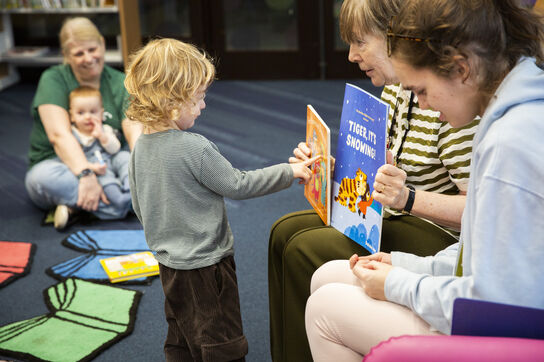
Welcome to Story Sharer Week 2026, BookTrust’s annual celebration of our incredible delivery partners like you, who use Bookstart resources to help children and families discover the joy of stories.