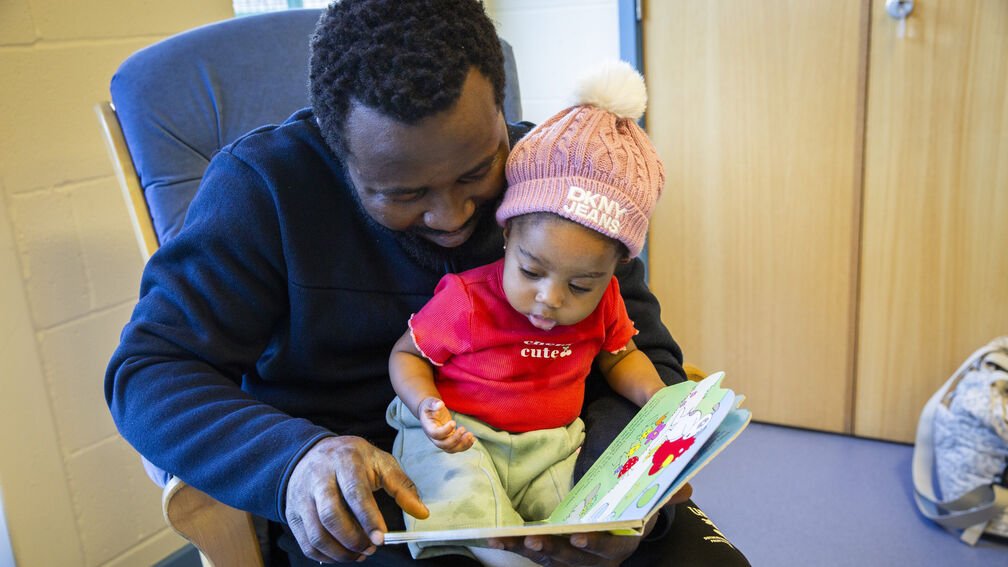
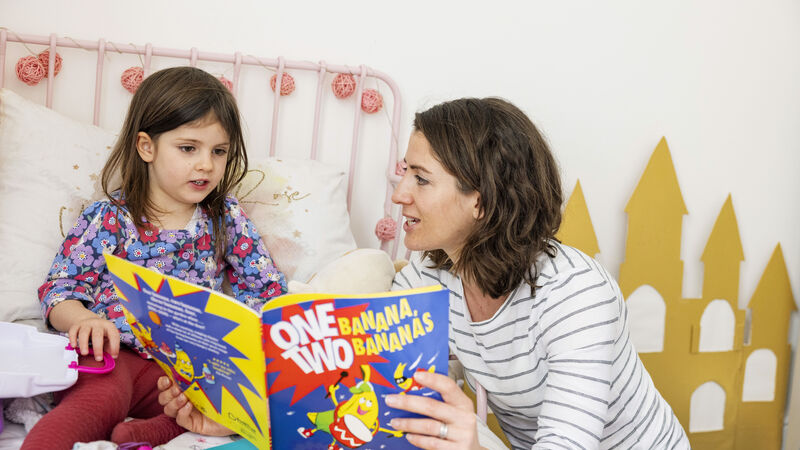
BookTrust’s latest National Family Survey* found that 80% of children aged 0–8 are reported to enjoy reading or sharing books, and 90% of parents and carers enjoy reading with their children too. Yet, daily shared reading has fallen from 60% in 2021 to 49% in 2025.
This suggests that enjoyment alone is not enough to sustain reading habits. Families value reading, but finding the time, support and opportunities to make it part of everyday life can be difficult. In fact, 66% of parents and carers report at least one challenge to sharing books with their child.
Our research identifies five interconnected conditions that can help make shared reading easier, more enjoyable and more sustainable.
1. Routine stability
Finding moments for reading that works within everyday family life
Families with regular bedtime routines are more likely to read together daily than those without them. Having a predictable moment for stories can help reduce the need to constantly find extra time, and makes reading feel like a normal part of the day rather than another task to fit in.
But many families face competing pressures, from work and caring responsibilities to the growing pull of digital devices. That’s why it’s important to help families find reading moments that work for them, whether that’s sharing a story before bed, looking at a book while travelling, or reading together after nursery.
Through BookTrust’s programmes such as Bookstart Baby, Bookstart Toddler and Pre-schooler and Bookstart Storytime, we help families build shared reading into everyday routines from an early age.
2. Shared responsibility
Reading does not have to rest with one parent or carer alone
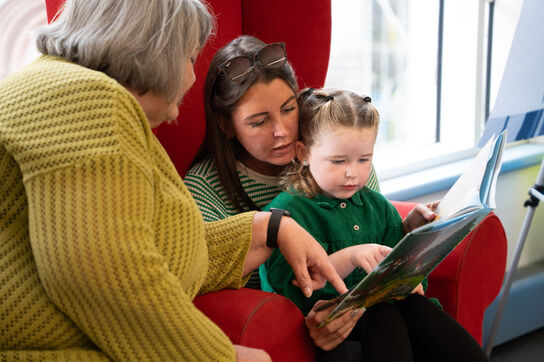
Reading can often be seen as something that happens between a parent or main carer and child. In reality, others can also play an important role. Grandparents, siblings, wider family members, practitioners and other trusted adults all help create opportunities for children to hear stories and engage with books. Our research found that children are more likely to be read with every day when wider family members are involved.
Not every family has the same support network, which makes community services particularly valuable. Libraries, family hubs, early years settings and community groups can all help create a wider reading ecosystem around children. This is why we work with more than 45,000 partners across health, education, libraries and community services, helping trusted professionals encourage and reinforce reading with families.
3. Books in the home
Supports choice, autonomy and interest
Our research shows a clear link between book access and reading frequency. Children living in homes with more age-appropriate books are significantly more likely to be read with daily. Simply having books available makes reading spontaneously easier and gives children opportunities to choose favourites, explore their interests and revisit stories they love.
For some families however, access to books cannot be taken for granted. Financial pressures and other barriers can limit opportunities to build a home library. Programmes such as Bookstart help remove these barriers by giving families high-quality books to enjoy and keep at home. Libraries also play a crucial role, providing free access to books as well as welcoming spaces where families can experience stories together.
4. Reading culture and norms
Makes reading feel normal, familiar and valued
The experiences that adults had when growing up can shape how they feel about reading with their own children. Parents and carers who grew up in homes where books and stories were part of everyday life are more likely to read frequently with their children. But importantly, a lack of childhood reading experiences does not mean families cannot develop strong reading habits today.
Families bring a wide range of storytelling traditions, languages and cultural experiences. Sharing stories might involve books, oral storytelling, songs, rhymes or conversations. What matters is creating enjoyable opportunities for children to engage with language and stories. With the Bookstart programmes, BookTrust’s approach builds on families’ existing strengths, recognising that every family has valuable experiences to bring to their child’s reading journey.
5. Confidence and knowledge
Helps adults see reading as simple and flexible
Around half of parents and carers say they are unsure, or not always clear, about how to help their child enjoy reading. Some worry that their child should sit still, listen to every word or finish every book. Shared reading can be much more playful and flexible than that, however. Looking at pictures, talking about what’s happening, making up stories, using funny voices and following a child’s interests all count.
That’s why simple, reassuring guidance matters. Through our Bookstart resources and activities, and support from practitioners, families can gain the confidence to enjoy books together in ways that feel right for them.
Creating the conditions for reading to flourish
These five enabling conditions are closely connected. Families may experience challenges in more than one area at the same time, particularly when facing wider pressures on finances, time or support networks.
The encouraging message from our research is that most families already value and enjoy reading. By listening and responding to what families really need support with, we can create the conditions that make regular, enjoyable shared reading possible.
Creating these conditions is a shared effort. At BookTrust, we’re working alongside families, practitioners, communities and partners to make reading easier to enjoy and sustain. We all have a part to play in helping create a world where every child has the chance to experience the benefits of reading.
The findings come from BookTrust’s 2025 National Family Survey, conducted online between 16 October and 5 November 2025 with an independently recruited sample of 3,508 parents and carers of children aged 0–8 across England, Wales and Northern Ireland. The data were weighted to be nationally representative.