Featuring insights from practising teachers, the module offers strategies to help teaching assistants create rich role play and wider provision opportunities that embed reading into children’s play. The training supports schools in ensuring that reading is meaningfully woven throughout EYFS and Key Stage 1 provision.
Role play and reading provision: free CPD training module for primary teaching assistants
This resource focuses on the importance of role play and wider provision opportunities for reading in the early years and Key Stage 1.
Learning objectives
This professional development support resource focuses on encouraging and facilitating role play and wider provision-based learning opportunities relating to books, reading and early literacy skills:
- Recognise the personal and educational benefits of role play and wider play opportunities linked to stories.
- Understand how to encourage and facilitate role play and wider play opportunities in reading sessions and setting provision.
National curriculum
Year 1 programme of study – “Role-play can help pupils to identify with and explore characters and to try out the language they have listened to.”
page 22
“Pupils should be taught to participate in discussions, presentations, performances, role play, improvisations and debates.” “Drama and role-play can contribute to the quality of pupils’ writing by providing opportunities for pupils to develop and order their ideas through playing roles and improvising scenes in various settings.”
page 32
EYFS statutory framework
“Through conversation, storytelling and role play, where children share their ideas with support and modelling from their teacher, and sensitive questioning that invites them to elaborate, children become comfortable using a rich range of vocabulary and language structures.”
page 9
Reading framework
“Dramatising the story can be motivating, once the children know it well, and it can hold their interest and focus. Dramatisation of stories is unique in that it requires the basic teaching skills of listening, observing closely, and harnessing the imagination of everyone in exploring new ideas.” “Role play can also help children to reflect on how a character might think, feel and behave at key moments, and explore motives and intentions. Asking all the children to adopt the same role at the same time is an opportunity for everyone to participate.”
page 34
Ofsted school inspection handbook
“Inspectors will consider, taking into account any exemptions from the learning and development requirements of the EYFS, how well: – staff develop children’s communication and language through singing songs, nursery rhymes and playing games.”
paragraph 452
Reading beyond books, the importance of play
Play is an integral part of learning in the EYFS, KS1 and beyond.
Playing, acting in role and experimenting develops children’s personal and social skills, communication and language, physical coordination and general understanding of the world – all in contexts that are meaningful, relevant and intrinsically motivated.
Books and stories are an incredible springboard into wider play experiences for children.
When children are familiar with the language, plots, characters, structures and artwork from stories, they can incorporate these elements into their own play with confidence.
In this video Ruby talks about the importance of role play and wider play opportunities in children’s reading journeys.
Role play and games. They’re a lot of fun, but they’re also really important for learning. So, play is a really vital tool that we use in the early years and in key stage one and all the way through primary really. We expose children to a range of ideas. We expose children to new learning and then we give them the opportunity to explore that independently through play.
They are able to explore characters, narratives and ideas which help them to understand themselves and further understand the world around them.
Reading and roleplay can help support the wider curriculum. Roleplay and storytelling supports emergent writers. It allows them to explore characters motivations, thoughts, and feelings and allows them to explore story structures so that they have a bank of stories to draw from when they come to write their own stories.
Reading and role play for empathy
Role play involves putting yourself into the mind of a character or person and acting or performing as them.
Role play encourages children to think deeply about characters’ perspectives and motivations, and encourages empathy as they explore others’ feelings.
In this video Oscar describes how reading and role play can support children to develop empathy.
My name is Oscar Pimlet and I’m a year one class teacher and the PSH subject lead. I think that um roleplay builds a lot of the skills that um as we as the children get a lot older are looked for in their reading sessions um across schools.
So things like empathy kind of understanding how characters are feeling, why they might be reacting in a certain way. Roleplay allows the children to kind of step into those roles and to feel how those things might feel. So if um you know something’s happened to a character in a book, experiencing that themselves, having uh you know other children kind of show them that and and they can kind of feel how that feels allows them to understand and be able to articulate a little bit better how they think the character might then feel.
Encouraging role play
There are various role play activities you can try while reading to encourage open ended discussion, empathy and reflection:
- Conscience alley: opposing groups try to persuade a character.
- Hot seating: child/children interviewed in role as a character.
- Freeze frame: explore characters’ feelings in a key scene.
- Improvise: encourage imagination to expand on the story.
Masks or puppets: act as characters in role.
In this video Oscar gives practical advice on how practitioners can encourage role play in reading experiences.
Really knowing the class is is really like the the biggest um it is you’ve got to start from that place. You’ve got to start from a place where you know the class if you’re trying to engage um all of them. So then you can build on things that they like and things that you know that they’re engaged in. So little parts of the story with where the wild things are, the parts that um relate to to the animals. I knew that in the little group that I had, there was um one child in particular, he’s got loads of pets at home and so the questions about how the animals might be feeling, how the beasts might be feeling, I thought were quite relevant to him cuz, you know, he he kind of understands and engages quite a lot with um questions about animals.
So, I think relating the questions to the children is really useful. But then also making sure that your the literature that you’re using is really good quality literature and that it um is relevant to to to those children as well so that they can kind of see and see themselves in in the books.
And so then when you’re going to role play, it’s not a really difficult um concept to ask them to do. You’re not asking them to to step in role as something that they can’t even imagine that the the roles that you’re asking them to take are quite comfortable and probably not too far away from things that they maybe experience in their day-to-day life.
If I spotted that somebody was maybe not um entirely engaged, I’d like to try and engage them specifically. So in a in in a book like Where the Wild Things Are, you’ve got a central character who’s Max. If I spotted that some of the children’s attention was drifting, they know the story. They feel quite comfortable with it. So maybe they’re not um as engaged as the others, then making that child the kind of centre of the next bit of roleplay. You’re Max this time and the other children are the beast and they’re going to tell you things and you’ve got to really be involved because if you’re not involved, the whole kind of role play loses its point of view.
So really centralizing them, making it relevant again to them, I think would be quite useful. They very much want to believe and to be sold on this story. They really want to be involved. They want to be engaged. And like letting go of any kind of um any sort of sense of self that might or or ego, I guess, that might be kind of stopping you from sort of really just throwing yourself into it. And I always think when I’m reading it, if I were sat there on the carpet, how would I want this next bit to have been read to me?you know, if it’s a really loud kind of kind of shouting voice, then I would re
I’ll shout it in a really loud voice and and kind of getting across to them what the story is trying to get across to them through my voice and my kind of actions. Um, but also relevant to the roleplay. I think even if it was just me reading the story to the children, me being engaged in that role play as well.
So, getting kind of onto the carpet and onto the floor with them. And if I’ve asked them to role play being asleep on the floor, I’ll join in with them and role play being asleep on the floor because they can see then also that it’s not just something I’m asking them to do. It’s something that I feel is so valuable that I’m going to join in with it as well because I think it’s valuable to me. So getting involved and and taking my own place in that story and the roleplay as well, I think is quite important.
Story and language structures
Providing a variety of books and role play opportunities gives children a toolkit of language and story structures that they can use independently.
After reading a book, children may enjoy incorporating elements of it into their play.
Familiarity with language and characters’ emotions will help by providing a foundation to play which can be built on and adapted.
In this video Oscar speaks about the importance of sharing a range of stories so that children can gain confidence using story and language structures in their play.
Lots of the stories that um that we focus on follow similar patterns. I mean, the most basic would be that they’ve all got a beginning, a middle, and an end. But within that, especially with things like adventure stories or or or comical stories, there are very similar arcs and tropes that the children pick up on and then use in their own writing.
So, it’s really important for them to have a a really wide bank of literature which we return to over and over again. So, where the Wild Things Are, which we read today, the children know that story really well. But I think you could see hopefully from from how engaged they were on the carpet that the fact that they know that story very well doesn’t mean that they’re less engaged in it.
They’re still waiting at every turn of the page to kind of see what comes next even though they know what happens next. But because of the uh understanding of the book that we’ve built up, they’re able to kind of really still be engaged and they can see how that story is going to pan out, which I think gives us a little bit more scope then to really investigate the characters.
We know the plot quite well. We know what’s going to happen. So we can think instead about how Max is feeling or how the wild things are feeling rather than what is going to happen next in terms of the plot. Um, and it’s also really useful, I think, to have that wide bank of literature because the children can return to that when they’re doing their own writing. So they come back to and they think about where the wild things are.
Oh well, this thing went right and then something else went wrong. So if I’m going to write a story, I need something to go right, but then I might make something go wrong to keep my reader engaged and to keep the person who’s reading my writing um, wanting to carry on reading it.
So, it’s useful to have that bank of of solid literature that the children can return to when they’re doing their own writing to to magpie bits from, which I think all authors do anyway.
Reading in enhanced provision
Role play and other play opportunities involving stories can be encouraged through the enhanced provision in your setting.
- Wider reading, writing and drama activities which extend language.
- Construction or art opportunities linked to the story.
- Small world scenes and toys.
- Dressing up and props.
Be led by children’s interests and reflect on engagement with your team.
In this video Sophie outlines some key concepts relating to planning and using enhanced provision in settings.
So all our provision is try to link to the cortex, try and bring it back to that cortex and the language and vocabulary we’re using. So if it’s hungry caterpillar, we might have um caterpillar segments that you have to cut out and then glue them on and oh, can you write down what the hungry caterpillar eats? What’s the first thing it eats? What’s next? What’s after? with maths in particular, linking your maths to our core text and trying to have that storytelling with maths is that hook that some children need. Um there are some areas that children are very very disengaged with and they always go for the same thing every time.
But if if there’s a book or a story or even a character or um a cuddly toy they love, having that set up on your math table is that hook and they sort of become bit interesting. and they go over and then they are they they have that confidence and that sort of bravery to go and try something new rather than always going to the home corner rather than always going to the book corner.
And when we do once upon a time one of our themes we do in reception and you know can you make a castle for Rapunzel? Can you make a tower for this this character and just trying to slowly slowly build up and extend their learning. In terms of planning, I always try to talk to my teacher, what do you want the learning intention to be?
So, I would go back to the planning, back to the curriculum. If the learning intention is to use an adjective, how can I create that resource? How can we make it engaging, open, accessible to all learners to be able to come down and think of one adjective, but always linking it back to that cortex. So, it’s just about having that open communication with your teacher, sharing ideas, and saying, “This worked really well. Let’s continue with this and extend it. This wasn’t that great.
How can we make it more accessible? How can we make it a bit more engaging? How can we how can we hook these kids into that learning in the playground? So many opportunities for storytelling.
We’ve got large construction, small construction, and we often have uh prompt cards out. Can you make a house for the three little pigs? What’s the best material for the three little pigs? and I’ll be there and I’ll be making something and I’ll purposely make it fall over or make it, you know, slightly wonky to encourage those children say, “Well, actually, no, the little pigs use bricks because that was the best material.” And then they’ll make a house um in the correct way to show me how it’s done. And it’s about just engaging that language.
Interest-led provision
Not all children will engage with or be motivated by the class text or theme your team have planned.
It is important to recognise children’s individuality and to support and nourish their emergent interests.
Try to observe children’s interests and incorporate stories and linked provision opportunities that allow them to engage in meaningful ways.
In this video Ruby talks about the importance of being led by children’s emergent interests in reading and provision planning.
Stories don’t always have to link to the wider curriculum. Sometimes children’s emerging interests will leave lead us down divergent paths. And we like to allow children to explore their own interests so that they can help themselves to develop a sense of their own taste.
So that when they come to choose a book for themselves, they’ll have an idea of what they like and what they don’t like.
Key takeaways
Role play and linked play opportunities in provision help children to:
- Develop empathy as they think about characters’ perspectives, motivations and feelings.
- Apply personal and social skills, communication and language, physical coordination and general understanding of the world.
- Develop confidence with a range of story and language structures.
Link provision to known stories and interests to boost engagement.
View this as a presentation
Assignment
Share a story that you feel provides good opportunities for role play and discussion.
During your reading session, aim to use one or more of the role play techniques demonstrated in this presentation.
Reflect on the discussions and interest generated by this activity: did you notice more engagement? Did the role play develop into any wider learning or play opportunities for any of the children involved?
Provide feedback
Access more development support resources
Find out when the next resources will be released
Our primary school or early years newsletters will notify you when the next resources are released to help support your professional development. They will also give you the latest information on activities and resources you can use to support reading with babies and children.
Sign up now-
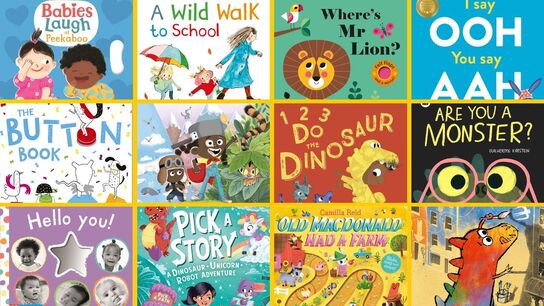
Play expert and futurist Yesim Kunter explains how to use books in play as part of children’s development.