The government has pledged to increase the numbers of children starting school ready to learn (1) and our research shows that sharing books and stories can be a powerful way to support children as they prepare to start school and on their onward school journey. This can be through families reading together at home during this important transition moment and through embedding story sharing into their plans as they welcome their new intake.
How reading and sharing stories can support children starting school
Resources to help teachers support children who are starting primary school in Reception, through reading and sharing stories.
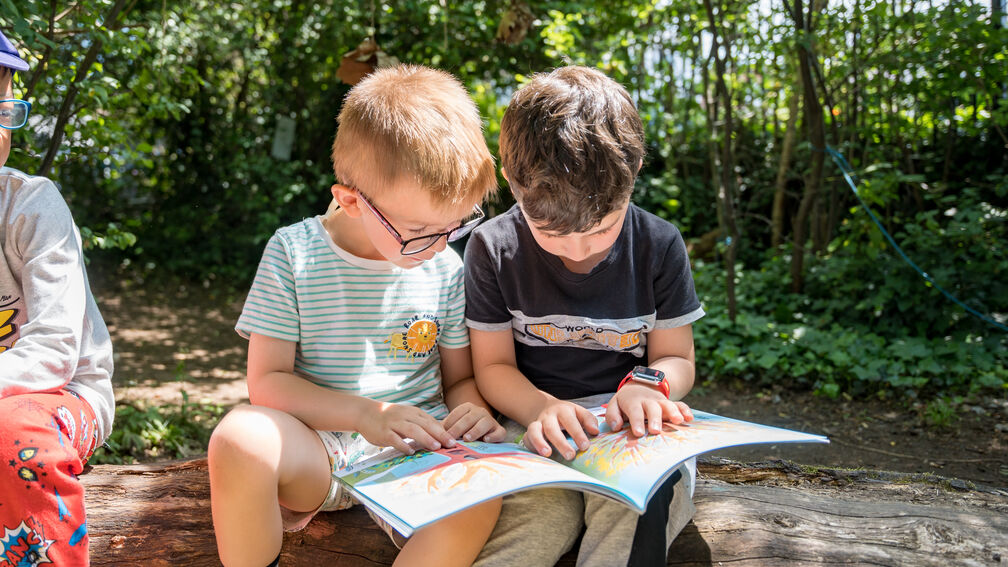
Our evidence shows that children who engage in shared reading:
- have better school readiness and make more progress across the curriculum. Children who are read to regularly develop stronger vocabulary, language, and early literacy skills – all foundational for success when starting school (1).
- develop better executive function, self-regulation and wellbeing. These capabilities help to shape their emotional wellbeing, relationships and readiness for new learning (2), reflecting integral components of Early Years frameworks and curriculums.
- are more likely to have healthy routines and habits which can help to create a safe, stable and predictable environment for children’s healthy development (3). This can be particularly important at a time of significant change.
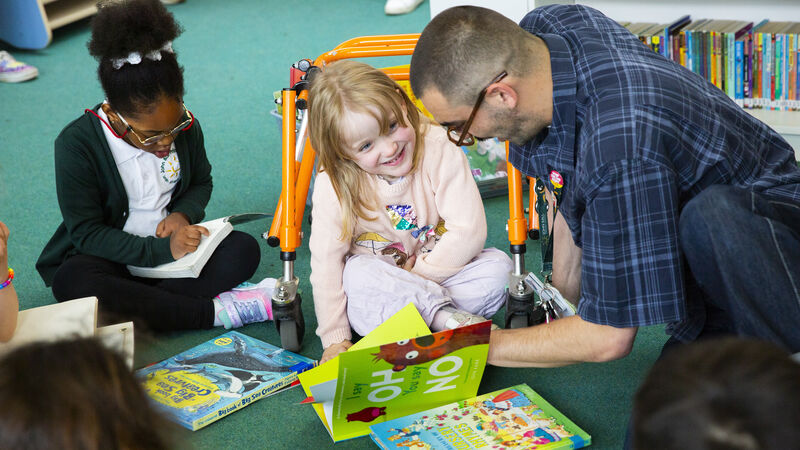
Teacher resources to support children starting school through books and stories
Our research with families highlights that starting school can come with mixed emotions for children and their parents and carers, and it is a time they may look for support as they navigate this change.
As teachers help settle new starters into primary school, we’ve developed resources to build on what you’re already doing, embedding books and stories into your activities from familiarising children with classrooms to introducing them to new areas of learning.
Our teacher lesson plan can be used as a template for a transition day or stay and play session at the beginning of term. It uses the classic children’s book We’re Going on a Bear Hunt by Michael Rosen and Helen Oxenbury as an inspiration for a story time with linked enhanced provision activities.
Using this plan, practitioners can introduce children to the joys of reading together and engage them from the outset with opportunities to participate with repeated refrains and role play. After the story, the plan outlines linked provision ideas for key areas so that children feel confident and excited to explore and get creative – all while building on the themes, language and structures from the book.
See our teacher lesson plan

PDF | 195 KB
Books helping children beginning Reception
-
Starting school: books to read with a new class
Starting school is a big step. This booklist is designed to support teachers in helping children begin Reception with confidence and enthusiasm. It features a carefully chosen mix of stories that explore emotions like worry and excitement, joyful read-alouds that build connection, well-loved classics, and interactive books that encourage movement and joining in.
Ways to support and encourage parents and carers
We’ve created this accessible one-pager that can be downloaded and shared with parents and carers to help them understand the many benefits of books and stories as their child prepares for school. This links to our parent web page which includes tips, guidance and book lists. Using this page, you might:
- encourage parents and carers to see how reading and books can help their child as they prepare for school and once they start.
- reassure parents and carers that the best thing they can do as their child gets ready to start school is to enjoy and have fun sharing stories and books with them.
- recommend some books that they can read with their child. This could include books on the topic of starting school, or ones that might encourage their child to open up about how they’re feeling.

PDF | 275 KB
Watch: how books can help children understand feelings
Check out our video from author Tom Percival which explores how books can help children understand and process their emotions.
How EVERY book generates an emotional response
I’m going to keep it simple. Books are basically feelings. They’re stuffed full of them, and they generate them too.
Obviously, there are books like Ruby’s Worry, Misha Makes Friends, or Sammy Feels Shy that explicitly focus on emotional health and wellbeing. But all books generate an emotional response, even a book that might not immediately seem to be about feelings.
For example, a manual on how to fix your car can bring about a positive emotional outcome. When a trusted adult reads anything aloud with genuine passion and interest, a child will associate that with a positive experience. It could be a football program, a comic, a history book, the sleeve notes on the back of a record — it could be anything.
My mum read to me loads when I was a kid. Not the Haynes manual for our Volkswagen, to be fair, but books that she loved. And that is 100% what set me off on the path to becoming a fiction writer.
How books help us learn about the world
Nearly all books are about feelings because nearly all books feature characters who experience a wide range of emotions — joy, despair, love, hope, anger, jealousy, revenge. I’m not sure if that last one’s an actual emotion; I certainly haven’t done a Big Bright Feelings book about it yet.
Whenever we read, we’re broadening our emotional palette. We’re learning more about the world, more about each other, and more about ourselves.
The role of picture books
A key benefit of picture books is that they’re a shared medium — an adult and a child reading together, side by side, focusing on the same thing at the same time.
A picture book can bond you through laughter. Maybe it helps you build connections around a theme or topic you both love. They can also be the perfect way to tackle a problem: a gentle way to start a difficult conversation, or a sideways step into a topic that the child might not want to discuss directly but is happy to talk about when it’s happening to a character in a story.
Relating with characters
Sometimes you’re reading because you need help coping with particular feelings in your own life. You might watch how a character takes on a challenge and then apply it to your own situation.
That’s certainly true of the Big Bright Feelings books. I put my characters into situations that I know a lot of people struggle with, and then I model a clear way through so that children get a fun story and a clear idea to help them start tackling their own challenges. It’s kind of like a stealth‑help series.
How books can provide comfort
Books can be a huge comfort. You might discover a character who looks, thinks, acts, or feels like you, which is really reassuring and can make you feel less alone.
This is a huge part of why diversity in books is so important. We all need to see characters like us to validate our whole experience of life — to make us feel present, seen, and valued in the world.
Stepping inside someone else’s head
Books also offer a genuine opportunity to spend time inside another person’s head — whether that’s a fictional character or the author of a non‑fiction book.
One of the big problems with real life is that we only ever see people’s immediate reactions, their obvious likes and dislikes, and we never really know why they say or do the things they do. We have to work that out for ourselves, which is hard. But in books it’s all laid out for you, making everything loads easier. And that helps us understand the people around us a little better too.
How books solve (almost) every problem
In short, whatever the problem, reading solves it. Unless you’re being chased by a tiger — reading will not help in that scenario. You’re going to need to put your book down and run.
Supporting reading enjoyment over the primary years
Of course, the transition to school doesn’t stop on day one. Continuing to support children to enjoy reading is crucial, especially as we know reading enjoyment declines over the primary years (4).
These booklists can help inspire you with some great books to share over the Reception year:
-
Suggested reading for Reception: Autumn term
The first term of Reception is a key period as children begin their educational journeys, and books play a vital role.
-
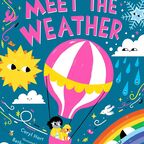
Suggested reading for Reception: Spring term
Begin the new year and new term by sharing lots of fun books! This selection should have Reception-aged children laughing, counting, rhyming, considering all sorts of topics – and enjoying the wonderful magic of words and pictures.
-
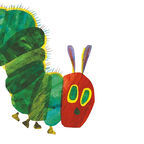
Suggested reading for Reception: Summer term
Here are some of our favourite books that are perfect for pupils in Reception to read during the Summer term.
(1) https://www.gov.uk/government/publications/giving-every-child-the-best-start-in-life/giving-every-child-the-best-start-in-life
(2) Taken from BookTrust The Benefits of Reading
Dowdall, N., Melendez-Torres, G.J., Murray, L., Gardner, F., Hartford, L. and Cooper, P.J. (2020) ‘Shared picture book reading interventions for child language development: a systematic review and metaanalysis’, Child Development, 91(2), e383 e399. Available at: https:// doi.org/10.1111/cdev.13225
Mol, S.E. and Bus, A.G. (2011) ‘To read or not to read: a meta-analysis of print exposure from infancy to early adulthood’, Psychological Bulletin, 137(2), pp. 267–296. Available at: https://pubmed.ncbi.nlm. nih.gov/21219054/
Neuman, S.B. and Celano, D.C. (2012) ‘Worlds apart: One city, two libraries, and ten years of watching inequality grow’, American Educator, 36(3), p.13. Available at: https://files.eric.ed.gov/fulltext/ EJ986677.pdf (Open Access)
Blair, C. (2016) ‘Developmental science and executive function’, Current Directions in Psychological Science, 25(1), pp. 3–7
(4) Taken from BookTrust The Benefits of Reading
Meetoo, V., Cameron, C., Clark, A. and Jackson, S. (2020) ‘Complex “everyday” lives meet multiple networks: The social and educational lives of young children in foster care and their foster carers’, Adoption & Fostering, 44(1), pp. 37–55. Available at: https:// journals.sagepub.com/doi/abs/10.1177/0308575919900661 (Open Access)
(5) BookTrust (2024) Primary school children’s reading and the vital role teachers play in nurturing reading enjoyment. Leeds: BookTrust