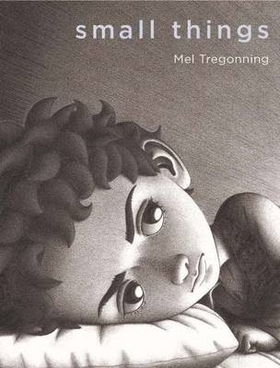
Small Things
by Mel Tregonning
Interest age: 4 to 8
Reading age: 5+
Published by Allen & Unwin, 2017
About this book
The protagonist of the story is a young ordinary boy in an ordinary world. He is, however, full of worries and dread. He is bullied at school and is upset about his falling grades. These worries eat away at him, making him feel entirely alone in the world. Yet with some help from his older sister, his parents and a new friend at school, he comes to learn that everyone is worried about something and that family and friends can help put things in to perspective.
This brilliant book manages to deal with bullying, fear of being different, frustration at underachieving, and the fact that while some things may appear small from the outside, they can feel unconquerable to those experiencing them. The fact that it achieves this without a single line of text or dash of colour is amazing. Tregonning's evocative and beautiful black-and-white illustrations are more than enough to pull off this perfect tale of childhood anxiety.
More books like this
-
The Lost Thing
by Shaun Tan
9 to 14 years
-
The Red Tree
by Shaun Tan
9 to 14 years
-
Together Street
by Clare Helen Walsh, illustrated by Robyn Wilson-Owen
3 to 7 years
-
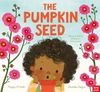
The Pumpkin Seed
by Poppy O'Neill, illustrated by Brizida Magro
3 to 7 years
Lists of recommended reads
-
Books to help children understand depression in grown-ups
Reading can be a wonderful way to explore emotions or tricky situations. If you're a parent or carer with depression, the fiction books below may help your child talk about their feelings and understand what's going on a bit better.
-
Picture books about feelings for young children
Picture books can be a great way to get children to discuss their feelings.
-
Wordless picture books: a great way to get your child to tell the story
Illustrated stories are an enjoyable way to develop visual literacy and help lead a child through a story. But have you tried a wordless picture book? These encourage children to think for themselves and form their own interpretation of what is happening in the narrative. They’re a great way to expand the imagination and have a lot fun doing it! Why not give one of these a go and see what you come up with…?