*Names have been changed
English
Cymraeg
‘Reading supports her emotionally, her physical and mental wellbeing, and her understanding of why she is with us’
Listen to how kinship carers Debbie and Francis use books to support Dora with her wellbeing and to understand her life journey.
Debbie: “I was reading to Dora the book I’ve got from BookTrust, which was Not All Heroes Wear Capes [by Ben Brooks, illustrated by Nigel Baines]. It’s about people doing extraordinary things for other people.
“We were sitting and reading, coming to the end of a chapter, and she just looked at me and said:
‘Well, you’re a hero, aren’t you? Because you took me in and you didn’t have to do that.’
“I said: ‘No, but we saw this little girl that was quite scared and needed somebody to love her, and we wanted to do that for you.’
“And she said: ‘Well, you and Uncle Francis are my heroes without a cape then, aren’t you?’
“She put all that together from reading that book. For that to come from her, despite her developmental and intellectual disabilities, and for her to then verbalise those thoughts, that’s what made it even more special for me.
“And it all came from that one book. So thank you. “
Francis: “We still often need to reassure Dora that: ‘You are safe here.’ She knows her birth mum lives quite close. She’s convinced her mum can hear her talking, and we have to give her lots of reassurance. Books really help with that.”
The right books just help her understand her previous life a little bit more. They open doorways for us to be able to talk to her about things that happened.
Debbie, Dora’s Auntie
Debbie: “We validate her and tell her that, yes, those things happened, but you’re here now and you are safe and those things aren’t going to happen again. Books open the doorways to those conversations.
“The book we’re reading now is about a panda and his companion, a little dragon. They’re travelling to new spaces, they have to go through hardship and storms.
“Although Dora has intellectual disabilities, she can pick out bits and say: ‘Well, that’s kind of like me, isn’t it? Because I have those bad dreams.’
“And I’ll say to her: ‘Uncle Francis and I, we’re like the panda. We’re going to look after you and we’re going to make sure that you get through that storm safely. And she says: ‘Yeah, I can see that.’
Francis: “There are lots of different theories on neurodivergence, why a child works in this way, and what makes them tick. But no child fits every single box. You try all these little strategies and if it doesn’t work, you move on.”
If she’s had a particularly fizzy day at school – we call it a fizzy day when her emotions are all over the place – the reading can help calm her down.
Francis, Dora’s Uncle
Francis: “She likes to choose a book. She will read a page, I’ll read a page, we dim the lights in her bedroom and make it more peaceful. Sometimes I’m still reading the book and she’s asleep.
Debbie: “Because Francis works away quite often, I let him have that time with her to read before bedtime. It just gives her that reassurance that, yes, Uncle Francis does go away, but he is coming back. It’s important [for] her attachment, (she calls him dad) and that dad and daughter time. Just reading books and sharing stories together.
“The whole experience of having Dora with us and finding good books that support her has completely changed my opinion of reading.
“It’s not only about learning to read so she has that skill. Reading supports her emotionally. It supports her physical state, her mental wellbeing, her understanding of why she is with us, and her attachment to this new family, a family that she’s going to be part of. That has broadened my opinion of how books can play a big part in somebody’s life.”
Debbie’s poem (written for Dora) ‘We Are Here To Stay’
We are here to stay.
When you first came to us, you barely made a sound.
Your eyes were wide and watchful, like you were waiting for the room to fall apart.
Every slight movement made you flinch.
We could almost hear the questions inside you.
Will this place hurt too?
You did not arrive empty.
You carried nights of shattered glass, doors that slammed like thunder, voices turning sharp and dangerous.
We knew you’d seen too much.
You learned early that love can change its face, and that staying small might keep you safe.
It’s a heavy lesson for such a little heart, so we didn’t rush you.
We didn’t ask you to call us anything.
We just made sure your dinner was warm.
We left the hallway light on.
We spoke softly, even when you couldn’t.
We wanted you to feel it.
Even if trust takes time, we are here to stay.
We saw you testing us.
Every kindness you held to the light, checking for cracks.
It wasn’t stubborn, it was smart.
Fear had kept you safe before, so we stayed through the nights you woke shaking through the long silences, through the sudden anger that came from nowhere, we didn’t walk away.
We wanted you to know we were here to stay.
Then one day, so quiet we almost missed it.
You reached for a hand, another day you laughed.
And it didn’t sound scared.
And the night you whispered “family”, our hearts broke and healed all in the same breath.
We told you, we are here to stay.
We know the past doesn’t vanish.
Sometimes it will still be hard.
Some memories will still bite at the edges.
But listen, you are safe here.
You don’t have to shrink anymore.
You don’t have to guess if love will turn.
We chose you.
You are here to stay.
And every day we are building something stronger than the storms you came from.
You are more than the violence you witnessed.
More than the fear that shaped you.
And we are.
We are honoured to stand here to help you build a life where love does not break.
You will always be our child of the heart because we are here to stay.
This work has been made possible thanks to the support of the Mohn Westlake Foundation.
To learn more about BookTrust’s programmes and the impacts that shared reading can have for children and families in contact with the social care system, get in touch at [email protected] or use the following form.
Talk to us
Sign up to a reading programme
-
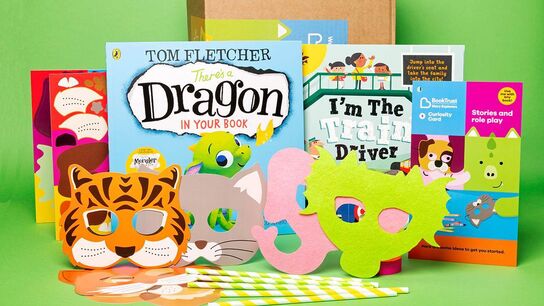
A book subscription service for ages 2–4 that embeds sharing stories at home to strengthen bonding and attachment for foster, kinship and adoptive families.
-
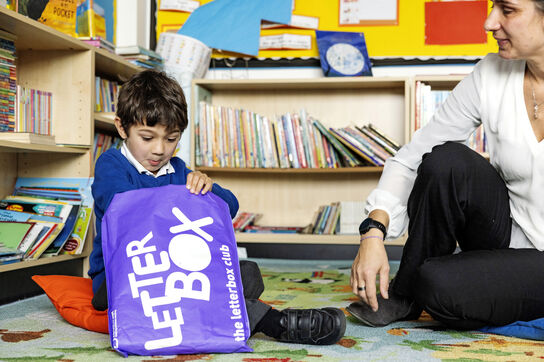
Join hundreds of schools and local authorities using Letterbox Club to bring the magic of reading and numeracy to pupil premium and vulnerable learners age 3–13