*Names have been changed
English
Cymraeg
‘Reading as an actual family is something that will always be with me’
Listen to Luke and Eddie describe how sharing books helps them talk about feelings and worries
Eddie: “Monkey Puzzle [by Julia Donaldson, illustrated by Axel Scheffler] was just something that connects me to this family. It describes how I’m linked, because I have feelings, and if I have bad dreams of me losing you [to Luke], they [Luke and his wife] always remind me that I’ll never lose them.”
Luke: “When you first welcome a foster child to live with you, you don’t know if they’ll accept you. They’ve been uprooted from everything they know.
“They want normality. And they’re children. All they want is to be loved.
“Our little man Eddie, he’s eleven now, and he came to live with us when he was only two. To settle him in, we got him this book from a popular author about a creature who’s got purple prickles over his back.
“It came with a hand puppet, and this hand puppet came to life for Eddie. The book has been patched up now so, so many times it’s falling apart, but he cannot part with it.
“It’s got sticky tape over it. The puppet’s been darned up a bit as well, because its arms were coming off.
“But he still keeps it in a special place. It’s still on his bed now at eleven years old.”
That book reminds me of the first day I came here and describes my feelings of how I live here.
Eddie, talking about the book ‘Monkey Puzzle’
Eddie: “[The puppet] is like a memory puppet. It just keeps those old memories in there and always reminds me of them. We would usually use the book, like, if I was upset, it’ll cheer me up.”
Luke: “He would tell the puppet about his day in school, about problems he had or things he’d even enjoyed. He’d share some of his worries, like:
‘I’m really tired today.’ ‘I can’t do that.’ ‘I don’t like this.’ ‘I miss people.’
“The puppet would have a little life of his own talking back to him in a special voice. Even though Eddie knew it was me talking to him, he’d interact with the puppet instead.
“He told the puppet how much he missed his mum and dad and about the problems he had, which were the same as in the book.
“I think when we’re adults, we want to immediately try and fix things for these kids, these small people. But we can’t be so black and white about it. In our situations, we’ve got to try and approach things in a more roundabout way.
“These books can be used as in-roads when we’re talking to children about these big ideas. Sometimes even adults find things difficult to explain.
These books can be used as in-roads when we’re talking to children about these big ideas. Sometimes even adults find things difficult to explain.
Luke, Eddie’s Foster Dad
“We can ask a child about the story when we’re reading it. We can say things like:
‘Well, that’s a bit like what happened to you this week, isn’t it?’
“Or: ‘You were talking about that.’
“It gives us a chance for those little people to begin unlocking their own emotional toolkit, to build upon their resilience and open their communication, to feel confident enough to talk to other people when they feel upset.
“When we begin talking together, even if we’re using a puppet as a proxy in between us, we’re beginning to learn about each other, and they are learning about us.
“They’re accepting us, and we’re learning a huge amount about them. We’re forming those big, strong emotional bonds, which they may not previously have had.
“We had a brother and sister living with us, and they were going to be adopted.
“The little girl for reasons unknown to us couldn’t talk when she arrived.
“She loved a cartoon on the TV, so we found a set of board books which included the characters as a hook to get her involved in looking at books that previously she didn’t want to.
“She would sit on the couch with my wife and I, cuddled up, both looking at the pictures, telling her the story. She got to know the story so much that she began to mouth the words along with us or correct us even in her own mumbly little language if she thought we were going wrong.
“Reading books helped her get her own voice out.
“When she left us she said for the first time to my wife and I, she loved us.
“It was the first time we had ever heard her voice.
“Her brother, who was a year older, held my hand and he said: ‘I love you, too. You two are the good guys.’
“I strongly believe that the bonds we built with those children over the year they were with us, through reading and enjoying life together, helped them.”
Reading books helped her get her own voice out.
Luke, Foster Dad
Eddie: “Looking back at reading as an actual family is something that was part of my life, which will always be with me and will never be gone.
“[It] feels like I’m remembered.”
This work has been made possible thanks to the support of the Mohn Westlake Foundation.
To learn more about BookTrust’s programmes and the impacts that shared reading can have for children and families in contact with the social care system, get in touch at [email protected] or use the following form.
You can also contact us by email at [email protected]
Sign up to a reading programme
-
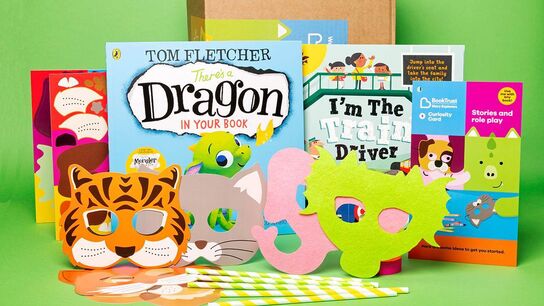
A book subscription service for ages 2–4 that embeds sharing stories at home to strengthen bonding and attachment for foster, kinship and adoptive families.
-
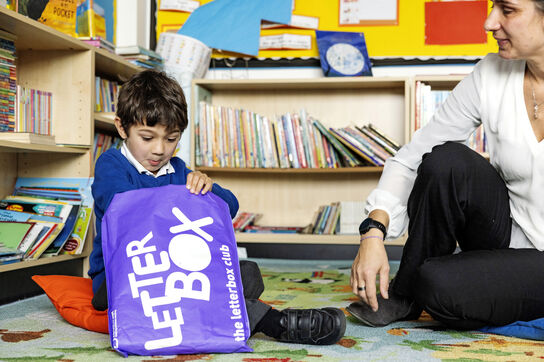
Join hundreds of schools and local authorities using Letterbox Club to bring the magic of reading and numeracy to pupil premium and vulnerable learners age 3–13