Our Writer in Residence, Matt Goodfellow, discusses voice and choice with three more talented authors from around the UK.
Image: Chris Close
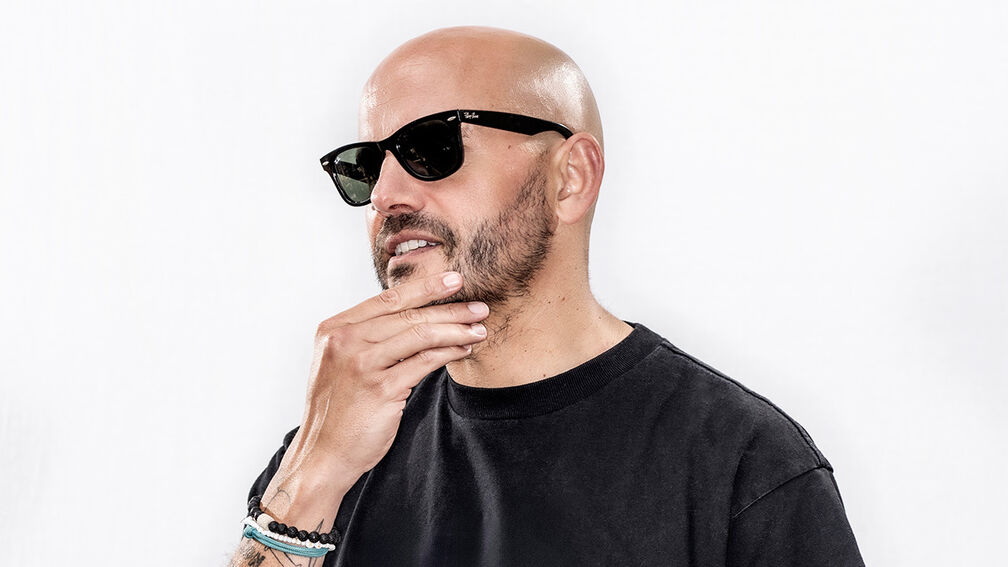
Matt Goodfellow is BookTrust’s current Writer in Residence
Hello, and welcome to the second part of our feature where I ask some of my favourite authors about their takes on voice and choice.
Thanks so much for all the kind words about the first part. I’m glad so many of you found it interesting – and again, thank you to all the writers involved who’ve taken time out of their schedules to talk to me – I really appreciate it.
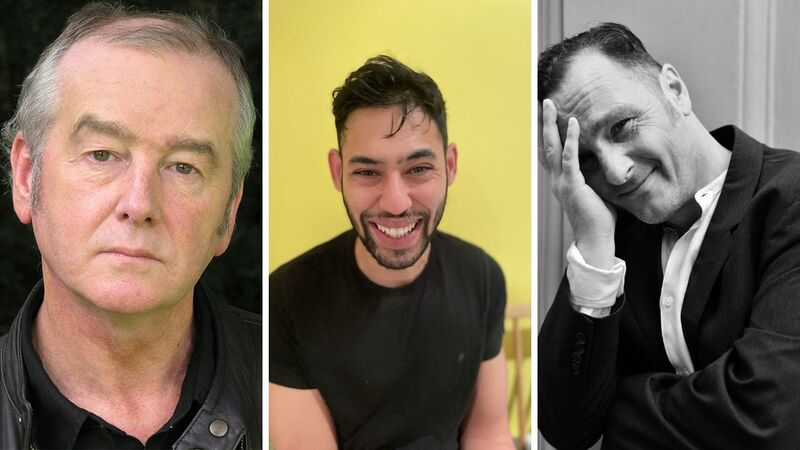
I’m delighted to welcome David Almond, Nathanael Lessore and Anthony McGowan for part two – writers who need no introduction from me.
Oh, and watch out for a very special Instagram live conversation coming soon…!
David Almond: Hello, I’m David Almond. I grew up on a council estate in the north east of England. I speak with a north eastern accent: always have, and always will. I still live in the North East. I love the way that people speak in my part of the world.
I’ve written many novels, short stories, picture books, plays, songs, and opera librettos.
Nathanael Lessore: Good morrow to the fans of fellow writer Matt Goodfellow! My name is Nathanael Lessore, writer of funny teen books, such as Steady For This, King of Nothing and What Happens Online. All my books are set in south east London, where I live, and feature modern slang used by teenagers.
I kind of got published by accident. I wrote the first draft of my first novel out of boredom, and looking for a sense of accomplishment in completing a project. I wrote about my life in Peckham and before whacking it online and forgetting about it forever, I looked up a few literary agents and sent it to a handful of them. Now I get to write for a living and participate in blog pieces like this one.
Anthony McGowan: I’m Anthony McGowan – born in Manchester, brought up in Yorkshire, went to school in Leeds. So generic Northerner! But now I live in London, for my sins. So, a citizen of nowhere.
I’ve been writing for 25 years, and in that time I’ve churned out about 50 books. I’ve written for all ages, but my core is probably YA. If I’m known for anything, it’s Lark, which won the Carnegie back in 2020.
What does ‘voice and choice’ mean to you in your work?
David: I wrote a piece that was published by The Guardian. It begins:
Wen A woz a littl lad me parints yoosed te tell iz to TAALK PROPA. The teechas did an aal.
It’s yes not aye, it’s child not bairn, it’s nothing not nowt.
It is I’m going home and not Am gannin yem.
It’s not howay it’s come along.
We wer telt it woz aalreet to keep sum of the acsent, of cors, cos it woz probly impossibil to get rid of it aal. But ther woz sum that sed that the acsent must be purjed, lyk the sownd of it was a sine of sin.
The piece ends with:
The words cum up from the blood and boans an from the grownd itself and the aynshent past and from the commin langwij, the langwij that must neva eva eva be forgot.
The piece upset a few people, but delighted many more!
Nathanael: At university, we did a whole seminar on ‘voice’. The voice of the characters, the voice of the narrator: these are the foreground of a piece of writing.
The voice is the first point of contact, the constant for the reader, and choosing that voice is probably the most important decision I can make. If it’s not distinct, then what’s the point? Why would the reader get behind a forgettable voice?
Distinct doesn’t mean loud, though. It means ‘believable’. And for my writing, it’s one of the first things I talk about with my editors: who is the person telling this story and why is it their story to tell?
My first book’s narrator was a bit of an airhead (may have gone a bit meta on that one!) My second book’s main character was cynical and sarcastic. My third was self-deprecating, and my fourth is laid back but with a twist. They’re all teen boys but their voices make their stories individual. The union of voice and narrative are what makes books as special as they are.
Anthony: Almost all of my books use a first-person narrator, and that narrator tends to be a teenager in a northern town, confronted with… problems.
Sometimes the narrator is a version of me, sometimes the connection is more remote. But always I’m drawing on memories, experiences, characters, voices from my teenage years, which were quite… intense, and filled with the sort of stuff that might, with a bit of moulding and manipulation, be turned into stories.
I always feel that if I can tap into that earlier version of me, then I trust that I can make a connection with today’s young readers, despite the gulf in years and the changes in the world around us. So that’s the ‘voice’ part: it’s a voice dragged up from 1980s Yorkshire, and then plonked in a contemporary setting.
And ‘choice’? In a sense we don’t choose stories, the stories choose us. But there are also more stories in my head than I’ll ever write, so there is a choice about which ones to invest in. And that’s where I tend to think: how can I draw in the kind of young people who don’t normally reach for a book? And that’s usually a combination of a storyline that will grip the reader, and a central character they can root for and connect with.
Image: David Wardle
Why do you think it’s important that children and young people are exposed to different accents and dialects?
Do you have any examples of interacting with young people at events where this was highlighted to you?
David: When I go to schools in the North East, or speak at events and festivals there, I often hear the children say, “Listen! He talks like us!” I know that young people are inspired and liberated by that.
Whoever we are, wherever we come from, we need to have our voice validated and valued.
It’s sometimes thought, especially in England, that accent and dialect is somehow ‘wrong’, that it is coarse and ‘uneducated’, that we should all aspire to speak with the same kind of voice, the same kind of accent. That attitude is deeply boring and very restrictive. It grows from prejudice and from easy stereotypes.
The ‘ordinary’ language of ‘ordinary’ people can be very beautiful, very poetic. Dialect has a powerful depth and resonance, and has roots in the distant past. Your voice and your accent are a crucial part of your identity. They connect you with your community and with the people who have gone before.
Yes, we always have to learn how to enrich the language that we speak and write, to reach for clarity and beauty. We have to strive to be understood by the wider world, but that doesn’t mean that we have to leave behind our natural accent, our natural voice.
Image: Tosin Akinkunmi
Nathanael: Accents and dialects are vital in storytelling for a number of reasons. Firstly, the way a character speaks grounds the story in a specific place and culture. The strength of voice relies on the way characters and narrators communicate. These touches give the story an identity.
More broadly, exposure to accents and dialects contribute to the links between empathy and reading. Reading about other cultures, and places, and races, and genders, walking in the shoes of these characters, hearing their voices, is what drives empathy in readers who might talk differently. It helps them broaden their minds.
It also ensures readers who have the same accents and dialects represented in the book have relatable characters to read about. As long as it’s done authentically! (Kids can tell when it isn’t, trust me.)
A frequent comment I get from teachers and librarians is that the slang in my books makes them much more enjoyable to their teen readers. Multiple times, I’ve been told that teenagers cringe at adults butchering their words and ask to read the books out loud themselves.
I’ve also had kids fist-bump me for being from the same side of the tracks as them. Without even meeting me, they know a bit about me already from the words in the books.
The nicest interactions I have are when kids tell me that they didn’t like reading until they read my books. And that’s more important than awards and shortlists, in my opinion. If accents and dialects make books more relatable, and therefore more pleasurable to read, then the importance is immeasurable.
Anthony: I don’t believe there’s one ‘right’ way to write for young people (or anyone else, for that matter). But certainly, one key thing that novels can do is to let the reader recognise themselves and their world in a book, which makes them understand that their own lives are valuable, and rich, and complex – the sort of lives that can be written about.
The most important moment in my writing life came in Year 8 when we were reading Barry Hines’ A Kestrel for a Knave as a class. One kid was limping his way through a scene, in that terrible way 13-year-old boys read sometimes, when he suddenly ‘got’ the fact it was written in Yorkshire dialect, and he got the flow of it, and then he put his hand up and said, “Miss, Miss, it’s us!”
That’s a hugely powerful thing to recognise. So many of the classics of children’s literature have a southern, middle-class setting. And, of course, that’s fine. But it can’t be everything. Every child deserves to find versions of themselves in books.
Every child deserves to find versions of themselves in books. ‘Diversity’ isn’t some woke trickery but an essential part of great literature.
In terms of how I’ve experienced some of these issues at events, then there’s a variety of ways they’ve played out. I’ve been to posh schools, where the world I describe is utterly alien to the experiences of the audience, and so they treat them almost as fantasy literature. But also I think it gives them an insight into those other worlds – and these are the kind of kids who grow up to live privileged lives, otherwise largely untouched by the kind of things I write about.
And then I’ve gone to Northern comprehensives where there’s a greater overlap. But then I often talk about how things were different in the olden days – how much more brutal the school experience was, and so there’s a weird energy, of both recognition of the similarities and wonder at the changes.
And then there’s a third type of experience, when I’ve visited parts of the UK that are very different to my own homelands – deep in East Anglia, or more remote parts of Scotland, or Cornwall – where the learning goes both ways.
What is your favourite use of accent, dialect, and/or voice in your books?
David: Most of my writing is set in the North East. It is filled with the beats and rhythms of Northern speech.
Many of my characters, in books like Joe Quinn’s Poltergeist or The Colour of the Sunor The Falling Boy, speak with northern rhythms and accents. They use dialect. I wrote one book, The True Tale of the Monster Billy Dean, that is totally written in phonetic Geordie.
That hasn’t prevented my work (including Billy Dean!) from being published and performed all around the world. I’ve been awarded many major international prizes.
Nathanael: My favourite use of dialect in one of my books is in Steady for This. The main character Growls has a nosy neighbour called Sharon who says, “’is name’s Gregory Flynn, and it ain’t the first time ’ees done this”. To which Growls responds, “Geez, if there’s one thing Sharon hates, it’s the council. And the letter ‘H’.”
Growing up in Peckham, there was always a cockney neighbour who knew all the gossip on the estate and had various run-ins with the local council. This tiny interaction brings her character to life and Growls’ response to it tells us about his character too.
Anthony: The two that come to mind are the hard Leeds accents in The Knife that Killed Me. It’s a grim, dark, brutal book, and that flinty, chiselled, sometimes sneery Leeds voice is all over it. And then there’s the softer voice of village Yorkshire that predominates in the Brock/Pike/Rook/Lark series, where dialect words like ‘laikin’ for ‘playing’ persist.
Can you recommend another children’s book or author that uses accent and dialect?
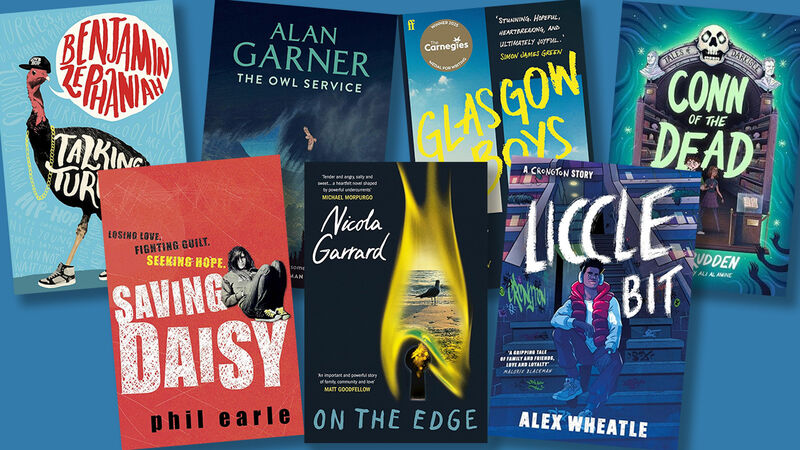
David: It’s great to come across writers who use and celebrate accent. Examples are Benjamin Zephaniah and Matt Goodfellow. I learned much from the great north western author Alan Garner, whose work is rich in the dialect and accent of his part of the world.
Such writers show us the true complexity and richness of the English language. They show that there is not one standard way to speak and to write. They encourage us to be ourselves.
Nathanael: Other children’s books that use distinct dialects and accents and which I’d recommend (other than Matt Goodfellow, of course!) include Glasgow Boys by Margaret McDonald and Conn of the Dead by Dave Rudden.
The dialect in Glasgow Boys helped me love the characters and grounded me in their world. Having been to Scotland and heard the spoken dialect, I felt privileged to be able to hear the characters so clearly.
And Dave Rudden uses Irish dialect in a way that’s also informative to the reader: a subtle lesson in culture, as well as providing strong voices. Me being an ignorant South Londoner, I didn’t often venture past the Midlands, and I’d never been to Ireland before I became a writer, so accents in books can really open up your world.
The first rule of writing is “show, don’t tell”, and distinct accents show us so much about the characters, universe, and cultures that are represented in a book. I get sent lots of books as part of my job; writers want me to read their books and say nice things publicly, which I do because it’s important to be supportive.
But the books that I can’t put down, the books that I love and read cover to cover, sometimes twice, are those with the strongest voice. The more different from my own, the better. Because books are entertainment and escapism, but also a way for me to learn. And I love those books for it. Teens do too.
Anthony: Phil Earle’s early works brilliantly capture northern working-class voices, especially in Saving Daisy and Heroic. And no one has ever come as close to recreating how teenage boys actually speak as well as the great Melvin Burgess in Doing It.
More recently, Nicola Garrard brings the outsider youth of south Devon wonderfully to life in On the Edge. When it comes to working-class London life, Alex Wheatle was the king, taken from us tragically early.
And then you could always go back to Barry Hines, and A Kestrel… And a certain Matt Goodfellow isn’t bad when it comes to turning ‘ordinary’ voices into poetry!