Author Marcela Ferreira explores how sharing a book together can support children’s development.
Image: Mark Chambers
Marcela Ferreira is a picture book author
English is not my first language. In fact, I only started learning it properly at 14 years old, when I moved to England from Brazil. GCSEs were a struggle, A Levels hard work, but at university I found a deeper appreciation for, connection with, and understanding of the power of stories.
So it wasn’t love (of books) at first sight for me, but rather a slow burn. A love transformed after the birth of my children, when I discovered picture books.
These short, sometimes funny, sometimes sad, beautiful, playful, serious, joyful and educational texts were wondrous to me! So rich in context, so much going on. Giving me a chance not just to teach my children, but to further connect with them.
I was completely and utterly hooked. Could it be that having English as a second language made me hyper aware of the skill that goes into writing them? Undoubtedly. Did it make me a bigger advocate of their virtues? Absolutely.
Now, as a writer myself, I have been on enough school visits to see first hand how many children are growing up bilingual, and how many have English as a second language. Children that will likely have a deeper understanding of the impact that words can have, even though they might not be able to vocalise it as such. More of a reason to make sure that reading picture books becomes a part of their everyday routine.
The truth is that picture books are a great medium to further enrich and develop any child’s language skills, regardless of their command of English. Not only do they help with the way one engages with stories, but they can also promote a general love of books.
So what must you consider when choosing picture books for such an audience? Well, a few things come to mind…
Artwork
Illustrations are, of course, key to any picture book. Humour, intrigue, tension, surprise, delight, beauty – the right illustration can deliver all of it, and much more.
At its most basic level, children will be looking to connect the pictures with the words on the book, but there are other learning opportunities too. Try to further develop their vocabulary by asking them to describe what they see, or to name as many things as they can on the page.
Don’t forget that illustrations can also go beyond storytelling, adding extra layers to the overall experience.
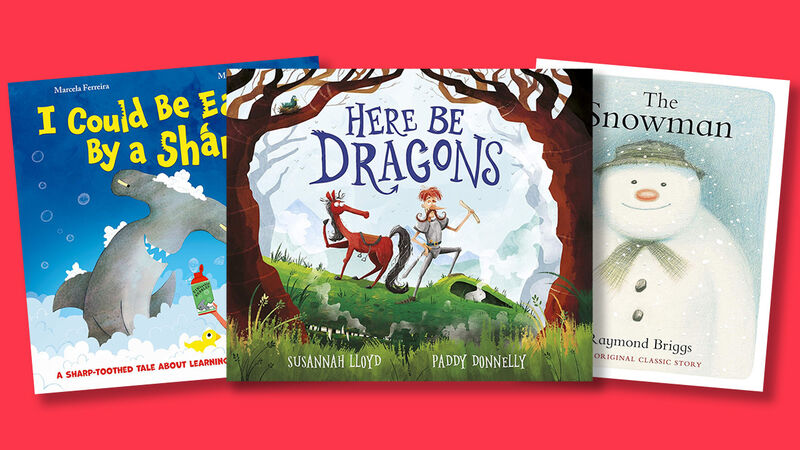
So ask children to look for clues about what else could be happening on the page beyond the text, like in the excellent Here Be Dragons by Susannah Lloyd and Paddy Donnelly.
Consider, too, the joy of the wordless picture book (like The Snowman by Raymond Briggs), and invite children to create their own narrative and think critically about what is happening on the page. Explore the art together, the characters and their world as depicted on the page. Ask them what they think is happening, to whom, and why?
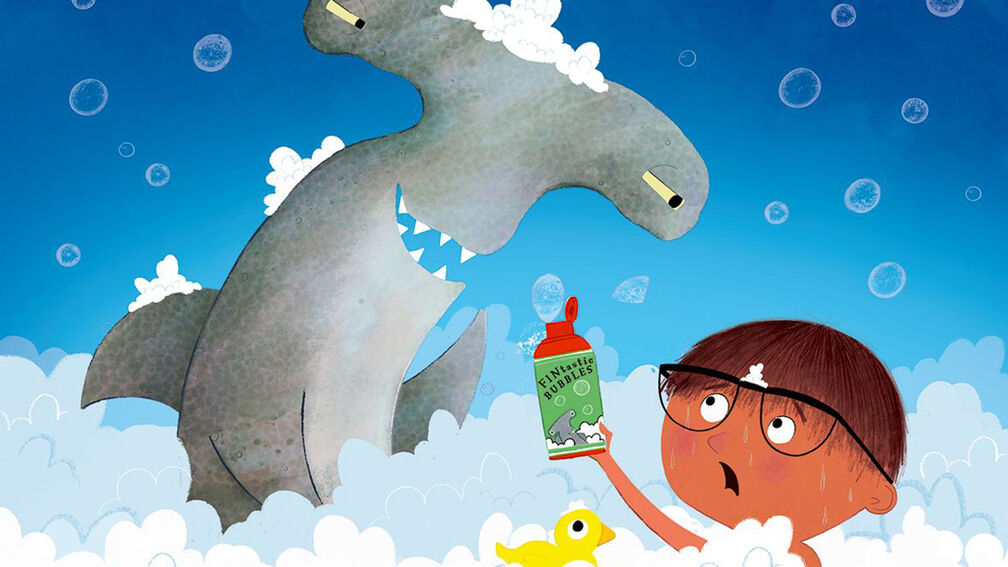
Illustrations also provide context through expressions, emotions, struggles, and victories. These can often start more complex conversations about our feelings. My latest book I Could Be Eaten By a Shark, illustrated by Mark Chambers, is about learning to live with fears and worries, and never fails to draw children in to discuss their own.
James builds a snowman in the garden, then wakes up in the night to find that it has come to life.
Repetition and rhyme
Repetition is key to learning any language. Fact. And it’s widely used in picture books.
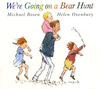
But be warned: bad repetition can dull the senses; so make sure you choose books that also have excellent plot and a sense of fun like Michael Rosen’s We’re Going on a Bear Hunt, illustrated by Helen Oxenbury.Invite children to participate and engage with the narrative, act out a scene, or just move about!
Michael Rosen’s use of onomatopoeia adds deeply to the narrative, so keep this in mind during your book search, especially when it comes to animal sounds. Ask children how different the animals sounds are in their mother tongue – a learning opportunity for all.
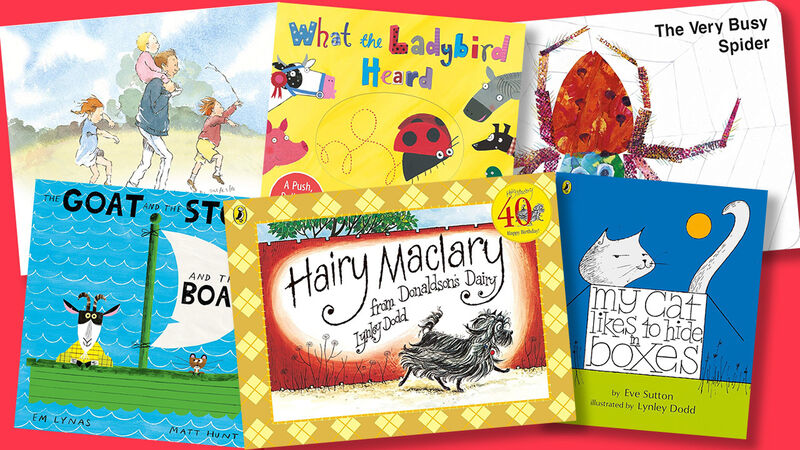
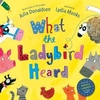
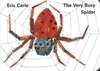
What the Ladybird Heard by Julia Donaldson, illustrated by Lydia Monks, and The Very Busy Spider by Eric Carle are further great examples, and funny and smart.
Picture books are meant to be read aloud so each word matters a great deal, especially when it comes to rhyming texts. Their musicality and rhythm draw us in and holds us close, even more so if you are a non-native (English) speaker.
A great rhyming book is like a lullaby – there is no pressure to understand everything that is being said in order to enjoy the experience, though it should hold your attention and spark your imagination.
Asking children to come up with their own rhyming words will guarantee plenty of laughs, as well as provide yet another opportunity to enhance vocabulary.
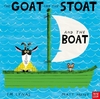
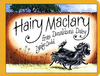
You can choose between books that use simpler rhyming language like The Goat and the Stoat and the Boat (by Em Lynas, illustrated by Matt Hunt) or ones that carry slightly longer and more complex text like the Hairy Maclary series (by Lynley Dodd), or My Cat Likes to Hide in Boxes (by Eve Sutton, illustrated by Lynley Dodd).
The animals on the farm are always noisy, all except for the ladybird who never says a word. But when burglars plot to steal the farmer’s fine prize cow, the ladybird has a plan…
One morning in a farmyard a spider begins to spin a web. All the animals try to persuade her to stop but she doesn’t answer any of them; she is too busy spinning her web.
This hilarious rhyming story follows Hairy Maclary from Donaldson’s Dairy, as he sets off for a walk in town
Non-fiction
Make sure to pick a topic that you think will excite the child you’re reading with before exploring the book. Discovering new things together is an excellent opportunity to connect further.
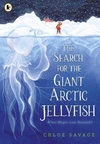
There are some non-fiction picture books, or stories with a non-fiction feel, like The Search for the Giant Arctic Jellyfish byChloe Savage. It’s based on real events, with a rich colour palette and illustrations that will keep young children glued to the page.
In this delightful picture book, scientist Dr Morley sets out to achieve her lifelong dream of finding the mysterious giant Arctic jellyfish. This is a creature that everyone talks about but no one has ever seen. Could it be real or is it just a myth?
The classics
Richard Scarry’s What Do People Do All Day? might have some outdated professions, but isn’t that just another talking point? An opportunity for questions and answers, plus gorgeous illustrations? This is London by Miroslav Sasek would be another excellent choice.
ABC and counting books
Not to be overlooked are baby books. Some can also be funny, interactive and, of course, educational.
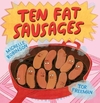
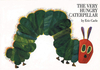
Both 10 Little Penguins (by Joelle Jolivet, illustrated by Jean-Luc Fromental) and Michelle Robinson and Tor Freeman’s Ten Fat Sausages will guarantee to engage the shyest of children, while The Very Hungry Caterpillar (by Eric Carle) allows for more complex conversations about the life cycle of the caterpillar.
Everything in this sausagey counting book works perfectly: from the big, bold illustration to the satisfying rhyme that works well for preschoolers. It will also entertain adults and older children, who will really get the silly humour.
Little fingers will love to follow the very hungry caterpillar as he munches his way through the pages of this classic, colourful, interactive picture book.
But whatever your choice, don’t forget the reading part!
The delivery is half the fun – and can make a huge difference, especially to a child who doesn’t have a full grasp of English. When it comes to learning a second language, listening tohow it is spoken, as well as observing how words are delivered, is key.
So, leave your inhibitions behind and remember that stories are supposed to be fun!
I Could Be Eaten By a Shark by Marcela Ferreira, illustrated by Mark Chambers is out now.