Author and teacher Catherine Bruton explores the link between books, nature, and children’s wellbeing.
Image: Oriol Vidal
Catherine Bruton is an author and teacher
We all know nature is a healer. We also know that stories play an important role in helping children process complex feelings. But can books about nature do the ‘double whammy’ in helping young people to navigate difficult emotional terrain?
I have been writing for children – and teaching them! – for nearly 30 years now. During my three decades ‘at the chalkface’,I have seen an exponential rise in mental health issues, affecting children of all ages, stages and backgrounds, which has been heart-breaking to witness.
In my twin roles as author and teacher, I have become increasingly fascinated by evidence that engagement with nature, including reading stories about nature, generates calmness and joy, supports creativity, and aids concentration, leading to improved mental health outcomes amongst young people.
So can ‘Green’ fiction as a form of bibliotherapy support the work of medical and other practitioners in helping children cope with trauma and poor mental health? If so, then let’s explore the therapeutic value of ‘eco-storytelling’.
How books about nature can spark wonder and connection
Much of my body of work focuses on the healing power of nature, through the lens of children coping with grief and trauma.
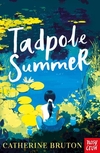
My book Tadpole Summer is the tale of a ‘glass child’ and her terminally ill brother, who learn to find magic and consolation in the small square of garden beneath their window.
It was inspired by a friend who works with Wiltshire Wildlife Trust, using forest schools and nature-based storytelling activities – ‘green bibliotherapy’ – to support traumatised children, including young refugees and asylum seekers.
A major new study by The Wildlife Trust, in collaboration with the Institute of Education at University College London (UCL), reveals that learning and reading about nature conservation and environmental issues has a profound effect on young people’s health and wellbeing.
And for young people with little access to green spaces, books can be their gateway to the natural world.
‘Nature books can open the door to adventure, sparking children’s curiosity about the world around them and encouraging them to head outside and explore,’ says Jen Davis, education and learning manager at the Wildlife Trust.
By bringing the natural world to life, books help shape children’s relationship with nature, fostering a sense of wonder, creativity and emotional connection.
Jen Davis, Education and learning manager at the Wildlife Trust
William Baldwin-Cantello, Director of Conservation at the Worldwide Fund for Nature (WWF), agrees: ‘Nature books ignite a sense of wonder and connection, encouraging young readers to step outside, experience nature first-hand and build lifelong habits that support good mental health.’
The magical power of storytelling
We already know that stories can play a key role in helping young people frame or express difficult experiences, allowing an outlet for trauma and giving them an emotional vocabulary to articulate their feelings.
There are many terms to name this – mentalisation, emotional literacy, reflective thinking, bibliotherapy. In essence, it is the almost magical power of storytelling to transform and heal.
‘A child can enter through the story world into a world of hope, options and possibility in the form of healthier, more creative coping mechanisms,’ explains Kim S. Golding, author of Using Stories to Build Bridges with Traumatized Children.
When a child is helped to think about his troubled feelings through story, it can prevent these feelings from building up into an awful mess inside.
Kim S. Golding, Author of Using Stories to Build Bridges with Traumatized Children
So the formula seems to be nature + stories = happier children!
The organisers of the Wainwright Prizes for nature writing agree. These awards, which expanded in 2025 to include three categories for children’s books, recognise the unique power of ‘green story-telling’.
‘We believe deeply in the importance of inspiring young readers through stories that connect them to the natural world,’ says Alastair Giles, Wainwright Prize Director.
And these connections hold a deep therapeutic value, as Mark Roland, Chief Executive of the Mental Health Foundation recognises: ‘It turns out that it is not just being in nature but how we open ourselves up and interact with nature that counts.’
How books open windows to the world
As a teacher and author, I see first-hand the unique ability of stories to ‘open up’ young people to the world around them, to expand their horizons and enrich their capacity for empathy, teaching them to walk in others’ shoes, to explore other worlds and cultures and places and lives.
Put simply, books open windows on the world through which children gain greater understanding of themselves and the world around them.
Tadpole Summer explores themes of grief and loss, but it’s also a story suffused with the magic and healing power of nature.
It’s also full of cheap and cheerful nature-based activities that can be done in even in the smallest of green spaces – from bug hotels to bee houses; hedgehog hibernariums and dormice dormitories; wildflower gardens for insects to mud-puddling pools for butterflies!
I really hope children who read it will be inspired to get out in nature too. Because it turns out that getting a daily dose of nature is one of the simplest ways to care for ourselves and each other and connect with our world!
And sometimes, that connection can begin in the pages of a book.
This heartwarming and heartbreaking story about a life-limiting illness in a sibling intertwines joy, grief, hope, laughter and loss with the comfort and healing power that can be found in nature.