9 books that break format and genre rules
Author Rob Walton recommends his favourite highly original books that play with format.

Rob Walton
Poetry, short stories, novels, factual books. We’re all familiar with these categories and could possibly suggest our favourites in the different genres, but what about books that don’t fit neatly into categories? What about books that play around with format and words? What about books that taste a little bit like rainbow belts?*1
One of the great joys of writing my book Please Don’t Read the Footnotes Please was playing around with the format as I wrote it. It also confused the writer at times, but that’s a different story.*2
In the last few years many graphic novels have been published that play around with how the pages of a book ‘should’ appear, but there are a whole variety of other writers and illustrators out there doing their thing in a different format.
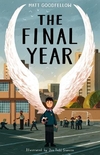
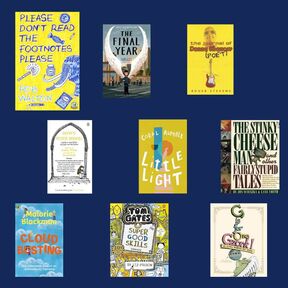
There have been several novels in verse published recently, with Matt Goodfellow’s The Final Year and The First Year being a big hit with pupils and teachers. The years refer to the transition from primary to secondary school. These moving and important books are illustrated by Joe Todd-Stanton.
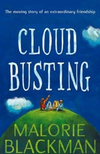
The poet Roger Stevens’ 2002 book for older readers, The Journal of Danny Chaucer (Poet), paved the way in many respects, and it would be wonderful to think it might get a new lease of life. Former Children’s Laureate Malorie Blackman wrote Cloud Busting a couple of years later, and it’s a book that plays around with poetic form, one chapter being titled ‘Facing the Truth – with Haikus’.
Coral Rumble is another highly regarded poet who has branched out into this area with great success. I’m a big fan of Little Light, published by Troika Books, and a good fit for older middle grade readers. So far, many verse novels tend to have been on quite serious subjects. (Sneaks off to write best-selling laugh-a-line verse novel.*3)
Looking through my shelves for other ‘playful’ texts, I came across my old copy of the utterly brilliant The Stinky Cheese Man and other Fairly Stupid Tales by Jon Scieszka and Lane Smith. This is a book that mucks about with pretty much everything – stories, contents, illustrations, typography, even the ISBN. Published over thirty years ago, it’s an enduring delight. Just looking at the cover makes me laugh out loud.
Then there’s Tony DiTerlizzi’s anarchic G is for One Gzonk, ‘an alpha-number-bet book’. Super rhymes, quirky asides and a very innovative take on the whole ‘A is for apple’ format. How about this on the letter M page: ‘Behold! The Mighty Mee-yighty…’ This is accompanied by an illustration of a barbell which directs you back to the letter B.
I have a confession to make. I read my first Tom Gates book last year. I have no idea why one of Liz Pichon’s books hadn’t found its way to me until then, but I’m very pleased I’ve sorted it out now. The one I read was Super Good Skills (Almost…). Not only is it a riot of pictures, ideas and text, but there’s also space for your own doodles. Possibly not the best choice for a school library, but loads of fun, pace and invention.
A book I have owned for a long time is Down with Skool! Written by Geoffrey Willans and illustrated by Ronald Searle. First published in 1958, which is honestly a long time before I was born, I now realise I need to read this again, having first had the pleasure earlier this year. There are exam questions, bits of script, any amount of asides, speeches and guides to teachers. It’s the sort of book which has been recommended for decades and it’s had its praises sung for very good reasons. It also has some things known as funny footnotes…
Please Don’t Read the Footnotes Please, by Rob Walton and illustrated by Reena Makwana, is out now.
1 Not yet a thing, but I’m working on it. Any food scientists-cum-publishers out there who want to help, can contact me through Book Trust.
2 Not actually a story. Just a thing. Possibly a thingy story thing. All right, have it your own way, it’s a story.
3 You think I’m joking? I never joke.