5 historical novels to inspire young people
Author Janeen Hayat recommends five excellent historical reads.
I’ve never had much of a head for history – the dynasties of the ancient Egypt, Alexander the Great, and the Austro-Hungarian Empire all float around my brain as vague concepts with dates attached. In school, history mostly seemed to be a list of wars and the monarchs who waged them.
But there are exceptions: The Grapes of Wrath made The Great Depression a human event, not just an economic one. Only by reading The Crucible did I realise that some Puritans were, in fact, girls like me. Dickens peeled away the gilded veneer of the Industrial Revolution, which history taught to me as a success story, and revealed amazing characters thriving in an unjust world. Each of these centred history’s victims and made them the heroes of their own stories.
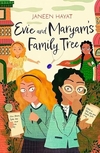
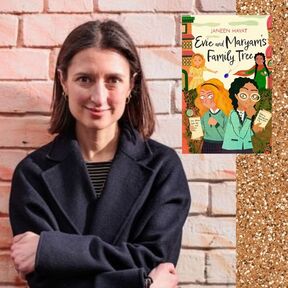
I didn’t love these books because they taught me something about social justice; I loved them because their characters drew me in and made me care about what happened to them. They helped me understand why I should bother with history: it’s a subject with social struggles at its heart. That’s perhaps why I wrote Evie and Maryam’s Family Tree – I started with characters I cared about (my dad’s side of the family) and ended up learning a whole lot about pre-Partition India.
My favourite historical fiction books deal with the tension between powerlessness and agency, but show in the end that our futures aren’t written. Young people navigate this tension constantly. Now more than ever, they need stories that show them that ordinary people have always fought to create the unlikely futures they want to see.
My first recommendation, The Misunderstandings of Charity Brown by Elizabeth Laird, is inspired by the author’s own childhood. This is a wonderfully quiet but powerful book about the friendship between Charity and Rachel, her German-Jewish neighbour, in postwar England. Charity grapples with re-defining herself as she grows up, pushing back on her parents’ fundamentalist Christianity, and their perception of her as fragile after having polio. Through her friendship with Rachel, she also navigates questions of class, nationality and individuality, while the country itself works out its own identity around her.
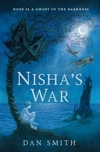
Next come two books that are part of a growing openness to explore the untold stories of the Second World War beyond Europe and Japan. My own book falls in this category, and yet I didn’t know much about the Japanese invasion of Malaya until I read Nisha’s War by Dan Smith. The book begins with the destruction of Nisha’s home, after which she flees to her father’s ancestral home in the north of England. It is a beautifully written, complex story of wartime loss and cultural differences, tied together by the supernatural.
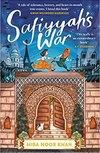
Safiyyah’s War by Hiba Noor Khan also tells a remarkable Second World War story, this one true, of the role North African Muslims played in saving the lives of hundreds of Jews in Nazi-occupied Paris. The Great Mosque serves as a beautiful sanctuary, and the lush descriptions of the mosque compound show us a sanctuary amidst fear and chaos. This story of Jews and Muslims working together against oppression is just the one we need now. My father, a devout Muslim, taught me that there is a special connection between Islam and Judaism – a concept that seems too often lost in our present world.
My next beloved book is Little House on the Prairie by Laura Ingalls Wilder. It was published in 1935, but takes place in the 1870s, giving us a Great Depression view of the frontier. The book is steeped in that era’s admiration for resilience and self-reliance. The adventures of Laura and her family – from fording a river to building a house with no nails – were as astounding to me as they were to my daughter. People actually built houses out of logs? People actually dug their own wells? The depictions of Native Americans are outdated, but these presented opportunities to discuss why the views of some characters were unfair. More than anything, we felt that there’s a lot we could learn how to do if we needed to.
My final recommendation isn’t strictly historical fiction at all. Shadow by Michael Morpurgo was written eleven years ago, while the war in Afghanistan was still underway. Shadow gives readers a glimpse into that war, which is too recent to be in the history curriculum and too distant for many young readers to remember. The story centres on Aman and his mother, Afghan refugees being held in a detention centre in Bedfordshire, and the springer spaniel named Shadow that links their old lives and new. Their complete powerlessness is frustrating to take in – yet they find ways to keep using the agency they do have. Morpurgo doesn’t hold back in describing the injustice of our treatment of refugees, and while we often have to wait 60 years or so for events to be taught as history, maybe we should start talking about the recent past more than we do.
Evie and Maryam’s Family Tree by Janeen Hayat is out now.