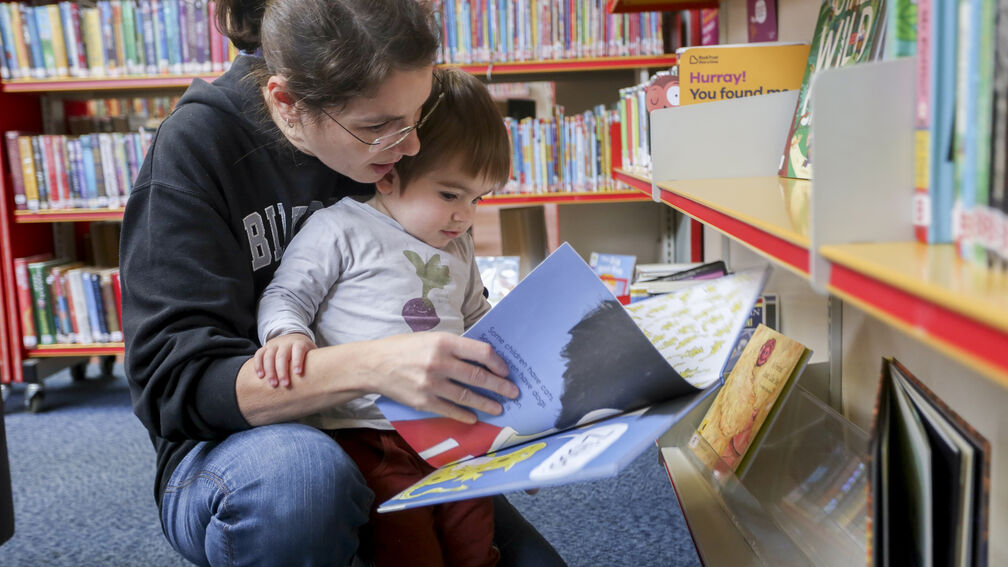
At a time when families are facing multiple and competing pressures on their time and finances, why is it so important to invest in supporting families to share books and stories?
Reading and sharing stories is proven to bring children profound and wide-ranging benefits that can affect their health, wellbeing, progress at school and their creativity. Shared reading brings immediate benefits to families too. It supports bonding between children and their parents, carers or other family members, boosts parental positivity and improves children’s sleep.
Children’s brains experience the most growth in their first five years. In these early years, stimulation from books, and using books, stories and rhymes as a focus for playing, talking, and singing enhances the cognitive, physical, social, and emotional growth and development of children that extends far beyond childhood.
Children from low-income backgrounds stand to benefit even more from the immediate and longer-term benefits of early shared reading. Evidence shows that children from disadvantaged backgrounds who achieve highly at the end of primary school are twice as likely to have been read to at home in their early years, compared to their peers. In the long-term, reading has the potential to transform children’s future life chances. A child growing up in poverty who is read to at age five has a significantly higher chance of economic success in their 30s than their peers who were not read to.
It is essential that children from low income and vulnerable family backgrounds do not miss out on the transformative benefits of early shared reading. That’s why at BookTrust, we provide extra support to these families; ensuring our books, resources and support reach and engage children and families who need us the most.
To cite this report: BookTrust (2023) Children’s reading habits in the early years: Research with families from low-income backgrounds in the UK. Leeds: BookTrust