Author-illustrator James Mayhew shares how nursery tales have stood the test of time.
Image: James Mayhew
James Mayhew
How do you like your porridge in the morning? Hot and sweet? Or perhaps you prefer gingerbread? A tasty billy goat, or someone’s grandma?
Such strange ideas for stories, but also so familiar that we no longer question whether piggies should boil wolves or if it’s acceptable for foxes to eat gingerbread men. They are tales of such embedded, folk-logic familiarity that we probably all still remember them from childhood.
I’ve just rewritten and illustrated eight traditional ‘Nursery Tales’ for Otter-Barry Books, and it’s led to some fascinating research, and to many long-forgotten memories.
The structure of these tales is reassuringly recognisable, with many repetitive refrains. Who can forget the “trip-trap, trip-trap, over the rickety wooden bridge… or what big teeth Grandma had?
But in an era where many fairy or nursery tale books are either “relevant”, gender-swapped, or subverted for humour, do the original tales still matter?
The features of nursery tales that make them appealing
These are generally not magical stories like fairy tales, and rarely deal with love or the mature themes of Cinderella or Snow White, nor do they all have happy endings.
They are mostly animal tales, and they succeed, I think, because they make it easy for any child to project themselves onto whichever roles they like, whether it’s a vain little mouse or a big bad wolf.
The repetitive structure encourages anticipation (that delicious storytelling device that keeps the listener hooked), and the problem-solving in a story like The Three Little Pigs is the perfect way to develop resourceful thinking (“what would you do?”) in dangerous situations.
Alliteration and rhyme all play their part in developing language skills, and the stories really do, still, gently prepare any child for the troublesome “real world” through the delightful, and slightly bonkers prism of anthropomorphised animals. I love that they also, somehow, keep one foot (or paw) in an earthy reality of turnip farming and cold porridge.
Often cautionary, sometimes moral, these are tales that contain many useful ingredients: fear, danger, punishment, escape, salvation, love, hope, and justice. Occasionally gruesome and often irreverent, they have a dark humour woven into their narratives that children just love. They are very often naughty stories, with slightly shocking consequences. What surprised me, as I began to research them, was just how unapologetic they are.
The power of retellings
Image: James Mayhew
When I was first asked to consider the project, I immediately thought back to the books I saw growing up. I didn’t have a great many picture books in the 1960s, but we did have the Ladybird “Well-Loved Tales” at home, and being reminded of them, I was immediately back in the company of The Gingerbread Man, The Billy Goats Gruff and Red Riding Hood.
The detailed and meticulous, sometimes almost lurid illustrations, came back in a flash, permanently etched on my memory. I probably saw other versions too, either at school or in the library, and I have since discovered many deliciously different interpretations.
Little Red Riding Hood has evolved with time, from Grimm’s macabre ending, with both Red Riding Hood and Grandma remaining eaten, to some modern versions where neither is eaten and even the wolf escapes (he doesn’t in my version). All the stories have variations and complicated sources.
It was fascinating to unpick the tales and find some kind of authenticity. It was just as fascinating, afterwards, to turn away from my research, and just become a storyteller, and tell them my way.
This, surely, is why the stories have survived. Each new voice, with each new generation, makes them freshly minted, and brings them to life again.
We may cling to our nostalgic chinny chin chinrefrains, but everything else can change and grow in the voice of a different teller of tales.
Exploring nursery tales from across the globe
The stories I chose come from many lands, and I wanted to really consider that part of their history, especially in my illustrations. So, my Enormous Turnip has a Ukrainian setting, in honour of Ivan Franko, whose version is probably the source for most retellings today.
The Gingerbread Man was first published in America, and although the story most likely travelled with European settlers, it’s been given an American backdrop in my version. Aesop’s Tortoise and the Hare race through a hot, dry Greek landscape, and The Three Bears, which seems to have been written down first by a Canadian, live on the edge of a great snowy pine forest.
The least known tale in the book is one of the most charming, and one which I felt should be more often told: The Vain Little Mouse (or La Ratita Presumida in Spanish). Set amongst sunshine and geraniums, it’s a story that, again, exists in many versions, and my challenge was to combine the elements I loved the most and make them work.
Storytelling is a lot like a mathematical equation. If things don’t quite add up, children see through it at once, and you have a problem.
Of course, within such tales, there is much which is eccentric, strange and simply unexplained. But even with the most unlikely scenario, one has to think of the characters, and find a curious, magic sort of child-like logic behind their actions.
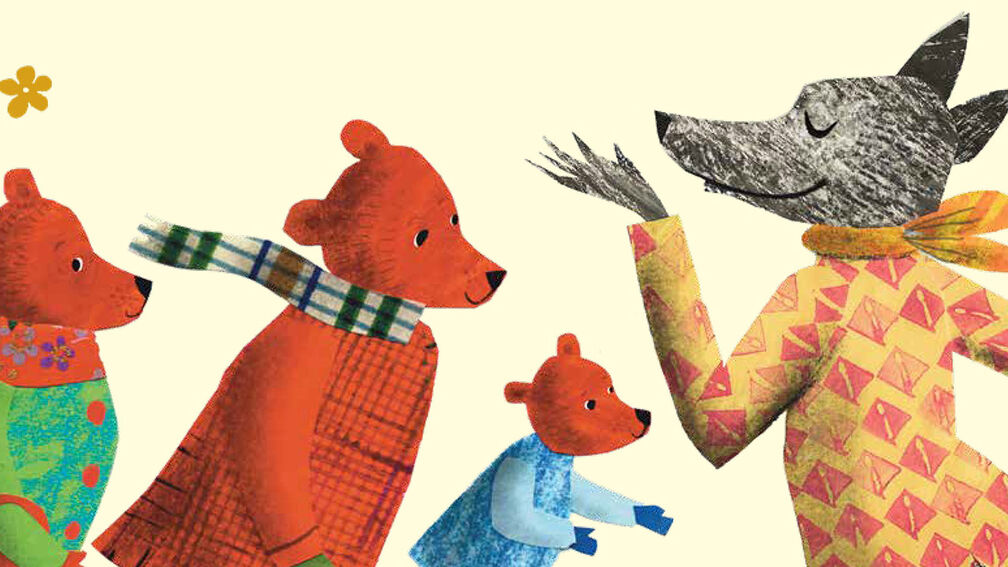
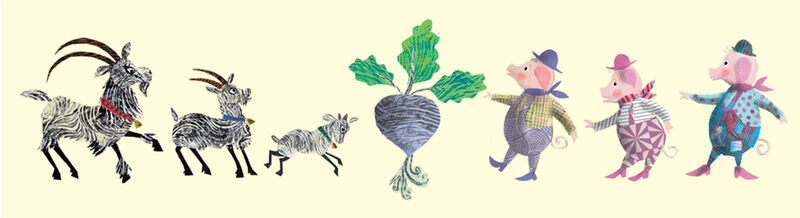
This has been a joyful book to work on, and the illustrations, hand-made with textured and painterly collaged images, have kept me happy company for many months. Imagining wily wolves and kindly bears, naughty girls and gingerbread men, sly foxes and slimy trolls, has been a challenge for my trusty needlework scissors (they are perfect for cutting papers for collage), but I got there in the end.
Now, it’s time for a new generation of children to dare to go deep into the woods, and fall in love with these stories.
My Book of Classic Nursery Tales by James Mayhew is out now.