Author Ella McLeod explains how subverted traditional fairy tales engage readers.
Ella McLeod
Every little girl wants to be a princess, right? Or that, at least, is what I was told when I was growing up. But times have changed and our collective consciousness around the messaging within fairy tales, once seen as so comforting and reassuring, has moved on.
In the past, fairy tales sold readers of all ages a dream of wealth and glamour – but now, we have questions. Do we really want to tell our daughters that the path to empowerment lies in the kiss of a man… while they’re unconscious, no less?
Fairy tales are aspirational, but what is it that they encourage young readers – and viewers, because we can’t talk about fairy tales without talking about Disney’s omnipresence in this space – to aspire to?
The Little Mermaid is willing to sacrifice her voice for her prince. Rapunzel – with her flowing golden hair, a distinctly European feature – is liberated by her proximity to whiteness. Sleeping Beauty needs saving from a powerful woman by a strange man on horseback…
I think we, now more than ever, want to interrogate what it means to associate certain ideas – like monarchy, with its history of imperialism and bigotry – with happily ever afters. I think we want to ask questions about beauty standards and narrow romantic ideas that reinforce patriarchy and heteronormativity.
I think we no longer take things for granted – this is a beautiful thing, in my opinion. It encourages us, as readers, to challenge expectations! To be daring and experimental – to dream big!
Caution vs curiosity
Of course, I still love fairy tales, they still make me feel warm and mushy inside. I love the romance of princess stories, the magic of witches and wicked queens, the quirky cast of characters – fairies and giants and talking bears, oh my!
But I am a modern writer for modern readers and so it is essential that I think about how I can use these fun, familiar elements in a way that appeals to today’s booklovers, who are forward thinking and enjoy something a bit cheeky and subversive.
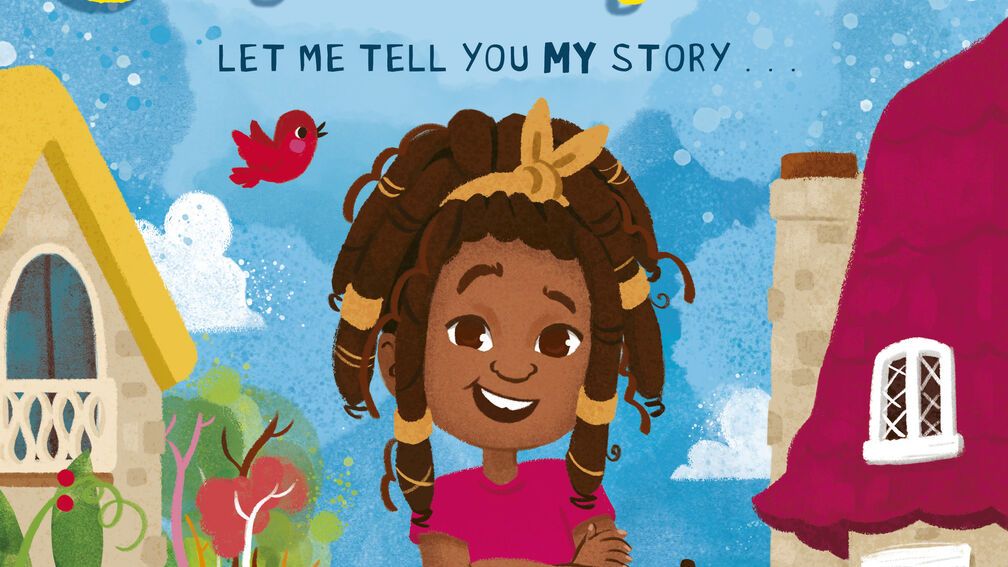
That’s what Goldilocs was for me. The original story – the one with the little golden-haired girl who finds a house in the forest and trespasses, eating the owner’s food and breaking their things before being eventually frightened away by the bears – was always presented to me as a cautionary tale. A reminder to respect other people’s boundaries and property. It’s a fair point – if someone entered my home, ate my breakfast, broke my favourite chair and slept in my bed, I’d be fuming too.
But there’s something else there, isn’t there? Most of the versions of the story I read or had read to me ended with something like “and Goldilocks never went into the forest again”. Some even saw her being eaten by the bears… which I suppose is fair enough. They didn’t get their porridge, after all.
As I’ve grown up and revisited this strange story, I couldn’t help but detect an underlying warning against curiosity. Little girls should stay out of the forest, they shouldn’t try new things. While, undoubtedly, those new things shouldn’t be stolen goods, I kept returning to that final thought – that Goldilocks never went into the forest again.
The power of retellings
Readers love fairy tale retellings because they offer an opportunity to poke and prod at ideas that have been presented as normative.
Girls are told to mind their manners and stay out of the forest – but what if we armed them with the tools to take down the wolf and befriend the bears? What if it’s the princess that slays the dragon or, better yet, rides off on the dragon into the sunset, soaring over the slow-poke prince on his horse?
What if the wicked witch isn’t wicked but simply misunderstood (shout out to Elphaba)? What if it’s the prince that needs saving, allowing little boys to take comfort in the knowledge that they don’t always have to be the ones doing the saving – that someone might be on hand to save them.
And this is the fun of this space! Fairy tales are imperfect and therefore ripe for adaptation and rewriting. They were, in their infancy, when we return to the first ones published – the Grimm brothers and Charles Perrault and Hans Christian Andersen – morality tales.
Stories to teach young people about the world. I don’t think their purpose has changed but it is right that their messaging has.
Fairy tales enable us to shed light on our ever-shifting social mores, teaching our youngsters that growth can happen when they’re curious and willing to challenge expectations.
For my part, I certainly didn’t set out to write a story about breaking and entering – instead, I wanted to explore curiosity and creativity, to have a look at what it means to try and try again, to experiment and play and ultimately find something that’s just right.
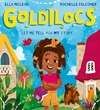
Goldilocs rewrites her story. She’s not a porridge-stealer or a chair-breaker! This twist on a classic fairy tale uses bouncing rhymes and a fresh perspective to create a truly engaging picture book.
We all know children love fairy tales, however there’s only so many times you can read the same tale (hopefully). Here’s a list of some of our favourite twisted fairy tales – fun and anarchic new takes on traditional stories.
Enjoy some of our favourite fairytales for 9–12 year olds. These fantastic books range from classic to contemporary, chapter books to graphic novels and stretch across the globe.
Enjoy some of our favourite retellings of classic fairytales for 5–8 year olds. These clever and often humorous books will engage children with their witty takes on old tales.
Enjoy some of our favourite fairytales for teenagers. These fantastic books range from classic to contemporary, grand opuses to graphic novels and stretch across the globe.