Author Catherine Barr argues that real-life nature stories can be as exciting as fiction.
Catherine Barr
I overheard, ‘I just can’t believe it’s real!’ exclaimed by a child after an assembly I gave recently, telling the rewilding stories of wolves in Yellowstone Park. Sharing real-life nature stories of nature that are as exciting, fascinating and joyful as fictional stories is my mission as a children’s non-fiction author. In my experience of visiting hundreds of primary schools across the UK, non-fiction authors turn out to be surprisingly rare visitors.
Unlike fiction told by many wonderful authors, I don’t dress up and I’m not funny. Teachers and children are unsure what to expect. Yet the stories I am able to share, inspired by researching my books – in collaboration with conservationists, subject experts and scientists around the world – do captivate attention and ignite a tidal wave of questions. That’s simply because children are naturally curious and love animals and the outdoors.
Apart from the obvious joys of a good true story (and there so many of those), bringing alive children’s senses through stories of the natural world is a winning way to engage their attention. A mix of videos, photographs, recorded conversations with scientists and adventurous field experiences bring non-fiction books to life in the classroom.
From discovering that tiger wee smells like popcorn (smell it with a blindfold), hearing the howl of a wolf (listen and guess), getting up close with a peacock tarantula (close-up photographs from London Zoo), to watching a sea turtle lay her eggs (videos from the field), the stories and environmental issues behind the books unfold with all the senses. The challenge and, more importantly, the opportunity is to bring the non-fiction alive with adventure, exploration, wonder and of course, curiosity and a thirst for more.
To many children in the UK, nature means their city garden or local park. Tigers, elephants and, luckily, tarantulas are distant and exotic wildlife far from home. This can put nature at a distance, seemingly unlinked to children’s daily lives.
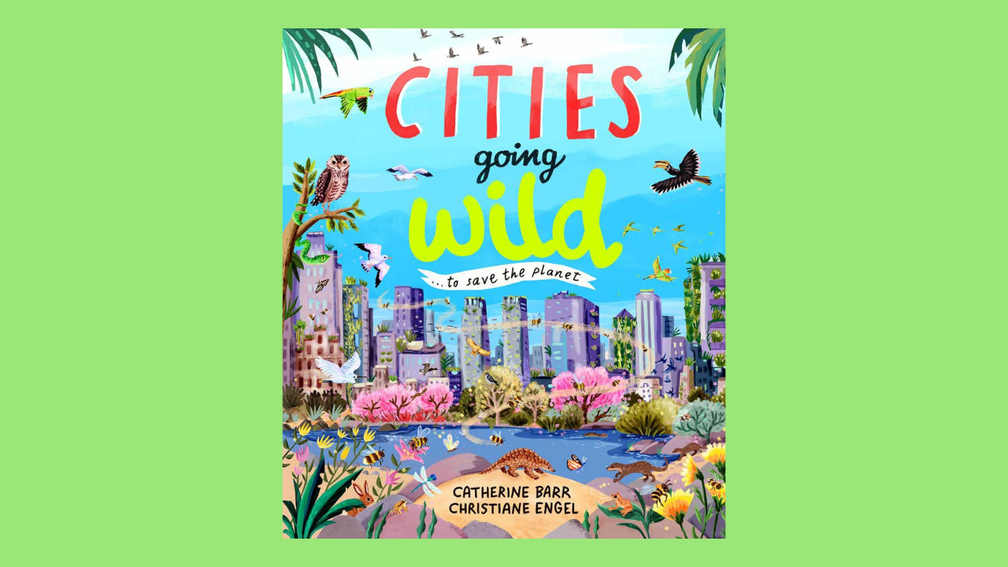
The planetary big picture is that by 2050 most of us will live in cities. The survival of all of us will therefore ultimately depend on the story of nature in the urban jungle. My book Cities going Wild, illustrated by Christiane Engel, takes children on a journey around the world where cities are bringing nature back, for the benefit of people and wildlife.
Children will discover the true stories of spongy cities, pollinator pathways, bird-friendly buildings, living seawalls in coastal cities and guerrilla gardening. With ideas for turning their own city spaces green, however small, this book encourages them to look up, listen and look down with fresh eyes to spot nature in their town or city.
Cities going Wild celebrates the joy of everyday nature from noticing wild flowers sprouting from bus stop roofs to noticing birds in city skies, cycling along tree-lined paths to eating vegetables from community gardens, spotting orchards along canals and even trees thriving on top of high-rise office blocks.
Children love stories, but connecting children to nature ultimately involves being outside. Reading about nature in classrooms and at home, watching amazing nature videos and films and exploring the senses will inspire children to look at the world differently. The challenge is to make that link and connect far-off wildlife stories to children’s own experiences in their local, often urban world. Once ignited, their imaginations will do the rest.
by Catherine Barr, illustrated by Christiane Engel
2026 7 to 11 years
Around the world
Non-fiction
Discover the world’s greenest cities in this inspiring non-fiction book, which is stunningly illustrated.
BookTrust and the University of Exeter collaborate together on the RENEW project. RENEW is a five-year partnership programme focused on biodiversity renewal, with a primary objective of encouraging biodiversity renewal by influencing the next generation of thinkers through books and stories.
We asked Professor John Wedgewood Clarke from the University of Exeter to read Catherine’s book:
“International in scope, yet teaming with local detail, Cities going Wild… to save the planet offers younger readers a hopeful vision of nature thriving alongside us in cities. Sumptuous illustrations and great examples of urban nature development work make it a crucial and urgent book to get in the hands of the next generation of nature lovers who need to know we can all make a home for nature on our doorstep, wherever we may live. Catherine Barr’s book shows and shares what researchers and scientists on the RENEW programme at University of Exeter are working together: how to renew nature through recognising the importance of including and mobilising people to enable the changes we need to see.”
Professor John Wedgwood Clarke, RENEW, University of Exeter.