Author Adiba Jaigirdar values stories that ask readers to develop their critical thinking skills.
Image: Avani Dwivedi
Adiba Jaigirdar
When I was younger, I used to think about journalism as the reporting of the truth. Journalists were the people who would fight tooth and nail to ensure that hidden or buried stories would be highlighted. They were the people who wrote hard-hitting truths about difficult situations, digging deep to find out difficult truths.
But in recent times, my perception of journalists has been forced to change due to the media landscape drastically changing. With the rise of online spaces, traditional news has had to shift and evolve. News media has been forced to appease national and international governments, and consider corporate buyouts and mergers, simply to stay afloat. This has only led to more bias in journalism and less nuance.
With the rise of new types of media, young people are also likely to seek out non-traditional mediums to look for their news. If it’s not social media, then it may be podcasts, or YouTube videos, or even influencers. Instead of dismissing the rise in these non-traditional news outlets, however, it’s important to try and understand their role in our society.
With traditional media buckling to the pressure of outside sources, non-traditional media may have the opportunity to tell news that is more independent, less censored, and more accurate. It also allows journalism to be more innovative and connect to people in new ways. This is not to say that there is not opportunity for misinformation or inaccuracies, but it’s important to realise that the risk of this exists in all media, making everyone vulnerable to falling for misinformation, or “fake news”.
What’s important is not that we police non-traditional media, but that we recognise the need for critical thinking and critical reading.
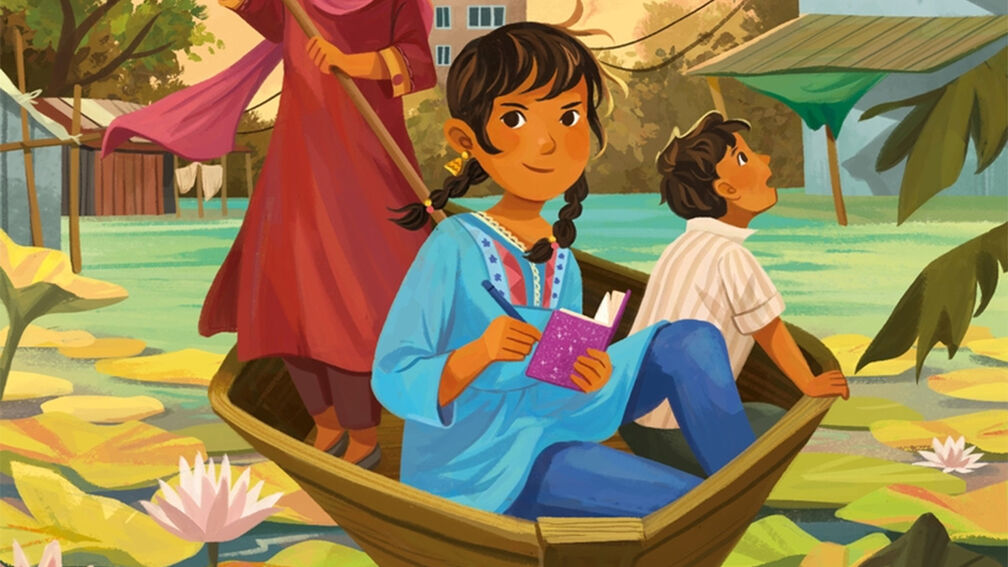
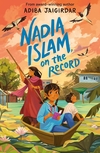
My book, Nadia Islam, On the Record, follows a young girl named Nadia who has always dreamed of becoming a journalist, following in the footsteps of her journalist aunt who is her role model. Nadia sees journalism in the same way as her aunt, a freelance journalist who is interested in telling the stories of those marginalised in society. An opportunity to tell the stories that others may not be interested in.
During the course of the novel, Nadia has to learn a lot about journalism that she hadn’t previously thought about. One of the first challenges Nadia faces in the novel is when upon arriving in Bangladesh, she learns that her journalist aunt is there to write a story about the climate crisis in Bangladesh, something that Nadia was completely unaware of, despite just having done a school project about climate change. Nadia quickly learns that there’s often a lot more to the story than someone may have access to, and it’s the responsibility of journalists to dig deep.
Nadia understands journalism as having a chance to have her say, but it’s not until she starts to see that there are stories that she has not heard, which are maybe not even valued by the world around her, that she starts to understand the real reason why journalism is important. It’s important to tell these valuable stories, to inform people about what is going on in our world, especially where it concerns marginalised people in vulnerable positions.
For me, this is ultimately the power of journalism and our current world, and it should be the standards that we ask our youth to hold themselves to, as well.
I think it is more and more important for us to encourage young people to not take everything at face value, to ask questions about what they’re reading or watching, and do their own thinking.
Given the changing landscape, it’s important for us to adapt and encourage the youth to seek out both traditional and non-traditional media, and find ways to connect with the news at their own pace, in their own way.
My hope is that books like mine, which engage with journalism and the news, and ask them to think for themselves and question the world around them, will help them do just that.
When Nadia visits Bangladesh for Ramadan, she joins her journalist aunt to write up a story on the environmental crisis in the area while exploring her own faith and connecting with her heritage.
It is vital that children learn to spot fake news and false information – and schools will soon be teaching classes on this. This selection of titles includes practical non-fiction books and also fiction that takes a broader view of ‘fake news’, in the sense of gossip and lies.
The following titles introduce important themes around climate change and make the subject accessible for children of all ages. Featuring a mix of fiction and non-fiction, they include books which explain contemporary scientific knowledge as well as stories which convey messages of hope and community to inspire the next generation of environmental allies.