Author-illustrator Bruce Ingman argues that pictures in books help children in many different ways.
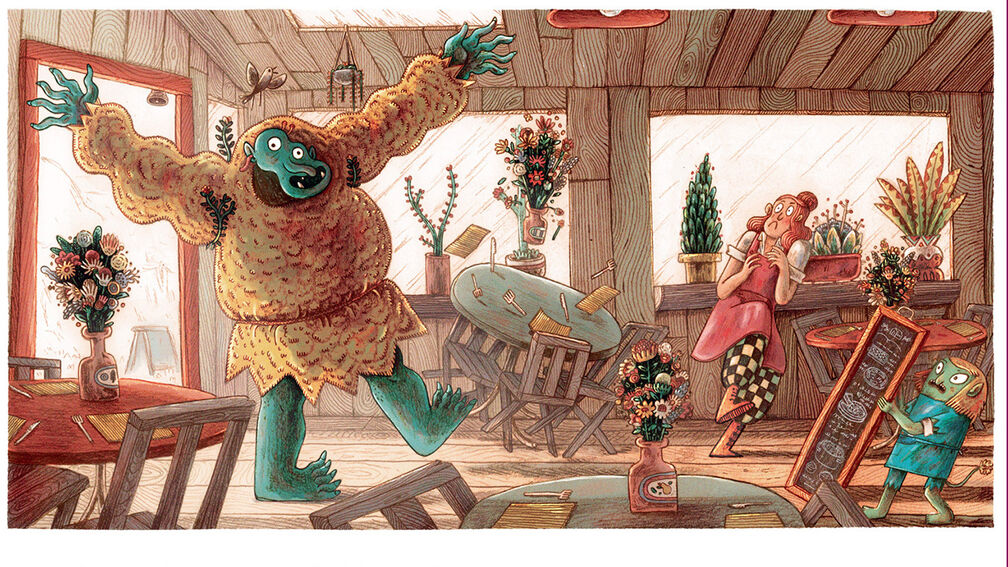
An illustration from The Cafe at the Edge of the Woods. Image: Mikey Please
Bruce Ingman is Head of the MA Children’s Literature: Children’s Book Illustration course at Goldsmiths, University of London. He was a judge on the 2025 Klaus Flugge Prize.
As a picture book illustrator, writer on illustration, and teacher of illustration, there’s one thing I’m sure of: children’s picture books need a broad range of illustrators’ work to help convey and emphasise all the various individual voices and viewpoints in the world.
When an illustrator makes pictures to draw the child’s attention to certain worlds, it tells the child that somebody takes something seriously, perhaps finds it beautiful, funny, or threatening, and invites the child to think about how they feel about it.
At that, children begin to understand the world is not homogeneous; that it’s OK to think and feel differently. It’s also vital to understand that there is someone who feels the same way as you, and picture books can provide that too.
Picture books as a guiding star
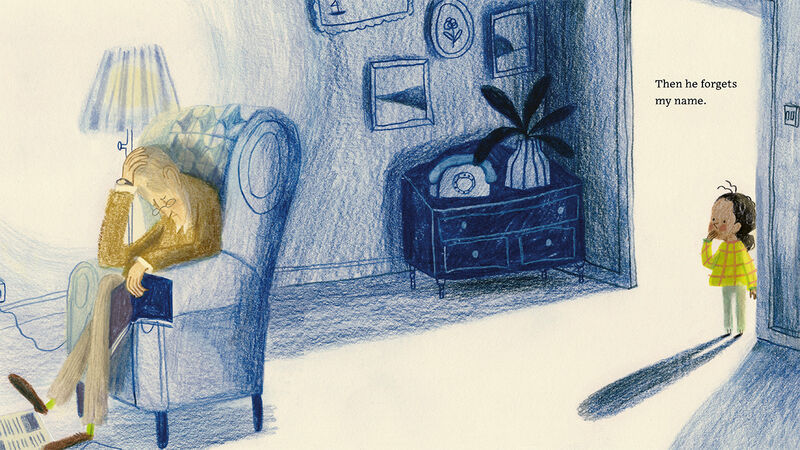
An illustration from Grandad’s Star. Image: Rhian Stone
Children need a guiding star to help them navigate their way through the plethora of emotions they will be experiencing, and which will then help them feel their way forward into their future.
Children can read a picture book and experience such traumas as the death of a pet or getting lost, but they don’t have to endure the real world consequences. They can shut the book and return to their own world. But they can take the memory of the feelings they had and that can help change or comfort them.
Children’s books can alert children to a range of feelings they are capable of having. They enrich their emotional skills. They tell them about other possible worlds, those they might want to be in and those they want to avoid.
As fellow illustrator Kate Winter says,
As writers and illustrators, we have the immense privilege of being able to connect with children not only through words and descriptions, but also through the universal language of images. An image can tell a thousand words, and one child might notice or interpret something in a totally different way to another, based on their life experience or connection to the themes in the story. Even without text, images alone can take the reader on a journey.
Kate Winter
The skills picture book illustrators need
The best illustrators realise that what they need to illustrate these picture books is already inside them. They are able to unlock that inner child and access those feelings they had as a child.
Not all illustrators can do this. And it’s not something that can be taught; Maurice Sendak explains this perfectly.
I’ve seen so many gifted people who were natural illustrators who didn’t have the technical facility, but to me they had a great treasure. They had what you can’t learn. That other intuitive quality.
Maurice Sendak
There are other skillsets that an illustrator requires when creating books that will speak directly to children; crucial among them is a sensibility in selecting the appropriate colour palette and technique in which to interpret the emotional landscape of the picture book story.
Favourite picture illustrators exhibit this ability but I’m taking as examples three illustrators who are just starting out on their picture book careers. Each of them in their debut book has chosen palettes which perfectly complement the particular emotion of their story.
Three illustrators to watch
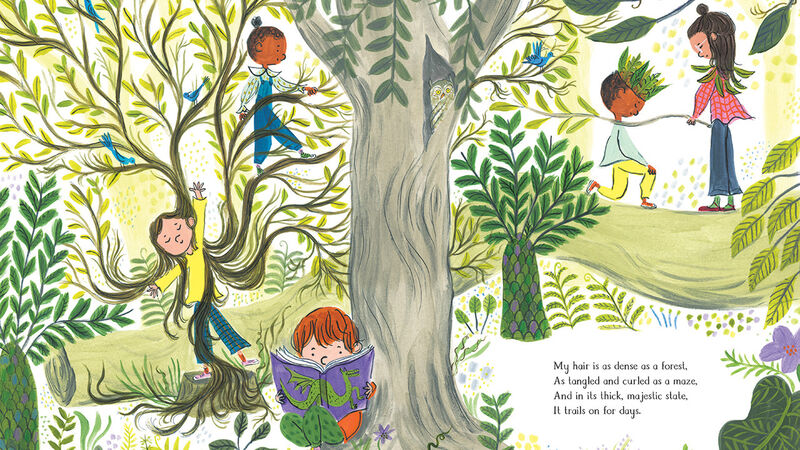
An illustration from My Hair Is As Long As A River. Image: Emma Farrarons
Grandad’s Star, written by Frances Tosdevin and illustrated by Rhian Stone, is the tender story of a little girl whose grandfather is developing dementia.
Stone has chosen to use a delicately nuanced soft focus coloured palette with coloured pencil, pastel, and gouache paint and it works to convey a beautiful sense of empathy between the two main characters. This empathy then extends out to the reader.
The Café at the Edge of the Woods is a very different story. Written and illustrated by Mikey Please, it’s a comic adventure in which resourceful waiter Glumfoot comes to the help of chef Rene to attract an admittedly unusual clientele to her new café.
Please uses exquisitely detailed pencil line artwork, digitally coloured with a sepia and pale green palette, to create the feel of a timeless traditional gothic folk tale.
The boy who stars in and narrates My Hair is as Long as a River, written by Charlie Castle and illustrated by Emma Farrarons, explains through a series of metaphors why this is so important to him.
Emma Farrarons’ painterly, exuberantly colourful artwork is a perfect match for the emotional journey on which the characters embark and the reader accompanies them on this journey as they turn the pages and explore the dynamic double page layouts.
The magic of illustration
How does a new illustrator develop an individual style?
I don’t think a style of work is something you can generate. You evolve your style over a period of time. As an illustrator, you need to do what nobody else can do except you. You have to find what you can do better than anybody else. The work has to be passionate and idiosyncratic.
It may seem obvious, but it has to come from the heart, not the eye.
An illustrator should also trust themselves, not try to emulate something that isn’t true to them.
The best illustrators leave emotional and imaginative space in their work for the reader to enter.