As BookTrust’s Writer in Residence, it is lovely to be able to shine a light on why reading together and talking together go hand in hand right from the very start.
Moments that really matter: The benefits of reading with babies
Our Writer in Residence Lucy Rowland, a children’s author and speech and language therapist, shares why sharing stories from the earliest moments can make a big difference to children.
We know there is no such thing as too early when it comes to sharing books. From bump to beyond, there are so many benefits to those small shared moments talking and reading to your baby.
These daily opportunities support early brain development, attention and listening skills, and language acquisition, as well as encouraging early bonding between parents and their babies.
Some parents understandably find it tricky to know what to say to a bump or a very new baby. And this is where singing nursery rhymes or sharing a short book can really help.
Babies might not understand what you’re saying or recognise the words yet, but they will enjoy listening to their parents’ voices, looking at the pictures, and having that close, shared moment together. In Lewisham, where I work, these moments are called Moments That Matter.
Finding ways to fit reading into daily routines
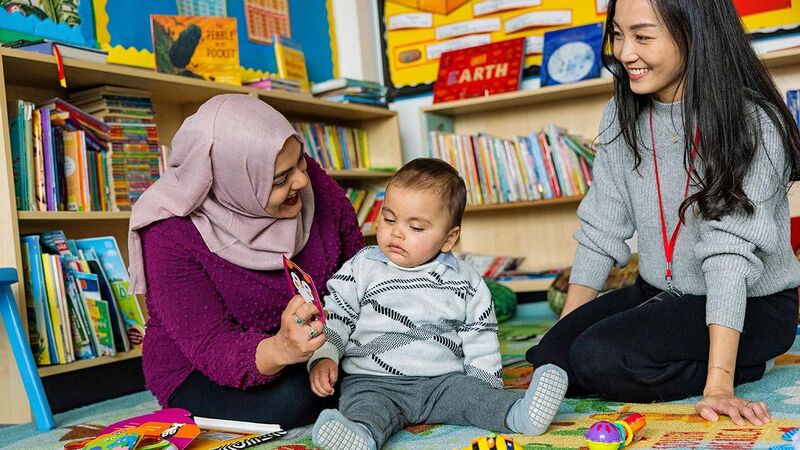
These moments don’t just happen at bedtime. Of course, books are brilliant as part of a bedtime routine, but you can also read them while waiting at the bus stop, in the queue at the supermarket, or if you’ve got one of those buggy books hanging on to your buggy, out and about for a walk.
As a therapist, I often tried to reassure parents that they didn’t have to read every word or even every page. They could just talk about the illustrations or name the pictures that their baby was looking at.
The power of rhyme and rhythm
In my books, I write pretty much exclusively in rhyme, and we know that rhyme and rhythm support children’s focus, memory and language development, and they support phonological awareness skills by helping children to tune in to the sounds of language.
But in the younger books I write, I try to lean into this even more and include shorter phrases, more repeated refrains, and just more repetition in general.
Making reading interactive
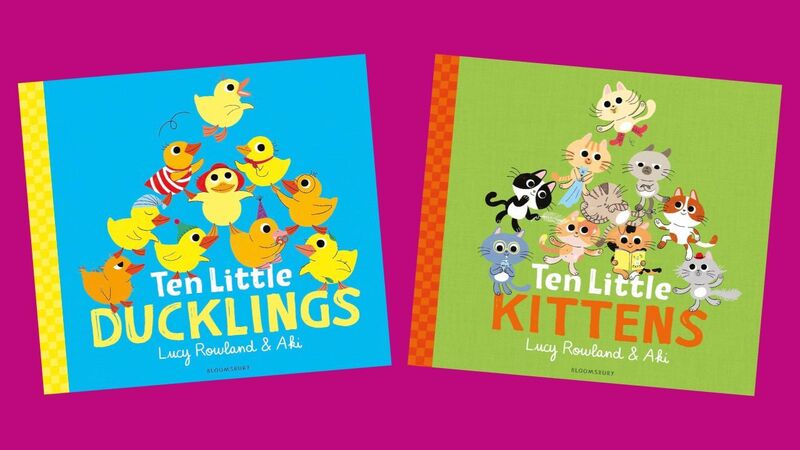
Ten Little Ducklings, which won the BookTrust Storytime Prize last year, and Ten Little Kittens have fantastic, bright, bold characters created by the illustrator Aki.
With books for babies and younger children, I always feel like interactivity is quite key, and we find lots of flaps and mirrors and touchy feely textures. These are all fun extras in baby books that also support their learning engagement.
And in these two books, this interactivity comes in the form of a question and something that the child has to spot. Or, for younger babies, something their parents can point out to them.
“Ten little ducklings keeping cool,
Splishing, splashing in the pool.
Watch them dive and float and swim.
Which one’s on a rubber ring?
I see you, Duckling!”
For the US version of this book, it is printed as a board book and these are a little bit tougher and more durable for little hands. So we see this format used a lot for baby books.
Having fun with repetition
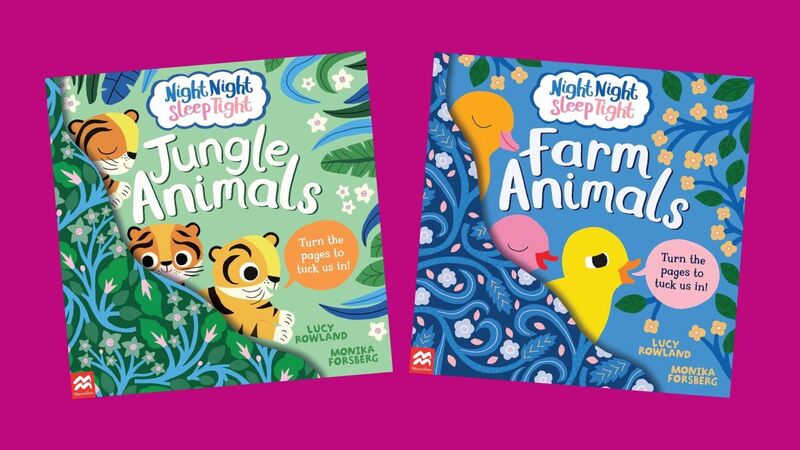
In Night Night, Sleep Tight: Jungle Animals and Night Night, Sleep Tight: Farm Animals – these are both beautiful books illustrated by Monika Forsberg – children are encouraged to turn the pages and tuck the animals into bed with a blanket and say, “Night, night” every time. So it’s got lots of repetition again.
“Tiger cubs are curled up tight.
Time for them to say goodnight.“
Let’s tuck them in with their blanket.
“Night night, tigers.
No more roaring.
Settle down, you will soon be snoring.”
And at the back of these there are some lovely pages that include tips for parents and carers, with how to read with their babies and also, a bit about why books are so important for a good bedtime routine.
Celebrating parents and carers’ native languages
If you’re lucky enough to speak more than one language at home, try using your home language to read with your baby.
This will support their language development and also create that wonderful connection to their family, culture and community.
Making reading work for parents and carers
So I suppose my overall message is that there’s no such thing as a right language, a right book, or a right time to share a book with a baby.
Little and often, talking, reading and singing with baby is a great place to start and these small moments all add up and really do make a huge difference.
They build strong foundations for communication development and for a lifetime enjoyment of books. These moments really do matter.
Writer in Residence
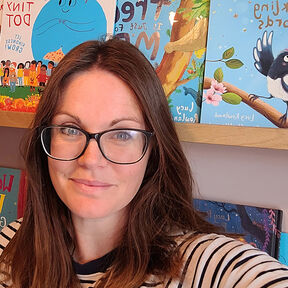
Find out more about our Writer in Residence Lucy Rowland and stay up to date with everything she’s getting up to during her time in the role.
Take a look