Author Steve Blackman shares how stories about tech can engage readers – especially when the tech goes wrong.
Image: Jeff Nentrup
Steve Blackman
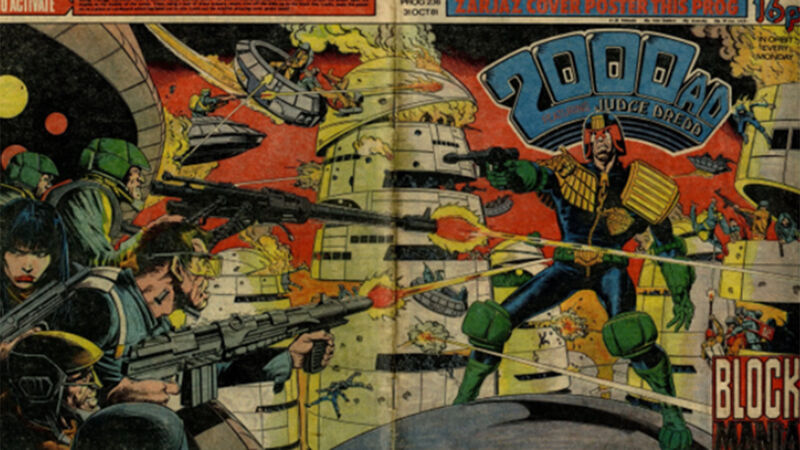
There’s a box my wife wants me to send to recycling. It’s never going to happen. That box has been with us through house moves and renovations. It’s been with me since I was 14. It’s full of comics: 2000AD to be specific.
A new issue arrived every Saturday morning and I’d savour it until the next one came. My dad didn’t understand. He knew why I loved books and films because he loved those things too. But comics, D&D and Choose Your OwnAdventure books? He thought they were frivolous.
What my dad couldn’t see was that I mined all of those mediums for storytelling. That was the connective tissue between them all.
It still is for many young people, but with one crucial difference: while manga, gaming, YouTube and graphic novels remain central to their entertainment, books have somehow become less connected – especially for boys.
One of Steve Blackman’s 2000 AD comics
We know the statistics about the literacy crisis, and authors, illustrators, publishers, librarians – the whole children’s books community – are doing everything we can to get children reading. My key contribution to that effort is to write books that speak to boys (and girls), that meet them where they are. That is where I feel we can best turn the dial – often through gaming and tech.
There are rules, of course. When aren’t there? You might think telling a 13-year-old boy that a story has STEM themes would be a selling point. Science! Technology!
But I’ve seen the opposite happen and, instead of promising excitement, STEM can trigger thoughts of curriculum – a double lesson after lunch on a Tuesday.
These potential readers want cool tech, not school tech. They want dangerous tech, wielded by subversive characters.
Above all, they want to see tech go wrong – entities going rogue, like they can in Fortnite, Minecraft, Roblox and even FIFA career mode.
Think about Jurassic Park, iRobot, 2001: A Space Odyssey, The Terminator, M3GAN and Smart House. Think about stories built around virus outbreaks (The Last of Us) and failed experiments (Stranger Things).
We can’t get enough of them because there’s an irresistible attraction to controlled chaos. In entertainment, malfunction is way more exciting than perfection.
Levelling up to help children discover a love of books
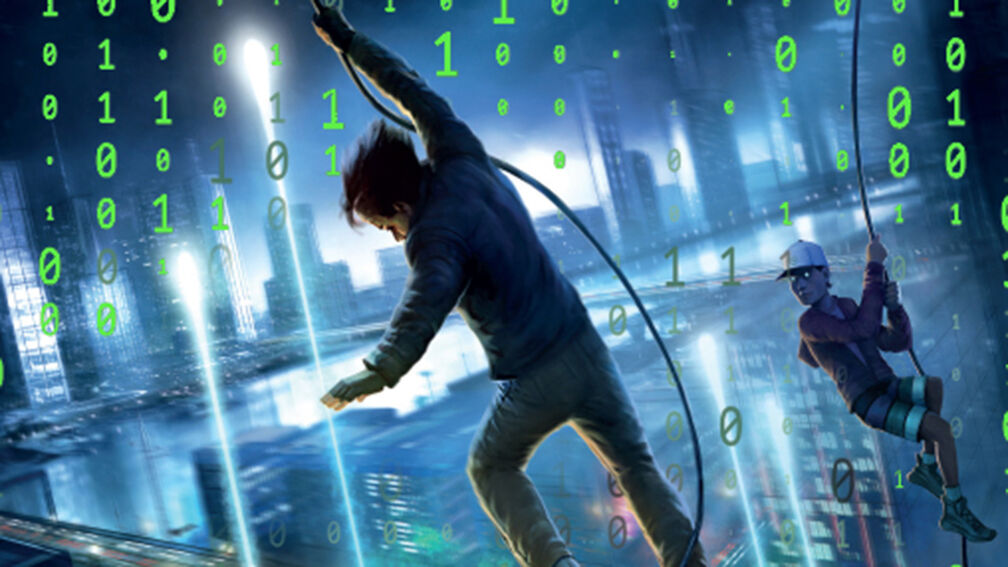
When I wrote my debut novel, Zero Override, my main goal was to tell a story that attracts reluctant readers – especially boys – with those same hooks: a world filled with exciting tech, young people using tech against the systems controlling it, and a national emergency when that tech goes wrong. It was also important to show that technology itself – especially AI – is not inherently bad or good. It depends how we use it.
The structure of Zero Override is heavily informed by the language and structure of gaming too. I wanted reading it to feel like playing a survival game: propulsion, evasion, outsmarting, surviving challenges and levelling up. There’s constant movement and peril; NPCs and systems behaving unpredictably; twists and surprises; a big boss to overcome; and the countdown pressure of disaster.
When I started writing the book, I pinned a sheet above my desk – a promise to myself about what the story was going to achieve. Through every draft, I tweaked and refined that promise. It still hangs there now as a reminder of how stories to help readers LEVEL UP their love of books.
L: Laughs. Funny moments, shocks, and did-that-just-happen?! surprises
E: Energy. Pace, propulsion and cliffhangers
V: Voice. Believable characters who joke, panic and mess up like the rest of us
E: Escapism. Thrills, adventures and a break from real life – while still connecting to things readers care about
L: Life stuff. Friendships, belonging and challenges that matter
U: Us on the page. Readers see themselves – and people unlike themselves – on the page
P: Pressure. Young characters making difficult choices when things are tough
Taut, adrenalin-fuelled escapades make this nail-biting, sci-fi thriller a genuine page-turner which poses a question about what it means to be human in a world of intelligent machines. A thought-provoking and fascinating read perfect for gamers, that will spark conversations about AI and how we want it to be used.