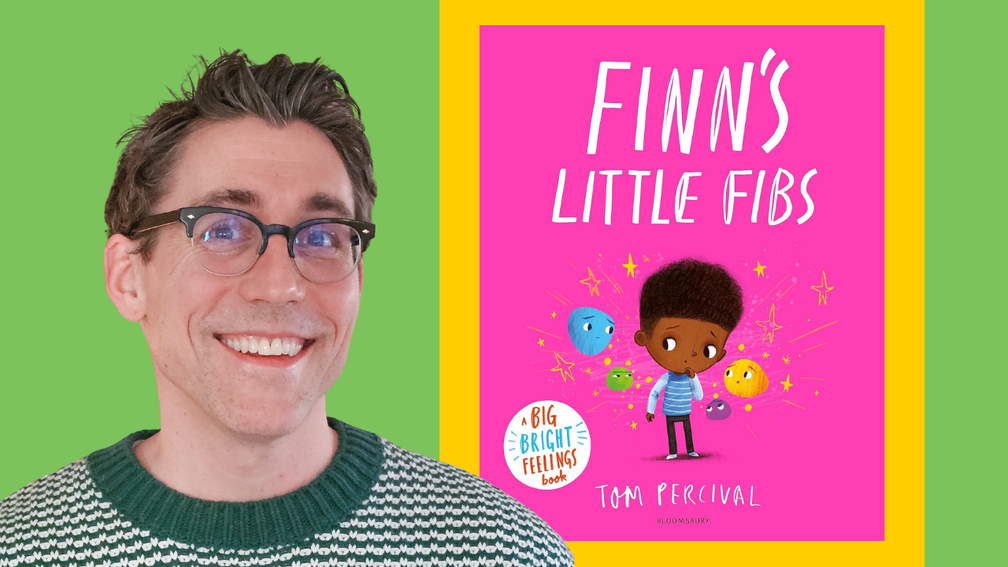
Our Writer in Residence, Tom Percival, argues that stories are safe spaces to explore decision-making.
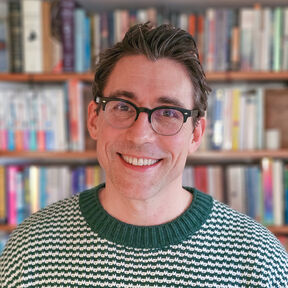
Tom Percival is an author, illustrator, and BookTrust’s current Writer in Residence
Let’s start with a fun fact: children don’t always do what they’re told. But I would imagine that if you’ve ever met a child, or been one yourself, you’ll already know this.
That’s because, advice only becomes relevant once it feels real. Just being told something rarely sinks in – you need to feel it.
As a child, I once grasped a freezing metal pole with wet hands purely because I’d been told not to do it, which suggests I was a naturally curious, wilful, or foolish child – possibly all three.
In that instance, the problem was relatively short-lived (although time passes slowly when you’re screaming, ‘HELP!’ with your hands frozen onto an iron post). Luckily, my mum poured warm water over my hands and I was freed, with no long-term repercussions. But there are many scenarios where a curious/wilful/foolish child could make some very bad decisions that would have much longer-lasting effects.
If only you could learn such lessons for yourself, safely, and without having to live through any annoying real-world consequences. But wait… That’s one of the excellent benefits of reading!
When we read books, we get to vicariously experience all the character’s actions. We get to explore the sensation of making any number of thoughtless/aggressive/reckless/dangerous/upsetting decisions without having to deal with ANY of the inevitable fallout – the characters get to do all of that and we get to see and feel how that affects them – so it all starts to feel real to us without having to mess up our OWN lives! Perfect!
In my book, Finn’s Little Fibs, the reader gets to see what happens to a young boy when he tells a small lie to get out of trouble and then has to tell progressively bigger lies to maintain his initial small lie. The reader immediately understands how draining and upsetting that becomes for him.
We get to see how a wedge is slowly driven between Finn, his grandmother and his sister as a result of these fibs, and most importantly, we get to see how miserable it makes Finn feel. Books generate empathy, and so the child reading this book feels Finn’s weight, and his sadness, and as a result it feels much more real to them than a lecture on ‘telling the truth’.
Of course, this works in a more positive, proactive sense too because books are great at modelling positive behavioural traits such as self-love, kindness, generosity, patience or determination.
By having aspirational, appealing, representative characters demonstrating desired traits and then moving smoothly through the world as a result, young readers will make those connections and draw parallels to their own situations – hopefully choosing to mirror those decisions in their own lives.
One piece of writing advice which gets drilled into authors every step of the way is to ‘Show Not Tell’ which I now realise (perhaps a bit too late now that my own children are fifteen and seventeen) is exactly the same with offering advice to children.
Not that I’m saying we should advise children to undertake dangerous, risky behaviour so that they can learn the relevant lessons, just that we need to understand that children are naturally curious (and to a degree wilful!) so simply saying, “Don’t do the bad thing!” isn’t really going to cut it.
Advice needs to be something that a child comes to their own conclusion about. That’s the reason why I try to never use a tone of judgement in my stories.
I won’t state that lying is wrong, or that losing your temper is bad, or that a child is foolish for grabbing a freezing pole with wet hands. I just try to demonstrate what can happen as a result and let the reader come to their own conclusions free of any moral judgement. That way it actually means something, it’s a decision that the child has come to for themselves, which will have a much more profound impact than any lecture.
So alongside being entertaining, and bringing about a greater sense of personal happiness and contentment, reading books can also help you learn to make better decisions in your own life – you can quite literally learn from someone else’s mistakes.
When Finn tells a fib about breaking Grandma’s clock, it leads to more and more fibs. How can he tell the truth? Reassuring, kind and sensitive, this is a lovely book, beautifully illustrated.
Writer in Residence
Find out more about our Writer in Residence Tom Percival and stay up to date with everything he’s getting up to during his time in the role.