Publisher Bella Pearson explains her editorial process, which often results in prize-winning books.
Bella Pearson
I’m often asked what I look for when acquiring new authors and new stories – and my answer is always, rather annoyingly, that I don’t know what I’m looking for until I find it. There’s ‘voice’ of course, which again is one of those frustratingly open terms – what even is voice? It’s not about plot, or concept, or even character.
Instead, I think of it like this: if I feel an emotional response to a story or paragraph or even a sentence, I sit up and take note. If a writer manages to create change in how I’m feeling because of something they’ve written, then bingo – I’m invested in what’s on the page. It might not ultimately be a story for me, but it is the beginning.
I used to teach with the wonderful editor and author, Beverley Birch, on a weekend course for unpublished writers, and we would talk about that unseen umbilical cord that exists between the reader and the story – a connection that sounds easy to create, but is so hard to achieve. And when there is work to do, which there always is even in the most polished novel, the editorial mission for me is to gauge the story that the author wants to tell, and to help get them to the stage that they’re conveying it in the best way possible.
The Branford Boase Award
I’m thrilled to be on the shortlist for the Branford Boase Award, one of my favourite awards. I can still remember where I was when I first read Jenny Downham’s stunning Before I Die (which won the Branford Boase Award in 2008). I was working late, deep in my basement office at David Fickling Books, and just couldn’t stop reading this submission that had just popped into my inbox – the intensity of feeling and pacing Jenny created, the almost breathless sense of being exported into another person’s emotional landscape. It was extraordinary, and incredibly powerful, and I was in tears at the end as so many other readers went on to be.
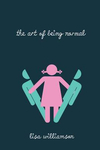
Similarly with our wonderful Guppy author, Lisa Williamson – I remember having an hour’s editorial session around twelve years ago as part of the Golden Egg Academy and making an off-the-cuff structural suggestion that I didn’t think anything would come of, and a few weeks later The Art of Being Normal, significant and timely with a mind-blowing twist, landed on my desk (shortlisted for the Branford Boase Award in 2015). These experiences of reading were visceral, and memorable. And they’re rare, which makes them even more special. (Plus, I am very picky!)
Every year at Guppy Books, we run an Open Submission Competition, which came about as a result of wanting to be open to unpublished writers but also being aware of the limitations of being a small publisher. For a week each year we welcome submissions from unpublished and unagented authors, alternating annually between young adult and middle grade. And through this, we have discovered some incredible, stellar, talented, original, and now award-winning, writers who were chosen from as many as 450 entries.
The first competition ran in 2020 during the pandemic, and I can still remember reading Nadia Mikail’s YA novel, The Cats We Meet Along the Way, sitting in the sun in my garden; this hugely original apocalyptic story made me laugh and it made me cry, and I simply couldn’t believe it had been written by a debut author. Nadia went on to win the Overall Waterstones Children’s Book Prize amongst others, the book has been translated all over the world and of course was shortlisted for the Branford Boase Award in 2023.
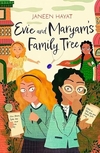
And the winner of our Guppy competition in 2023 was Janeen Hayat with her beautifully told, empathic and moving story of friendship and family history, Evie and Maryam’s Family Tree. Working with Janeen has been a dream – she’s so intuitive and expressive, and is one of those writers who could describe paint drying and you’d be gripped. Her compassionate and wise way of looking at the world shines through her writing and we all loved her very personal book about the partition of India and the complexities of early teen friendship from the moment it came in. I’m so proud of this book and we were thrilled when it won this year’s Waterstones Best Book for Younger Readers. And even more thrilled to be on this year’s shortlist of the Branford Boase Award with Janeen!
Some years ago, when I was working as a freelance editor, I was told by a publisher that I was the most hands-off editor they had ever worked with. I’m not sure it was intended as a compliment, but I took it as one. In my view, an editor is there to illuminate and support the author on their journey in creating the story they want to tell, rather than shoehorn it into another shape altogether. Perhaps it’s a bit like being a therapist: you might see a possible solution or the overall intended result pretty early on in the process, but it’s an editor’s job to help the author, often too close to their own story, see it for themselves.
When Evie and Maryam are paired up for a class project investigating family backgrounds, some strange coincidences point to a historical connection between them. Absorbing and insightful.
David Piper has always been an outsider, labelled a freak by the school bully. Only his two best friends know the real truth – David wants to be a girl.
13-year-old Gwen and her siblings move into a spooky house on a remote island. When a new childminder arrives, horrifying events unravel, and the children must face their fears to defeat her.