Author Paul Ian Cross shares why pacy chapter books are essential for engaging children with reading in the classroom, at home, and for life.
Image: Katarina Gasko
Paul Ian Cross is a scientist, former reluctant reader and author of the SuperQuesters Mission science-based adventure series
Teachers and librarians have seen it play out time and time again: one child will give up on reading a book after only a few pages, while another can’t stop.
In my own experience as a reluctant reader, the difference is rarely about reading ability. It’s often about how different children are engaged, and more importantly, how they stay engaged.
Some stories take time to build (that’s sometimes the polite way of saying they are too slow!), while others draw children in instantly. This is where adventure stories come in. Pacy. Dramatic. Exciting!
For children still developing their confidence with reading, long descriptions and slow openings make it boring and they disengage. Personally, I feel this is true for people of all ages!
So how do we increase both engagement and enjoyment? Fast-paced adventure stories may be the answer. I judge my own stories based on how I feel when I write them. If I’m bored writing it, a child will be bored reading it. It’s as simple as that!
That means that when I write, I want something to happen quickly. I introduce a problem or a mystery for my characters, the SuperQuesters, to solve. To ramp up the excitement, I also add an extra dimension to the challenge such as time pressure with consequences. This is sometimes described as ‘high stakes’ or a ‘ticking clock’. As a reader, that’s what pulls me in, so it’s how I write too.
And it doesn’t stop with the opening. I try to carry that through every chapter, building in small hooks and mini cliffhangers along the way. The aim is simple: each chapter should leave you wanting, no, needing, to turn the page.
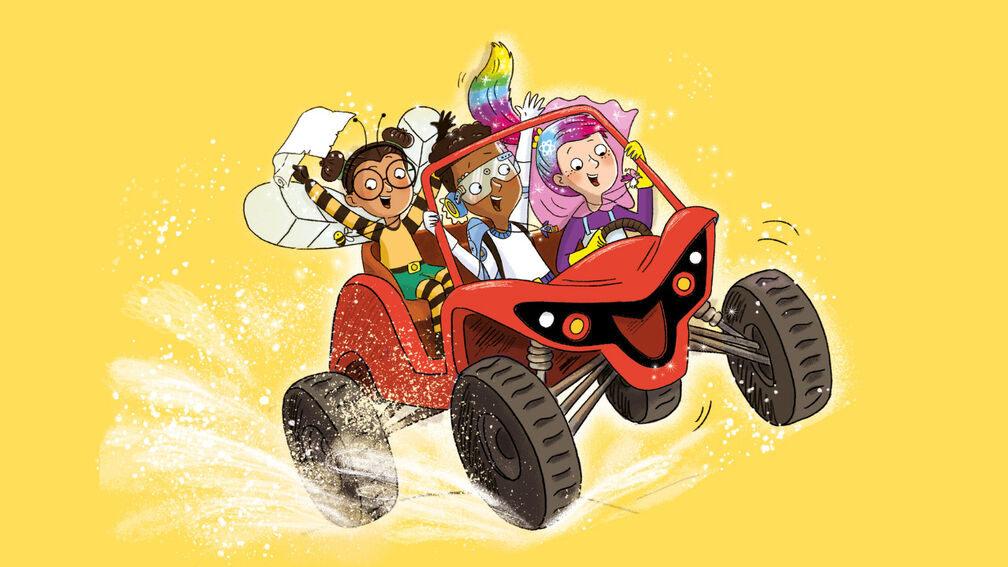
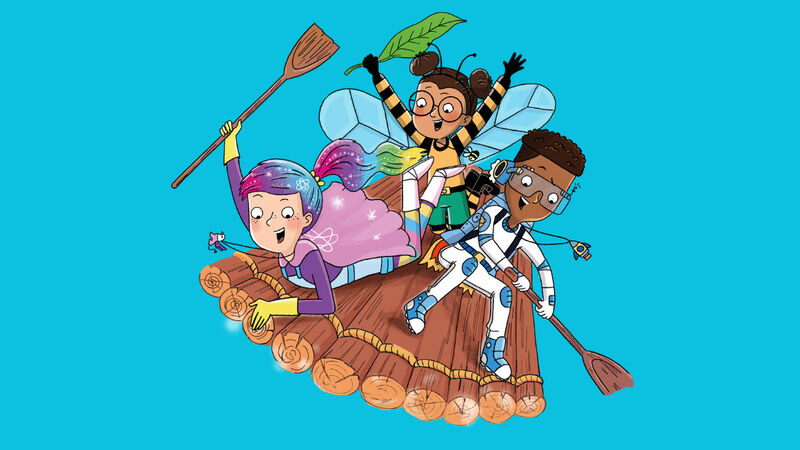
It’s not only the writing that contributes to the pace but also the images. The words and illustrations work hand-in-hand to create everything that a pacy adventure needs: action, atmosphere, and attachment.
Image: Katarina Gasko
The importance of characters
This segues nicely into the next thing you need, which is to care about the characters. The most effective adventure stories are centered around characters who feel believable – people who make mistakes, who learn and change as they go along, like real humans!
Relentless action can sometimes go too far. Readers also need time to breathe. That’s why stories need to be character-driven and have moments of humour and connection.
I try to add in emotion by using my own personal experiences in my stories: perhaps the way I felt on holiday when I saw something incredible, or a funny anecdote I might have had. The funny characters are often the ones children remember most. They’re also what makes it enjoyable to read (and to write!)
The power of format – and strong endings
How a story is delivered matters just as much as the story itself. We know from research that comics and graphic novels are powerful when it comes to learning and literacy as they boost engagement and support reading comprehension. Combining visuals with text literally makes it easier to understand.
But there are other ways too. Illustrated chapter books can be a bridge between picture books and longer books, but it’s important to keep them accessible. They still need to be short enough that they don’t feel daunting while also being paced in a way that keeps readers moving forward.
If it feels manageable and exciting, children are far more likely to stay with the story.
We also need to be considerate of how a story ends. While mini-cliffhangers work at the end of each chapter, cliffhangers at the end of a book are not so popular! It’s important to have a satisfying ending as it leaves the reader with a sense of achievement.
Improving access to books
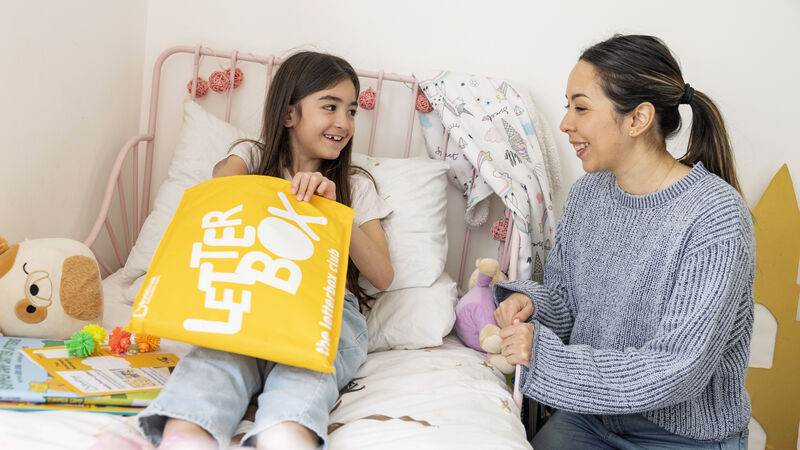
Access to engaging books is just as important as the stories themselves. Programmes such as BookTrust’s Letterbox Club can help extend reading beyond school and into the home by providing children with books they can own and revisit.
When children have the right book in their hand at the right time, the impact can be immediate and lasting. I’m overjoyed that SuperQuesters Mission: River Crest Rescue is part of Letterbox Club in 2026. I hope that children go on to enjoy more adventure books (and maybe the other two books in the SuperQuesters Mission series!)
When all of the elements I’ve outlined come together, you (hopefully) have a book that works and a very happy reader.
You have children that read for longer, who talk about their books with their friends, and who revisit their favourite stories. Children who start to read independently and confidently. In this National Year of Reading, this can only be a good thing.
When stories are clear, emotionally engaging and full of momentum, children won’t stop reading.
And once that shift happens, the impact can last far beyond a single book.