I’m going to keep this simple. Books basically ARE feelings.
They’re stuffed full of the things, and they generate them too.
Our Writer in Residence Tom Percival explores how books can help children to explore emotions, find comfort, and learn about other experiences.


Tom Percival is an author, illustrator, and BookTrust’s current Writer in Residence
I’m going to keep this simple. Books basically ARE feelings.
They’re stuffed full of the things, and they generate them too.
Now obviously, there are books like, ooh, let me think, I don’t know, Ruby’s Worry, Meesha Makes Friends, or Sammy Feels Shy, that explicitly focus on emotional health and wellbeing.
But all books generate an emotional response, even a book that might not immediately seem to be about feelings. For example, a manual on how to fix your car can bring about a positive emotional outcome.
And that’s because when a trusted adult reads anything aloud with genuine passion and interest, a child will associate that with a positive experience.
So it could be a football programme. It could be a comic, a history book, the sleeve notes on the back of a record. It could be anything.
My mum read to me loads when I was a kid. Not the Haynes manual for our Vauxhall Viva, to be fair. But books that she loved. And that is 100% what set me off on the path to becoming a fiction writer.
So nearly all books are about feelings, because nearly all books feature characters who experience a wide range of emotions, whether it’s joy, despair, love, hope, anger, jealousy, revenge…
I’m not sure if that last one’s an actual emotion. I certainly haven’t done a Big Bright Feelings book about it… yet.
But whenever we read, we’re broadening our emotional palate. We’re learning more about the world, more about each other, and more about ourselves.
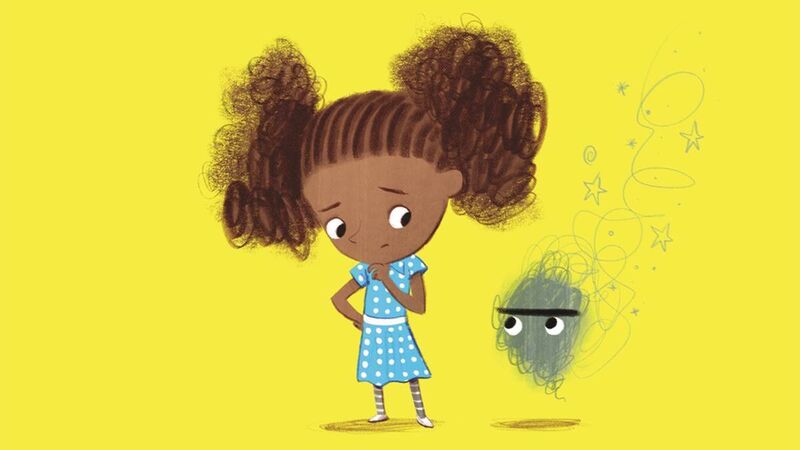
Ruby’s Worry
A key benefit of picture books specifically is that they’re a shared medium. An adult and a child reading together side by side, focusing on the same thing at the same time.
And a picture book could bond you through laughter. Maybe it helps you build connections around a theme or a topic that you both love.
They can also be the perfect way to tackle a problem; a gentle way to start a difficult conversation, or maybe a sideways step into a topic that the child might not want to discuss directly, but is happy to talk about when it’s happening to a character in a story.
Sometimes you’re reading specifically because you need help coping with particular feelings in your own life. You might watch how a character takes on a challenge, and then you can apply it to your own situation.
That’s certainly true in the Big Bright Feelings books. I put my characters into situations that I know a lot of people will struggle with, and then I model a clear way through so that the children get a fun story and a clear idea to help them start tackling their own challenges.
It’s kind of like a ‘stealth-help’ series!
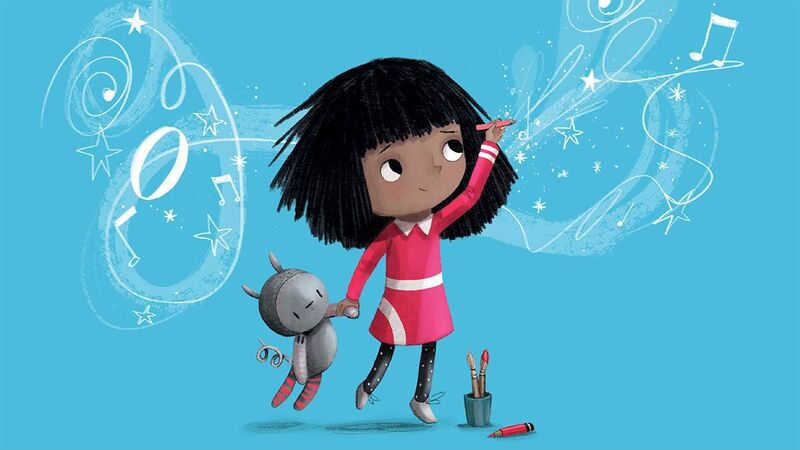
Meesha Makes Friends
Books can also be a huge comfort. You could discover a character who looks, thinks, acts or feels like you, which is really reassuring and can make you feel less alone.
So this is a huge part of why diversity in books is so important. We all need to see characters like us to validate our whole experience of life – to make us feel present, seen, and valued in the world.
Books also offer a genuine opportunity to spend time inside another person’s head, whether that’s a fictional character or whether you’re reading a non-fiction book where you feel like you’re almost having a conversation with the author.
One of the big problems with real life is that we only ever see people’s immediate reactions, their obvious likes and dislikes, and we never really know why they might say or do the things that they do. We have to work that all out for ourselves, which is hard.
But in books it’s just all laid out for you, making everything loads easier. And that in turn helps us to understand the people around us a little better, too.
So in short, whatever the problem, reading solves it. Unless you’re being chased by a tiger. Reading will not help in that scenario. You’re going to need to put your book down and run!
Tom Percival, Author and BookTrust Writer in Residence

Find out more about our Writer in Residence Tom Percival and stay up to date with everything he’s getting up to during his time in the role.
Take a look