Author Tony Bradman discusses how we can help to turn boys into readers.
Image: Aleksei Bitskoff
Tony Bradman is a children’s author
The world was a very different place when I started writing children’s books. That was in the 1980s, and mobile phones, personal computers, and the internet were still mostly in the future.
But some things never change, including the idea that it’s difficult to get boys reading. It was definitely a problem back then, and recent reports only seem to confirm that things aren’t any better today – in fact, they’re worse.
There’s no doubt one major culprit in this is the plethora of entertainment available to children via screens of all sorts.
I also know from my own experience – as a parent and grandparent, and an author who has visited lots of schools – that there are often differences between girls and boys when it comes to reading.
But I believe that with the right help and encouragement, boys can grow to love reading just as much as girls.
The power of a well-told story – and being read to
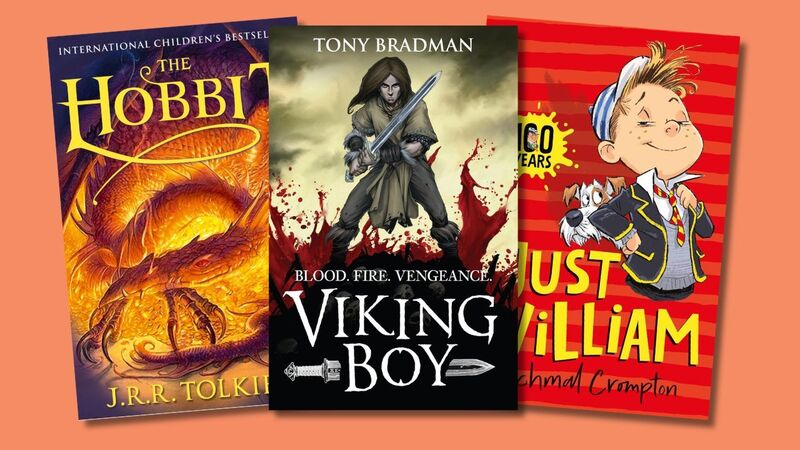
I fell in love with books when my primary school teacher (take a bow, Mr Smith!) read our class The Hobbit. I had only read comics before then, and loved the visuals. But I was captivated by Bilbo’s story and the world he took me to, and I wanted more of it.
So (thanks to my local library!) I soon found my way to The Lord of the Rings and many other great books, mostly historical and war stories and science fiction.
Years later, I realised the key element of that journey was simply the power of a well-told story to keep me absolutely gripped.
Once you’ve properly experienced the thrill of a suspense-filled plot with twists and turns and plenty of cliffhangers, you’re almost certainly going to be hooked.
So for me, the secret to helping boys develop a long-lasting love of reading is to give them that experience as often as possible.
That can start with being read to, as it did for me. I read to my own kids till they were well into their teens, and there’s plenty of evidence to show that can have a major impact on the development of children’s reading.
I’ve also seen the power of story working when I’ve visited schools. It’s magical when a group of boisterous children gets drawn into a story I’m reading them and they listen, totally rapt.
The key elements of successful stories
The accepted wisdom seems to be that boys prefer action and adventure in fast-moving stories, and non-fiction too, books about sport, machines, and so on.
I think there’s a nugget of truth in that – it explains my own penchant for historical fiction, war stories and science fiction. But girls like those things too, and boys enjoy reading about emotions, especially in stories that take action and adventure to another level.
That’s what I try to do in my own books, and it seems to have worked. My book Viking Boy is popular in schools, and I think that’s because it ticks all those boxes. It has plenty of action, plus real feeling, it explores the world of the Vikings, and it’s often read to a class by their teacher. Both boys and girls enjoy it, but I often hear from teachers about boys for whom it’s the first book they really engage with.
Humour is also very successful with boys.
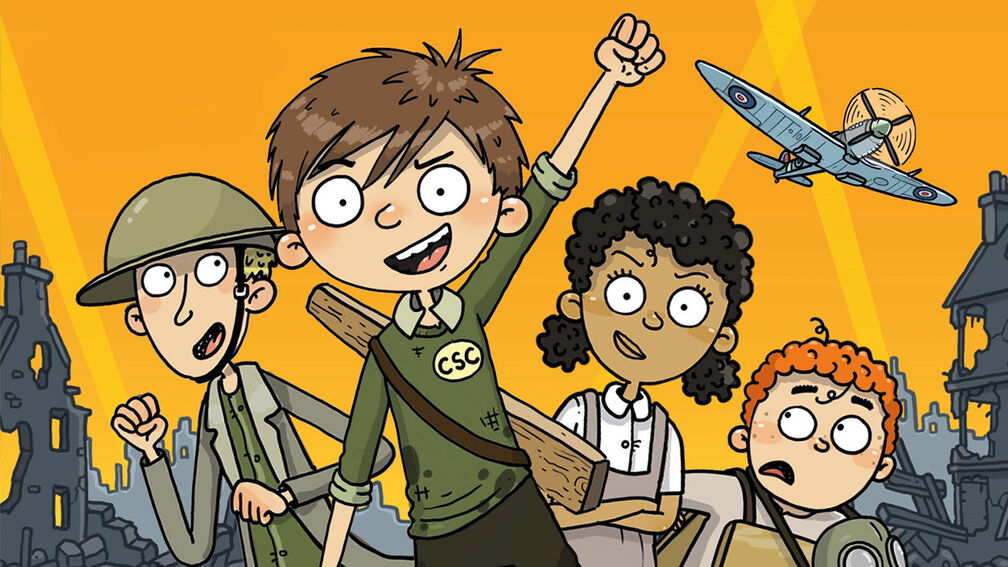
I’d always been a fan of the legendary comedy series Dad’s Army about the volunteer force assembled to defend Britain against Nazi invasion after Dunkirk. I found myself wondering what might happen if a group of children wanted to help. They might secretly form their own special unit, which might be led by someone who is always willing to break the rules…
That reveals another influence on me, the Just William stories by Richmal Crompton. William is one of the great characters in children’s literature, and very popular with boys, a maverick engaged in a constant struggle against the forces of oppression, i.e. the adult world and its relentless insistence on kids always doing what they’re told. Those stories always seem to take me straight back to my own childhood.
Some books to try
So what happens when you cross Dad’s Army with Just William? You get The Cobb Street Commandos.
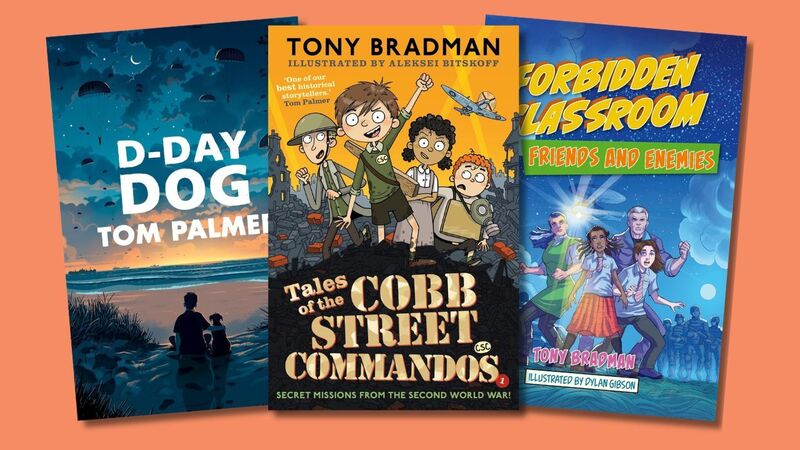
In the first book, Tales of the Cobb Street Commandos, you’ll meet Jimmy Wilson and his friends Bill, Stanley and Kathleen and follow them as they secretly help the nation to win the war – when they’re not at school, that is. They might be stuck in the East End of London, but they’ve got Hitler in their sights.
There are two more books coming down the pipeline, and each one contains three separate stories. My goal as always is to provide children with gripping, interesting stories they can simply enjoy, and to make the stories good read-alouds for school or home use.
They’re all based on research into the period, so I hope readers will also learn a lot about aspects of the war that they might not find covered elsewhere.
There are other plenty of other authors whose work boys will enjoy. Tom Palmer writes terrific books about the Second World War, and football and rugby too. We’re both published by Barrington Stoke, a publisher specialising in books for children who struggle with reading. Their short, highly accessible books work brilliantly with readers who just need great texts that will get them into the reading habit.
And last but not least, I recommend graphic novels – I’ve always loved comic strip storytelling, as many boys do, and I’m not just talking about Bunny Vs Monkey or Wimpy Kid (although they’re good too).
There are plenty more graphic novels around these days. I’ve even written a series for primary age children myself – it’s called Forbidden Classroom, is illustrated by Dylan Gibson, and is about an X‑Files-style invasion of a school.
In the midst of World War II, Jimmy and his friends are keen to play their part in the war effort. Three stories in one volume, with energetic illustrations throughout.
The first part of J R R Tolkien’s epic masterpiece The Lord of the Rings, this is the story of young hobbit Frodo Baggins, who finds himself faced with an immense and terrible duty.
Packed full of hilarious short stories, this bumper collection of cartoons covers an entire year of adventures for Bunny and Monkey. Off-the-wall characters, wacky storylines and hilarious comic-strip illustrations ensure there are plenty of laughs on every page.