It’s a joy to see everyone in the book world, and teachers too, embrace the aim of making reading joyful, relevant and visible for all.
The brilliant thing about us humans is that we’re all different – and our reading habits are no exception. From long novels to crime thrillers, to coffee table books or a magazine, some of us read every day, others might not pick up a book for months.
The main point is, though, that reading transports us. It enables us to learn new things and make discoveries. It can help us navigate emotions, difficult situations and life-changing events, all from the comfort of wherever we choose to sit and open a page.
Showing children that there is no ‘right’ way to read, apart from however they choose to do it, opens up many doors to discovering all the different ways we can access stories.
Representation and inclusivity are, as they should be, things which publishers are ensuring become unquestionable fixtures in all books. But, as a parent of a neurodivergent, disabled child, I have seen a grey area in the ways that children, like my youngest daughter with Prader-Willi-Syndrome, are able to access stories and reading.
Bringing stories to life
My daughter, who turns 11 this year, after a decade of only a vague interest in books, has recently begun a more regular bedtime routine of sharing a story. As a picture book author/illustrator, this is finally music to my ears. Her older sister was always a bookworm and kept me and my husband busy with demands of three stories a night, every night, without fail (and of course, all spoken in ‘their kinds of voices please’).
So when daughter number 2 appeared four years later, I was primed and ready for a continuation of these nightly reading feasts. In a highly anticipated moment when I proudly appeared one night, ready to read her my debut illustrated picture book (this moment being a book-maker’s dream!) her lack of interest was as high as a 1960s beehive. It was, as you’d imagine, a slight blow to my shiny new illustrator confidence to discover that a bowl of cucumber sticks or bag of colourful sensory ribbons was much nearer the top of her priority list. Reading, right now, was just not her thing.
This isn’t to say I didn’t persist, but it soon became very obvious that most picture books just didn’t engage her. Then a couple of years ago, a visit to her specialist school for a Christmas performance brought a game-changing moment for me as a parent. A colourful, totally mad rendition of Eric Carle’s The Hungry Caterpillar, including accompanying visual language beamed across a large white board high up on the back wall, along with beautifully simple, repetitive songs (which we were humming for days afterwards), wild dance moves, sensory shakers and glimmering light sticks galore. All in all, it was a fabulous and engaging celebration of everyone’s favourite greedy, green caterpillar.
With it, came my (probably very belated) realisation that reading isn’t simply sitting with your nose in a book. Reading is finding all the different ways that could bring that story to life, whether it be through song, sound, light sticks, widgets or a wild dance move. It is engagement, it is stories, it is making the joy a book can bring accessible to each and every one of us.
Books can speak in many ways, not just words
Every disability is different, and it would be impossible to create one template for a book which catered to every neurodivergent or disabled child’s reading needs – but there is certainly a large space available for more inclusive and accessible ways that publishers can create engaging books that speak to children in many ways, not just words.
Herein lies a whole host of often-untapped ideas and resources – books with larger fonts, books with page numbers on EVERY page (something which you probably haven’t ever noticed, but can make a huge difference to neurodivergent readers), books which feel tactile, the consideration of page paper thickness, the inclusion of visual language (symbols or widgets that represent words) to assist with, or replace, the reading of actual words. The list goes on.
In our house, it is Julia Donaldson and Sara Ogilvie’s Hospital Dog (usually with a little trimming of the words from me) which is currently my daughter’s favourite request, no doubt due to our regular and frequent trips to the hospital. Others hot on her list are the bright, bouncing sing-song texts from Barefoot Books which, luckily, tucked up together in her bedroom, nobody but us gets to hear my slightly-out-of-tune warbling of. Often the next morning, she happily revisits these books on her ipad (obviously listening to the official and much more tuneful versions) and sails off into a world of fun.
It’s wonderful to see her reading adventures unfurl – they are very different to her sister’s, but the end result is the same: a love of stories, an interest in the world, both of which have highlighted again to me the importance of finding other ways to do things. We are all different, and our reading journeys will not all take one set route.
Look out for a carefully curated SEND resources section for mainstream books on Authorfy, which will be accessible for teachers, classrooms and families across the globe. The hope is to grow these into a continually evolving library to help provide more possibilities for children, like my daughter, to bridge the gap within traditional books and give them more access to the magical realm of reading; the beautiful thing that should, and must, be joyful, relevant and visible for all.
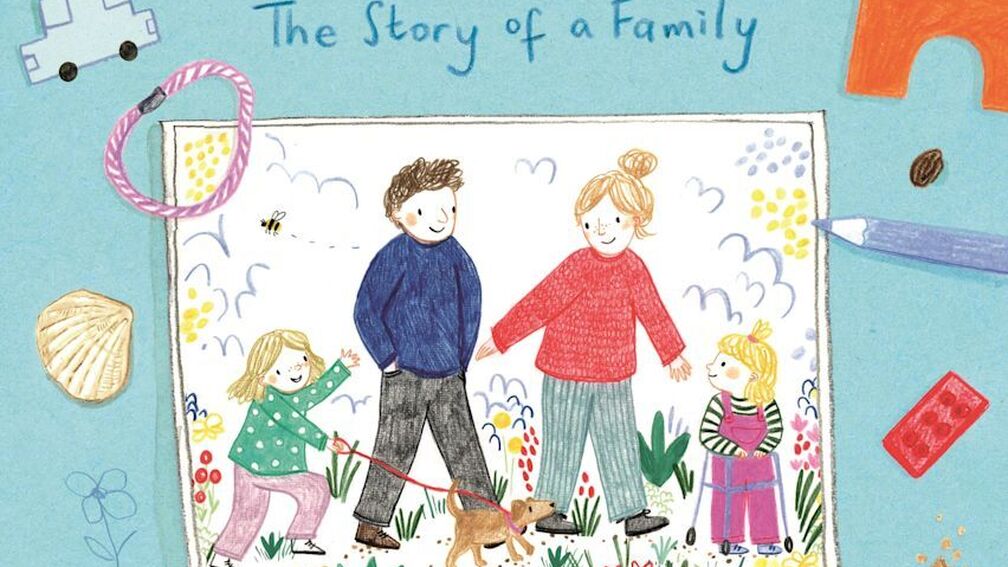
This is Us by Emily Hamilton is out now.
Find books on similar topics
-
Twelve children’s books that are useful for discussing disability, neurodiversity and inclusive issues with young readers
-
Most children’s books today suitably reflect our multicultural society. However, not so many reflect other forms of diversity, for example the fact that one in five school-age children has special educational needs. This is especially true of books for very young children. This list aims to help you to find early years books showing positive images of disability, as well as titles that may prove useful in discussing disability and diversity.
-
These books are a great way to read and learn about all kinds of families with your toddler or younger child.