Louise Greig is an author
It is heartening to see marginalised children increasingly represented in children’s books. I think this has been something noticeable and something to celebrate in children’s literature in the last decade.
However, I do think hearing loss is still under-represented.
Our senses help us to navigate our world. And they enrich our lives. When a sense is missing or significantly diminished, our navigation of the world is disrupted. We need a different map, so to speak.
With hearing loss one can see the world as clearly as others do, but one’s experience of it is vastly different.
Children are now taught to accept difference. Contemporary classrooms celebrate diversity. Inclusion is now normal. These are great leaps. I do not believe that acceptance is missing. But I do believe that understanding and acceptance need to reinforce each other.
Understanding, not just acceptance
Acceptance is an important first step. But stories have the power to take children beyond acceptance towards understanding, and it is through understanding that empathy grows.
Acceptance says, “You belong in my world.” Understanding says, “I want to understand your world.”
When children meet characters with hearing loss in books, they are invited to experience communication from a different perspective. Stories can broaden a child’s understanding of communication, showing that it is a shared experience built on patience and a willingness to meet one another halfway.
Books also create natural opportunities for conversations between children and the adults who read with them. A story can prompt questions about hearing loss, communication, and the many different ways people experience the world.
These conversations help steer children towards curiosity rather than assumption, and towards empathy rather than sympathy.
My own experience of progressive genetic hearing loss, culminating in profound adult deafness, has taught me that communication is never the responsibility of one person alone. It is a shared responsibility.
Yet Deaf and deafened people are still too often made to feel that they are the ones being accommodated and that successful communication rests solely with them.
Stories can gently challenge this idea by showing that understanding comes when everyone plays a part. They remind us that communication is a partnership and that true inclusion begins with a willingness to understand another person’s experience.
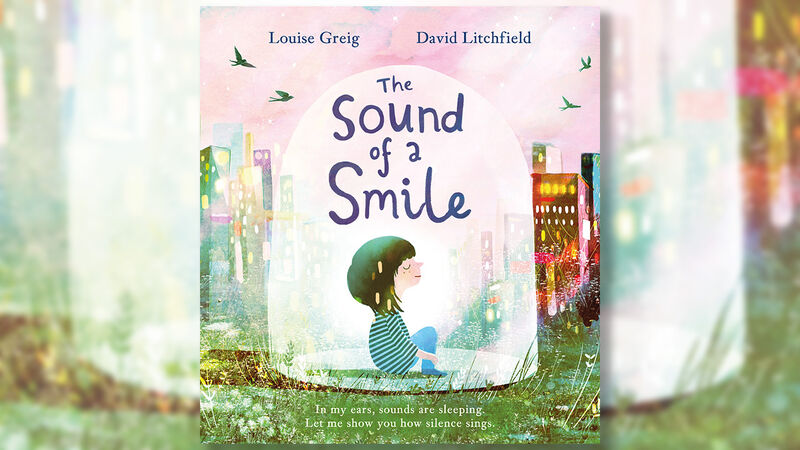
The Sound of a Smile
Every individual’s experience of hearing loss is different.
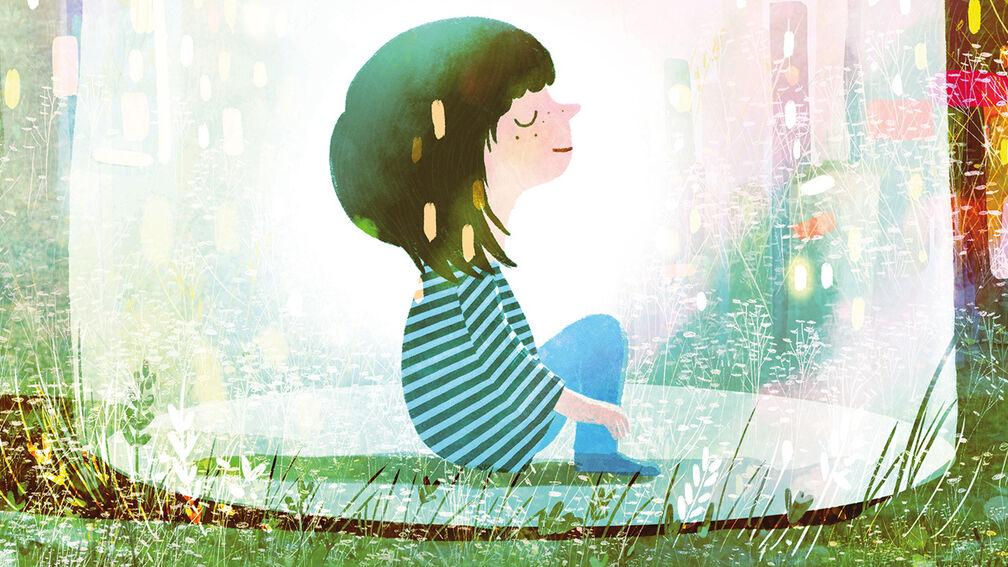
My book The Sound of a Smile, illustrated by David Litchfield, uses silence as a metaphor for an absence of meaningful sound. Silence is something that all children can understand.
Of course, some children wear hearing aids or have cochlear implants and can hear language but may not hear other environmental sounds or may struggle with direction of sound. Children who do not wear aids to hearing may hear certain sounds but not language. But, by definition, any hearing loss is likely to present a barrier to communication.
The book is not about explaining hearing loss but rather about inviting hearing children into another way of experiencing the world.
The book unusually looks at a world beyond sound. My own experience of severe hearing loss was one of profound isolation, loss of autonomy and agency, and erosion of confidence and, ultimately, personality.
But when I was confronted with a world in which I must find a way to live, I began to notice a world between and beyond sound. A world that exists for all of us. A world in which we can all sit together in mutual appreciation.
The child in this book has a secret map – her way of navigating the world. And through David Litchfield’s astonishingly sensitive and empathetic illustrations, she is ready to share her map with you.
The intention behind The Sound of a Smile is to respectfully bridge the gap between hearing children and adults and children with hearing loss. There is a space on that bridge where we can meet and find a shared place of enrichment, understanding, and friendship.
I hope that in the future, there will be more books exploring what we can bring to that space of mutual understanding and empathy.
The Sound of a Smile by Louise Greig, illustrated by David Litchfield, is out now.