Building bonds through sharing books
This briefing provides an overview of BookTrust’s own insights and wider research which demonstrates that reading is not just a literacy or learning activity, but a relational one.
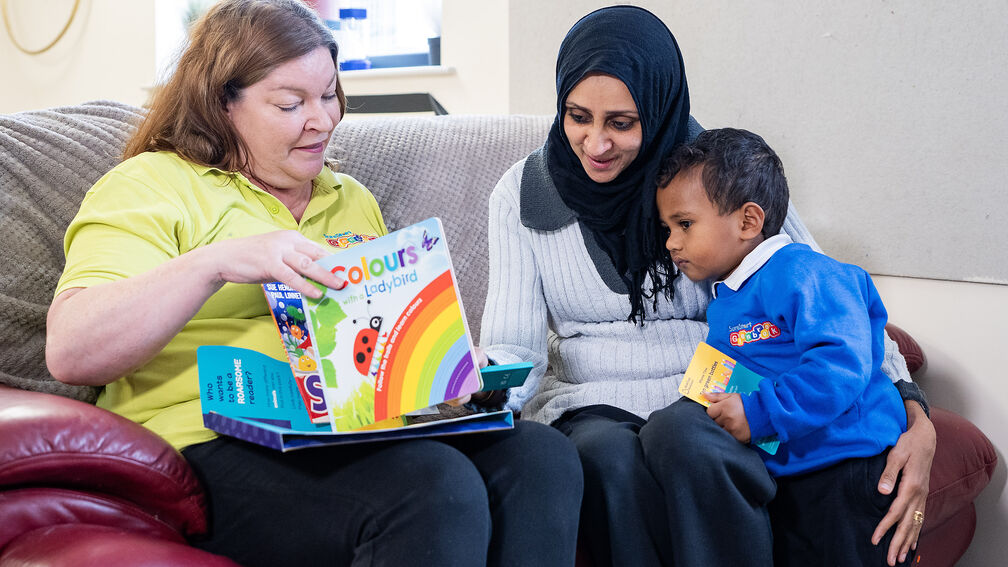
A mother and son at a Bookstart session
About this briefing
With this briefing, we hope to reinforce what many working across policy and practice already recognise: that quality interactions and strong relationships are central to children’s development. But not all children have the same opportunity to experience this. Shared reading offers a powerful way to nurture these vital connections, supporting children’s cognitive, emotional and social outcomes.
Relationships are the basis for children’s development
Children’s learning and development is deeply rooted in social and relational practice. Early caregiving relationships, particularly those that foster bonding and attachment are central to healthy development. Shared reading provides an ideal context for the kinds of interactions that build these foundational relationships.
Bonding and attachment are nurtured through everyday interactions, where children learn to trust and feel safe through sensitive, responsive care. Shared reading provides a structured yet gentle way to scaffold these connections, helping them develop over time. It promotes warmth, responsiveness and consistency – key behavioural foundations of both strong attachments and positive developmental outcomes more broadly.
Reading supports rich caregiver-child interactions
Growing evidence from randomised control trials of shared reading programmes shows benefits both children and adults achieved through the strengthening of caregiver-child interactions. Key pathways include:
- Enhancing caregiver-child engagement: Shared reading encourages joint attention and attunement, helping caregivers connect with their child.
- Increasing caregiver warmth and sensitivity: Shared reading provides a structured context for noticing children’s cues and responding with warmth.
- Reducing caregiver stress: Shared reading provides a predictable and enjoyable activity that creates a calming atmosphere and helps caregivers feel capable and confident in supporting and connecting with their child.
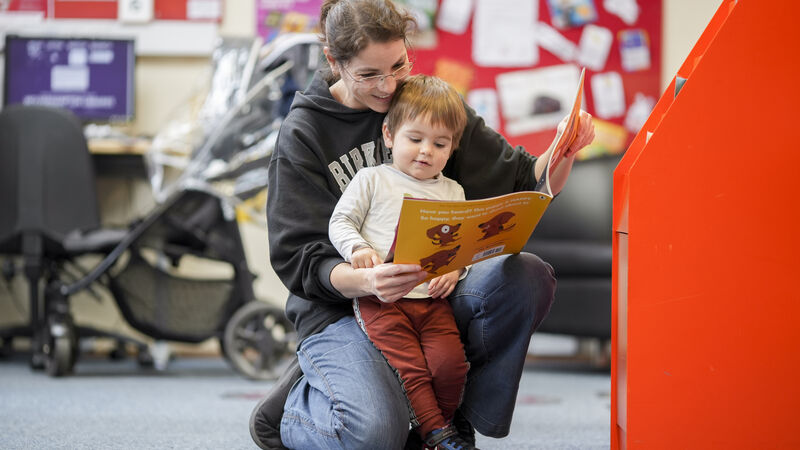
Quality interactions encourage reading habits
Bonding and attachment are not just outcomes of shared reading, they are part of a reward cycle for parents and carers, who enjoy experiencing these rich, responsive interactions. When caregivers read in a warm, interactive way, tuning into their child’s interests and needs, children enjoy books more. This creates a positive feedback loop, where children’s enjoyment boosts caregivers’ sense of reward, motivating them to keep reading.
Reading support in the early years is most effective when it embraces a positive and celebratory approach. Embedding this within core family services, such as health visiting, also creates additional benefits. Evidence shows that integrating reading support into health visits strengthens families’ relationships with healthcare providers. Something BookTrust’s partners know and value.
Embedding reading into the lives of early years families
At BookTrust we focus on creating enjoyable reading experiences that can be woven into families’ daily routines. We take an integrated approach, equipping partners with the books, tools and learning they need to help families create these moments of connection. By working in this way, we ensure that families have access to our support in a proactive and equitable way – so families receive help without needing to take the first step.
Download the full report


To cite this report: BookTrust (2025) Building bonds through sharing books. Leeds: BookTrust
Webinar: Building bonds through sharing books
Our webinar summarises the research findings and explores them in conversation with best-selling early years writer Camilla Reid and Rebecca Humphreys, a specialist health visitor who leads Newcastle Hospitals’ family hub.
More BookTrust research
-
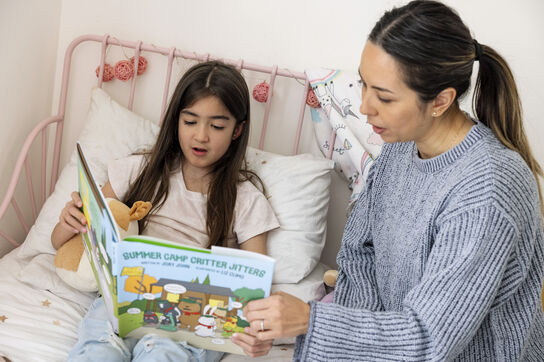
Our research with kinship care families indicates that shared reading can provide a powerful relationship space, helping carers and children communicate and build a sense of safety and belonging.
-

We’ve chosen these books because they encourage playful interaction between adult and child, which can strengthen growing bonds.
-
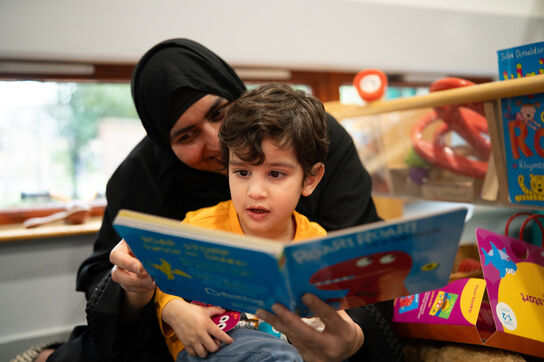
Explore our latest impact report and find out how we are working in every community in England, Wales and Northern Ireland to get families reading.
-
Learning and innovation are at the heart of BookTrust’s work. All our learning and co-creation activities contribute to understanding and measuring what works to get children and families reading.