Author Ruth Lauren shares why all children can benefit from stories that reflect people in the real world.
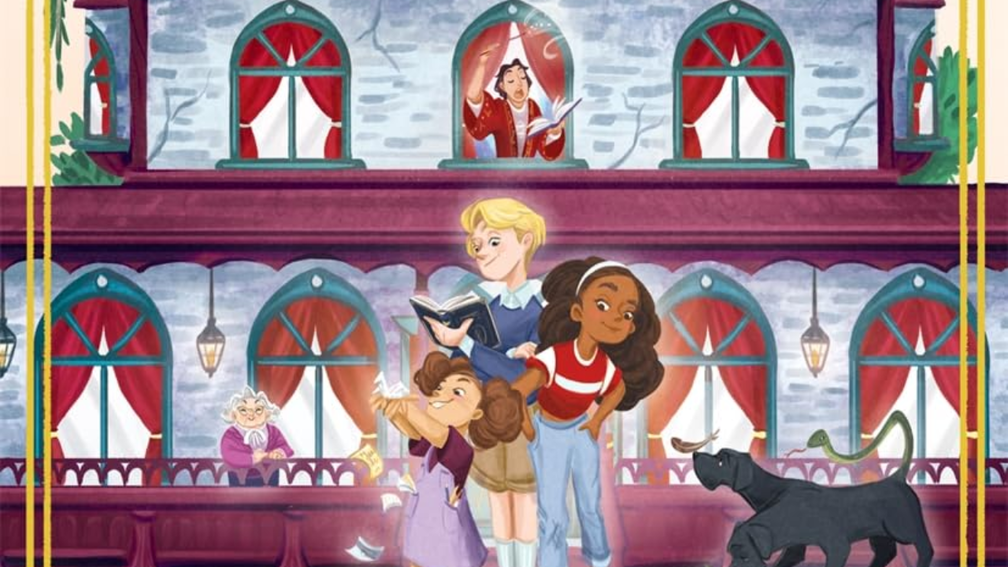
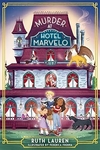
A detail from the cover of Murder at Hotel Marvelo by Ruth Lauren, illustrated by Federica Fenna.
Ruth Lauren
It’s normal to be neurodivergent (but here’s why I have to keep telling myself that).
I have an autistic son. Another son with ADHD. Another son and daughter who are undiagnosed but likely autistic. I was officially diagnosed earlier this year at the age of forty-nine. And I didn’t read books with representation of neurodiversity when I was a kid.
It’s no secret that representation in children’s stories matters. It shows our neurodivergent children that people like them exist, they matter and they can and should be included in stories.
If you’ve ever been in any kind of parenting forum you’ll have seen the posts asking for ‘Help finding books with neurodivergent characters’. I’m glad that this is a question parents can ask now. It gives me hope that parents know books are a powerful way to show their autistic child who they are and why.
It’s brilliant and it’s crucial that we now have stories that centre around a character’s ADHD or dyspraxia. These stories show neurodivergent children that they’re not alone if they’re having difficulties. There could be answers to similar problems right there in the book in their hands.
Reflecting the real world
But it’s equally important that we have books that feature incidental representation of neurodiversity and characters who are implied/coded neurodivergent. Books that include, without drawing attention to, characters whose minds are wired differently to their peers.
Both types of book raise awareness, understanding and acceptance, and we need that, because if your kid isn’t neurodivergent, they almost certainly know a child who is.
All kids need to see neurodivergent characters in books that deal directly with neurodivergence. But they also need to see characters who are incidentally autistic in a variety of settings and situations, both realistic and fantasy, to guard against the risk of reducing those characters to their diagnosis alone.
All kids need a variety of exciting, interesting, fun, thought-provoking, engaging stories, with both neurotypical and neurodivergent characters, because in the real world that’s what the rest of their lives will look like.
With Murder at Hotel Marvelo, I wrote a story that featured neurodivergence without plotting the entire story around it because it’s how my family and I live our lives. If I’m grocery shopping, I’m doing it while autistic. If I was solving an impossibly magical murder like the main characters in the book are, I’d be solving it while autistic – just like Teddy (coded autistic) and Juniper (coded ADHD) are.
The Marvelo siblings wouldn’t solve the mystery and (spoiler) save the day if they weren’t a neurodiverse trio. Finnian’s caution, logic and knowledge complements Juniper’s full-of-ideas enthusiasm and energy. And neither of them would get anywhere without Teddy and the way she views the world, the details she notices and the connections she makes that no one else does.
We need stories that bring neurodivergent children’s strengths to the forefront, show them making mistakes and getting things wrong like anyone does, but ultimately triumphing in fun and engaging stories where it’s completely natural for neurodivergent people to just be. We need these stories to get into the hands of all kids, not just the ones whose parents are asking for them because their own child is AuDHD or has OCD.
Wouldn’t it be nice if every kid knew that they have something to offer and that the people around them could benefit from it if they believed that? Shouldn’t it be the case that incidental inclusion of neurodivergent characters becomes equal to incidental inclusion of neurotypical characters?
Children’s lives, whether their own, their family’s or their friends’, feature neurodivergence, so the stories they read should too.
Our diagnoses are intrinsic to who we are but the world goes on around us regardless. And if the world presents us with a mysteriously deceased wizard, then what are we to do but investigate?
I want kids to know that it’s normal to be neurodivergent. If someone had told me that when I was a kid – if someone had showed me that reflected back at me in a book – I might not have to keep telling myself that now. I might believe the truth – that it’s normal to be neurodivergent.
Hotel Marvelo: the ideal place for magical beings to relax and unwind in complete safety. That is, until the wizard Henry Gravelaxe is discovered dead in the spa.
We believe that books are a great way to raise awareness and improve understanding of different experiences. This booklist aims to provide a range of children’s and teens’ books that feature characters who are autistic, or who have Autistic Spectrum Conditions.