Author Susannah Lloyd shares her tips for reading aloud with children, and shares how it can support communication skills.
Susannah Lloyd
Whilst I was writing my latest book in the Badgers Are Go series – Revenge of the Claw – I always imagined it being read out loud: the uncertain, bewildered whisper of my hero, Lulu Whifferton-Rear; the sharp bark of Major Musty Rumpington, the steely-whiskered, no-nonsense leader of the Rumpington Academy of Badgering; and the slick velvety voice of The Velvet Claw, the evil mastermind behind The Claw Institute of Villainy, Scoundrelling and All-Round Boundary.
As I developed the story around these voices, I threw in words that have always had the power to make me laugh, all on their very own, such as ‘snout’, ‘rump’, ‘trout’, ‘splats’, and ‘bristles’.
Lastly, I sprinkled in as many alarming and scandalising developments as I could, and I mixed it all up, hoping I had the recipe for a great read aloud. Then came Nici’s amazing illustrations, the delicious icing on the cake. I gasped with happiness when I first saw Professor Briskwhiskers, Maverick Inventor and Jolly Good Fellow, glowering out at the reader with a look of bristling fury.
As well as being a writer, I am also a Speech and Language Therapist. Often, when I am trying to juggle these two parts of my life, I wonder what these two disparate roles have in common.
In the end, I guess it all boils down to a love of words. Understanding how language skills develop, I know just how transformative the experience of being read to can be. Mary Myatt, an educational advisor, captured it best when she said,
Because stories are enjoyable, we have a tendency to underestimate their power.
Mary Myatt, educational advisor
How books can develop children’s vocabulary
Of all a book’s transformative powers, the most magical might be its role as a source of new words, because words are the building blocks of our ideas and imaginations. The words I absorbed from the books that were read to me now build new worlds in my own head.
The sheer number of new words that books can expose us to is countless, so much more than we hear in our everyday talking. One study found that young children whose parents read them five books a day enter kindergarten having heard around 1.4 million more words than children who were never read to*.
Research has shown that the earlier the habit of reading stories together at home begins, the stronger the language skills that develop*.
But it isn’t just small children who benefit from being read to. Even at secondary school, being read to increases vocabulary in ways that reading by yourself does not, particularly because it means you get to hear new words and ideas that match your age and understanding, not restricted by the pace of your own reading level*.
All that being true, I am aware that this research can make the act of reading a story sound very educational and worthy, like offering a child a nutritional bowl of bran for breakfast. But it’s really an array of puddings with all the toppings. It IS good for you, but only because it is so delicious.
Picture books and illustrated chapter books
Picture books and illustrated chapter books in particular are perfectly designed for this. They grip and hold our attention with their mesmerising rhythms or rhymes and with their suspense – with the question of what will come after the next page turn. The pictures provide all the context we need to help us understand what the words might mean.
Children naturally ask for loads of re-reads, treating books the same way we treat music as adults, getting hooked on a favourite story over and over until they have had all the repetitions that they need to get a firm grasp on all the words and ideas.
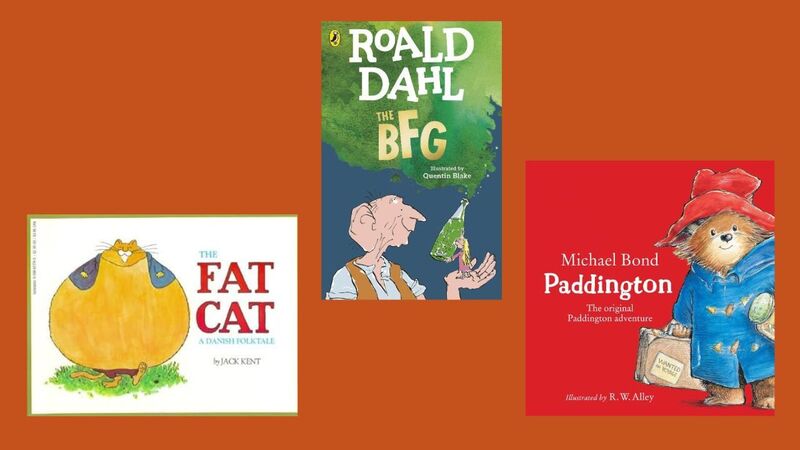
One of my favourites was The Fat Cat by Jack Kent, and my children were the same, picking out my ancient copy to be re-read over and over again… “I ate the gruel and the pot and the old woman too, and Skohenttentot, and Skolinkenlot. And now I am going to also eat YOU!” says the cat, in a line now registered deep in my memory, read to me with relish by my mum.
I think it accounts for just how many of my characters get eaten, or nearly eaten, in my own books. In my latest one, my hero Lulu survives, by a whisker, after a very near miss with some killer trout.
I like to write stories about blunderers, scoundrels, and general shenanigans, the same things that entertained me most in the stories that were read to me as a child. We were big library visitors, and I always had a new library haul on my bedside table each weekend. After my bedtime story came even more stories via a little stack of audiobook cassettes.
Even now, the sound of Bernard Cribbins reading Paddington Bear can give me a sense of cosy wellbeing like nothing else on earth. I was read to every day at primary school, and for most of middle school too.
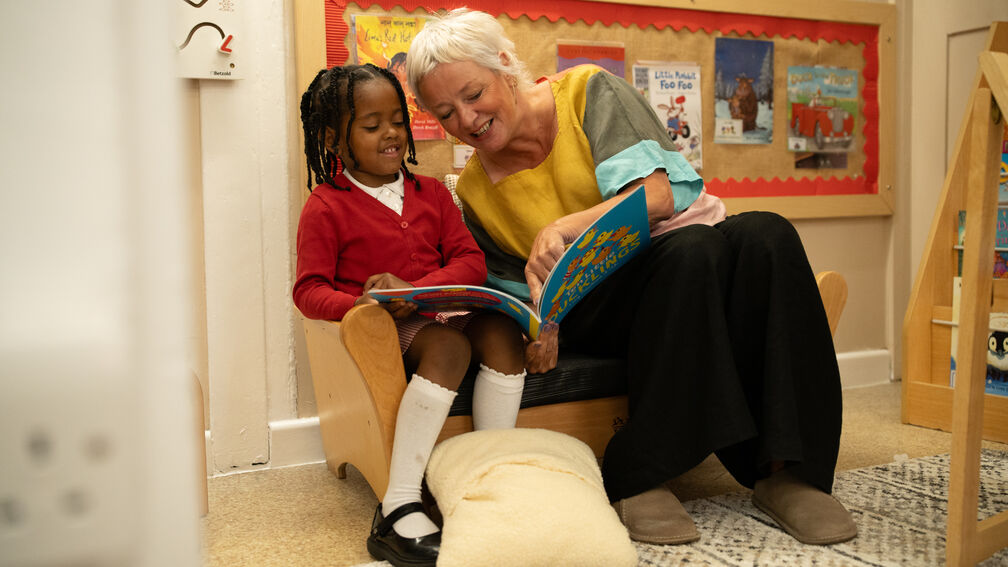
I still remember the building buzz of excitement as we gathered round our teacher on the carpet the week that The BFG first came out. Our teacher had stayed true to her promise that she was going to get a copy to read to us straight away, and her enthusiasm was infectious. Emilie Buchwald said that “children are made readers on the laps of their parents”, and I would extend this to classrooms too.
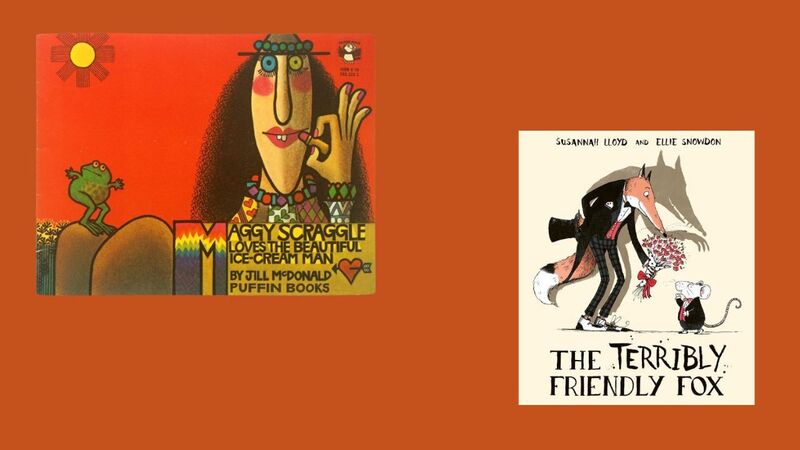
I remember delighting in strange and unusual words as a child, even in elusive words I couldn’t quite grasp despite the pictures. I loved the line ‘she turned around widdershins’ in Maggy Scraggle Loves the Beautiful Ice-Cream Man. It didn’t really matter that I didn’t know what widdershins was; I knew Maggy Scraggle was a witch and that it must be some sort of deep and terrible magic, and that was all that mattered.
When I wrote my own first picture book, The Terribly Friendly Fox, the line, “I don’t think we had ever met anyone quite so suave and debonair” came into question during editing as being a little too out of the age range, but I was certain once Ellie Snowdon’s illustrations were there – with the fox elegantly dancing the party guests around the room – that readers would understand.
Being read to is how I got hooked on books as a child, and when I became a mum, I found that the joys of reading to someone are not just reserved for the listener. My happiest parenting memories are of reading together with my boys, especially seeing their delight in a book that made us laugh.
Victor Borge once said that, “Laughter is the closest distance between two people,” and I think that this is at the heart of why I love reading out loud so much. And this, too, is why I became a writer. I wanted to bottle that feeling at source, and work out how to make it myself.
Right from our first baby board books, through to picture books and on to chapter books, the feelings my sons and I were chasing were always the same.
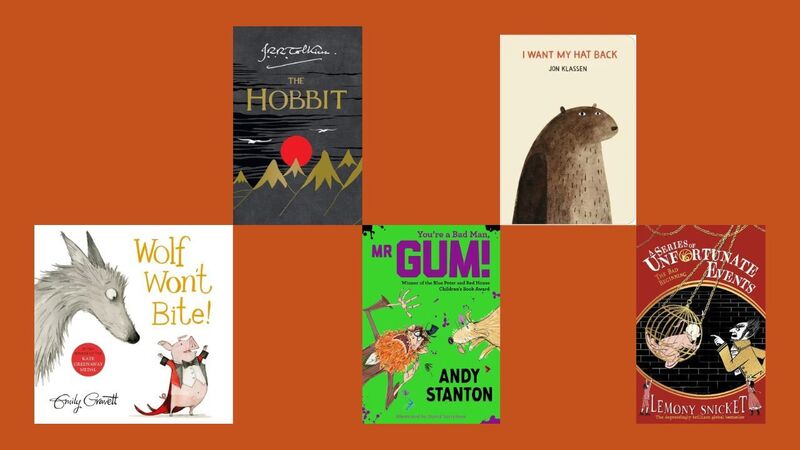
We delighted in page turn shocks such as in Wolf Won’t Bite; we cackled over the scandalising end to I Want My Hat Back; we giggled about Mr Magnolia’s gloriously odd new boot; we cried helplessly with laughter together at Mr Gum, and we were on the edge of our seats at the dark-humoured villainy of Count Olaf in A Series of Unfortunate Events. We even laughed at The Hobbit, if only for the fun of having a go at our best Gollum voices.
I never felt the urge to stop reading to my kids once they could read independently for themselves – for me that was a little like saying once you could eat your dinner all alone, you somehow should. Some things are just better done in company.
I hope that readers, grown and young alike, enjoy reading Revenge of the Claw out loud together, and I would love to hear how it goes down!
When Children Are Not Read to at Home: The Million Word Gap, Jessica A. R. Logan, Laura M. Justice, Melike Yumus, and Leydi Johana Chaparro-Moreno (2019)
Joint picture-book reading correlates of early oral language skill, Barbara D. Debaryshe (2008)
‘Just reading’: the impact of a faster pace of reading narratives on the comprehension of poorer adolescent readers in English classrooms, Jo Westbrook, Julia Sutherland, Jane Oakhill, Susan Sullivan (2018)