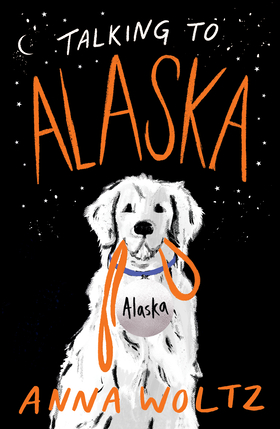
Talking to Alaska
by Anna Woltz
Translated by Laura Watkinson
Interest age: 10 to 13
Reading age: 11+
Published by OneWorld, 2021
About this book
It only takes one day at their new school for Parker and Sven to become mortal enemies. Parker’s had a terrible summer and just wants to be invisible, while Sven is desperate to make an impression and be known as anything other than ‘that kid with epilepsy.’
When Parker discovers her beloved dog Alaska – who she had to give away last year – now belongs to Sven, she’s determined to steal her back. Of course, that’s much easier said than done…
Meanwhile, Sven is mortified when Alaska is brought to meet him wearing her fluorescent Assistance Dog vest. Having epilepsy feels like he has no control over his life anymore, so when Parker – face covered and in disguise – arrives in his bedroom at midnight to take Alaska back, there’s something new to think about. But after spilling all his secrets to her, what’ll happen if he uncovers her real identity?
Told in alternating chapters between the two characters, this is a heartfelt story about understanding others. It’s a relatively short read, but Anna Woltz packs a lot in, including themes of bullying, trauma, and coping with life-altering situations, while the characters make unexpected discoveries about friendship – and a special discovery about Alaska too.
About the author

More books like this
-
My Especially Weird Week with Tess
by Anna Woltz
9 to 14 years
-
An Elephant for the Emperor
by Saviour Pirotta
9 to 14 years
-
The Other Boy
by Hamed Amiri, illustrated by Sònia Albert
9 to 14 years
-
Cleopatra's Amulet
by Lindsay Galvin
9 to 14 years
Lists of recommended reads
-
Books to help your child get ready for the big move to secondary school
The transition to secondary school can be both exciting and difficult. These books aimed at 11-13 year olds contain themes around friendships and overcoming a variety of challenges, as well as starting at a new school. Many of them are also empowering and affirming, recognising a range of experiences. Lastly, and most importantly, they’re all fantastic reads, sure to encourage children to love books.
-
Books about epilepsy and seizures
This booklist includes books with characters who have epilepsy and books with characters that have seizures. The cause is not always explained or known, nor is it the same in every case. It’s important to note that those books set in historical times do show some ignorance and subsequent ill-treatment, which can be hard to read about. However, these are excellent books that are well worth every child reading.
-
Favourite books in translation
If you're interested in exploring children's books in translation, these well-loved favourites and award-winning titles offer the perfect places to start.