Stories as bridges: 12 illustrated books to open discussions about war
Author Jake Hope recommends some top stories for starting conversations about conflict
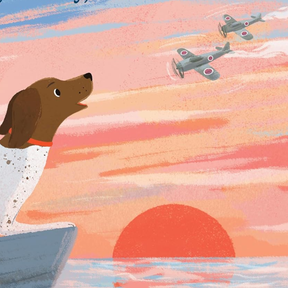

Jake Hope
Everyday life often means encountering viewpoints and positions that are different to our own. One of many roles that stories can play is in acting as a bridge between divergent points and providing a shared experience or understanding. At a time in history when there is considerable division globally and politically, the unifying role of stories feels particularly important.
Storytelling lies at the heart of Ming the Panda: A True Story of Courage and Hope, which Yu Rong and I created. In it a mother relates the story of Ming, the first giant panda at London Zoo, to a child who struggles to sleep. Ming achieved superstar status with news reels being filmed about her. ‘Ming’ means brightness in Chinese and the panda brought hope to people during the approach and development of the Second World War.
Yu Rong’s dramatic and thoughtful illustrations capture the atmosphere and emotion of the period in vivid detail. She uses traditional Chinese papercut techniques which are blended with Western forms. Her artwork conveys sophisticated and complex ideas scaffolding the text. This interplay can create engaging and innovative ways to tell stories and to start conversations around big subjects.
Illustrated stories can offer safe means to explore and empathise with the complicated emotions and ethics that surround war and conflict. Visual storytelling provides rich and layered accounts of conflict and can offer a common experience in how we react and respond to this.
Here are twelve of my top picks of picture books and graphic novels which help to provide background and understanding to ideas around war and conflict, opening the doors for discussion.
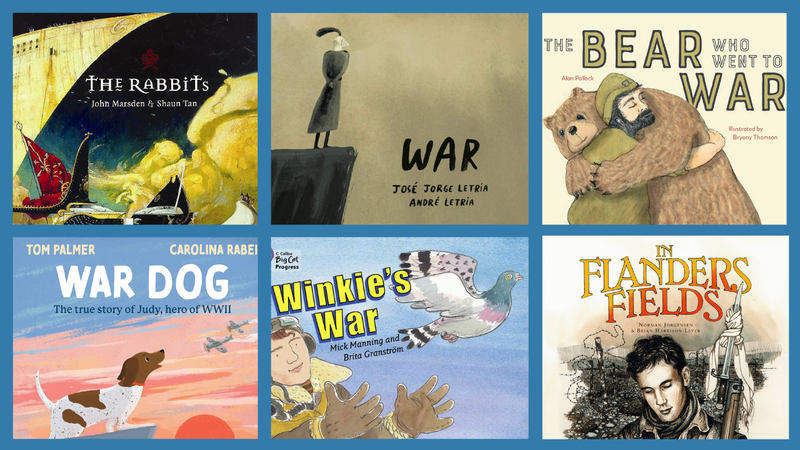
1. The Rabbits by John Marsden, illustrated by Shaun Tan
An uneasy relationship between land and inhabitants is explored in this brooding allegory about rabbits coming to Australia. Shifts in palette and style cause the illustrations to sear their impression onto the minds of readers and make for an ideal discussion point around colonisation.
2. War by Jose Jorge Letria, illustrated by Andrea Letria
This unforgettable and hugely stylish book is rich in symbolism. There’s a forbidding quality in both the spare, darkly poetic writing and the creeping manner in which conflict begins to unfold in the narrative.
3. The Bear Who Went to War by Alan Pollock, illustrated by Bryony Thompson
Like Ming, Wojtek, who this story centres upon, was a real bear who was found orphaned and who was adopted by Polish soldiers. It makes for a moving and compassionate account of kinship and alliances in adverse times.
4. War Dog by Tom Palmer, illustrated by Caroline Rabei
Animals have played fascinating roles in wars and conflict and can be a useful mechanism for exploring times of turbulence and uncertainty. Judy was a real dog who became the mascot on HMS Grasshopper. She was the only animal to be made a prisoner of war, as this book recounts.
5. Winkie’s War by Mick Manning, illustrated by Brita Granström
The sea itself becomes part of the peril in this story of a real-life carrier pigeon in the Second World War. The air crew she worked with crashed into the sea and became reliant upon Winkie to get the message home to secure their rescue.
6. In Flanders Fields by Norman Jorgensen, illustrated by Brian Harrison-Lever
Part-inspired by the poem by John McCrae of the same name, this evocative picture book focuses on a robin who becomes ensnared on barbed wire around the trenches in World War One. A sensitive exploration of the impact of war on lives and landscape is depicted and there’s a strong and lasting visual metaphor around capture and freedom.
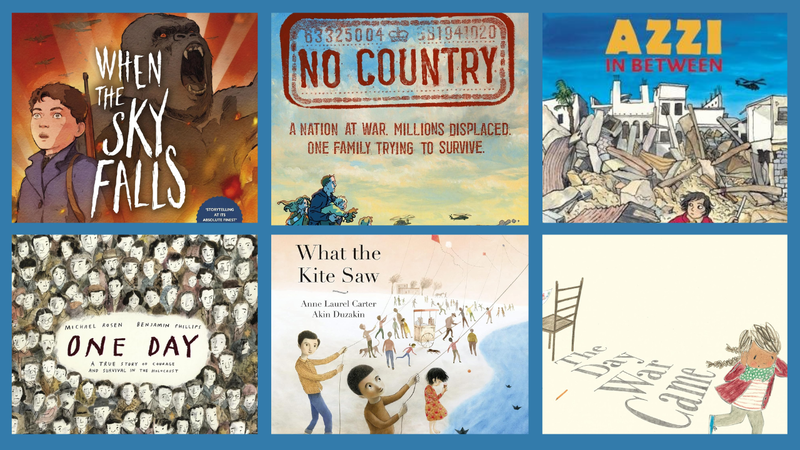
7. When the Sky Falls (graphic novel edition) by Phil Earle, illustrated by Fred Fordham
Drama and period detail are vividly brought to life in this immersive graphic novel edition of Phil Earle’s story of Adonis the gorilla and the mutual friendship and security he finds with Joseph.
8. No Country by Joe Brady and Patrice Aggs
Direct and impactful, this graphic novel explores how our lives might be affected if war came to our shores. Drama and impact are created with familiar landscapes and environments forming the backdrop for conflict and displaced people. Look out for No Refuge, its memorable sequel.
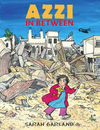
9. Azzi in Between by Sarah Garland
The sense of danger facing Azzi is palpable as she and her family flee their homes to try to find safety. A controlled colour palette and thoughtful use of shadows and light combine to evoke the unsettled nature of conflict. This book was the inaugural winner of the Little Rebels Award.
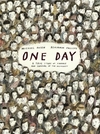
10. One Day by Michael Rosen, illustrated by Benjamin Phillips
Stories are key to keeping history alive and this sensitive portrayal of Eugène Handschuh and his father as survivors of the Holocaust offers moments of hope and humanity through times of great tragedy with its muted colour tones and its desperate directness.
11. What the Kite Saw by Anne Laurel Carter, illustrated by Akin Duzakin
Absence and loss are at the heart of this story of a young boy who feels alone and afraid without his father and brother and with the ever-present threat of violence and conflict surrounding him.
12. The Day War Came by Nicola Davies, illustrated by Rebecca Cobb
Illustrated stories can stimulate us to think and feel, as this book powerfully shows with the drawings of the chair, which is the object that prompts expressions of compassion.
Ming the Panda: A True Story of Courage and Hope by Jake Hope and Yu Rong is available now.
Read our reviews of some of the books on Jake’s list
Reading resources
-
Author and teacher Maryam Hassan shares her ideas on how to create welcoming classrooms for refugee children.
-
Comics writer and illustrator Neill Cameron discusses the powerful ability of cartoons to convey emotion.
-
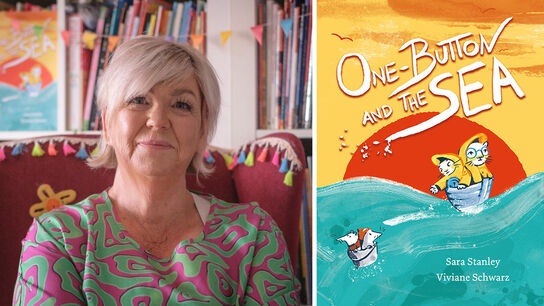
At BookTrust, our research shows the long-term benefits of reading together with children. One of these is giving children space to talk about tricky subjects. We asked author and bookseller Sara Stanley to elaborate on why adults should embrace this opportunity.