9 knock-out manga series to get children reading
Manga creator Nigel Twumasi shares his favourite manga that’s suitable for primary school age and up.

Nigel Twumasi
There is a certain privilege to being a creator of manga. It often creates an instant connection with young people who share that passion for the medium. So much so that I still remember one eager young person discovering I create my own manga titles on day one of our comic workshop and bringing two volumes of the manga “Dr Stone” with them on day two, for a show and tell about the story they were evidently enjoying so much!
It’s an anecdote that speaks to the wider opportunity. As we struggle with a crisis of reading-for-pleasure among young people, I see manga as an oasis in a desert of empty distraction and endless scrolling that risks turning a generation away from the enjoyment of being lost in fiction.
The National Literacy Trust reported the lowest level of reading enjoyment since records began in 2005. However, there is hope, as the independent body the Comics Cultural Impact Collective highlights that research also found that nearly twice as many young people who read comics enjoy reading, compared to those who don’t read comics in their free time (58.6% vs 33.1%).
There is no crisis of reading enjoyment amongst comic readers.
Those numbers tell me there’s something to explore, should we decide to explore it. Before we tackle those manga flavoured options, let’s start with the basics, as there can still be a lot of confusion around manga, but it’s not as daunting as it may appear!
To start, “manga” is a Japanese creation and essentially another word for “comics”. There are other factors, like storytelling that goes far beyond the narrow superhero lens we typically equate comics with in the West, to a wealth of genres that mean there is truly something for everyone.
And these stories tend to be more fraternal versus the often paternal stories we expect to tell children. It’s the difference between a story that seemingly talks down to, or lectures its audience, and one that speaks on their level, inviting them on a fantastic adventure they feel emotionally connected to.
So the audience is primed, but cultural differences do bring challenges in knowing what is suitable for younger audiences, and what is best kept at arm’s length until at least GCSEs! I’ve put together some titles that would be great to consider when engaging younger readers.
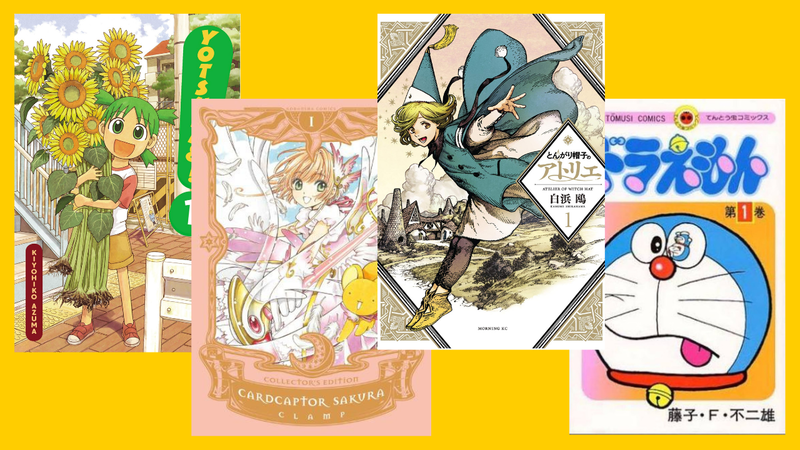
Early / Confident Readers (Ages 8+)
Doraemon (Fujiko Fujio, 45 volumes total)
A comedic story about a robotic cat named Doraemon, who travels back in time to assist a boy named Nobita Nobi in his day-to-day life. It contains lessons around values such as honesty, perseverance, family, and respect for elders. Its episodic structure makes it easy to follow, with slapstick comedy and mischief thrown in.
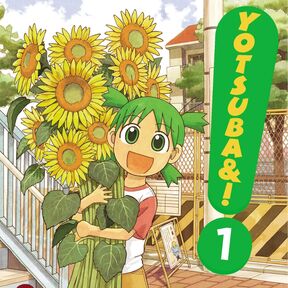
Yotsuba&! (Kiyohiko Azuma, 16 volumes total)
A slice-of-life series about an energetic young girl discovering everyday life with fresh eyes. It’s highly accessible and ideal for readers who like humour and observation. It works well as a “first manga” because the visual storytelling is so clear.
Note: Both Yotsuba&! and Doraemon could be considered for younger readers, especially for confident readers who enjoy short, episodic stories.

Primary/Secondary aged readers (Ages 10+)
Cardcaptor Sakura (CLAMP, 12 volumes total)
The story is about Sakura Kinomoto, a primary school student who discovers magical powers after accidentally freeing a set of magical cards into the world, which she must then retrieve.
This comes under the banner of “magical girl” adventure, which is a sub-genre that centres on young girls who possess magical abilities, often with an emphasis on friendship and empathy. You can also expect some light peril and gentle romance themes.
Witch Hat Atelier (Kamome Shirahama, 16 volumes and counting)
This is a good pick for readers who like wizard-school stories. A fantasy story about learning magic, creativity, and responsibility. It centres on Coco who wishes to learn magic but is resigned to her un-magical life. As she is about to give up on her dream, the witch Qifrey shows up and Coco learns that her dream of becoming a witch may actually be possible.
You can expect a story with content that is generally child-friendly, but art and pacing that may suit stronger readers. There is occasional peril and some darker imagery in places.
Dr. Stone (Riichiro Inagaki / Boichi, 27 volumes)
A science-based adventure that can spark curiosity and problem-solving through its story. After the entire human race is petrified in stone for 3,719 years, 15-year-old prodigy, Senku Ishigami, is revived and begins to study to revive humanity and rebuild human civilisation with a focus on science.
There is some peril along the way, and occasional crude humour, but overall, there are very detailed descriptions of science principles that can be used as a basis for engaging students in science, as well as reading.
Kuroko’s Basketball (Tadatoshi Fujimaki, 30 volumes)
This story applies a fantastical layer to basketball. It follows Tetsuya Kuroko, the sixth member of the “Generation of Miracles”, a highly gifted school basketball team. It’s not immediately apparent what Tetsuya’s gifts are, but he sets out to support Kagami to get to the top of the school basketball world, taking on Kuroko’s old team-mates one by one.
It’s fast-paced with enough character development and heart to attract sports fans and non-sports fans alike. There is also lots in here about rivalries and teamwork, so it’s great for readers who like competitive stories.
Haikyuu!! (Haruichi Furudate, 45 volumes)
An upbeat sports story about teamwork, with very positive role models. It follows Hinata Shōyō as he strives to become a great volleyball player despite his small stature. There is competitive intensity here with some mild language considerations.
Unlike Kuroko’s Basketball, it is much more grounded in its sport (no powers here) but similarly focuses on positive characteristics like never giving up and being able to push your own limits in order to achieve your dream.
Young Teens (Ages 12+)
Your Lie in April (Naoshi Arakawa, 11 volumes)
The story follows Kōsei Arima, a young pianist who loses the ability to perform after his mother’s death. Life changes after Kōsei meets Kaori Miyazono, a free-spirited violinist who helps him return to playing, but who Kōsei later discovers is anaemic and soon hospitalised.
The narrative delves into themes of grief and is emotionally intense, so it is certainly one for a teen audience, with extra caution around potentially triggering themes.
My Hero Academia (Kohei Horikoshi, 42 volumes total)
Despite what I said about comics not equalling superheroes… I have to add this one to the list! The story follows Izuku Midoriya, a student who is obsessed with heroes and exists in a world where almost everyone has some kind of superpower (known as “quirks”). Well, everyone except him.
But it all changes when he is bestowed great power by the world’s biggest superhero and now must learn to control it to become a great hero himself. It’s a story with clear themes of courage, teamwork, and self-belief, along with lots of action and some violence.
It’s important to remember that traditional manga titles don’t fit neatly within the same rigid age bands as on this side of the world, so I advise previewing volumes and judge what works best for your young people. Manga stories also tend to grow with the audience more, so a title that starts out suitable for early readers might become more complex and darker in later volumes.
Manga’s versatility is a power that has yet to be fully tapped in the current reading-for-pleasure crisis we find ourselves in, and these titles by no means represent the entirety of manga available. But they should serve as a helpful starting point into a medium that captures attention and can be used to build a fun reading culture. Whether encouraging students to explore recommendations and discuss narrative arcs, or more directly as a learning tool.
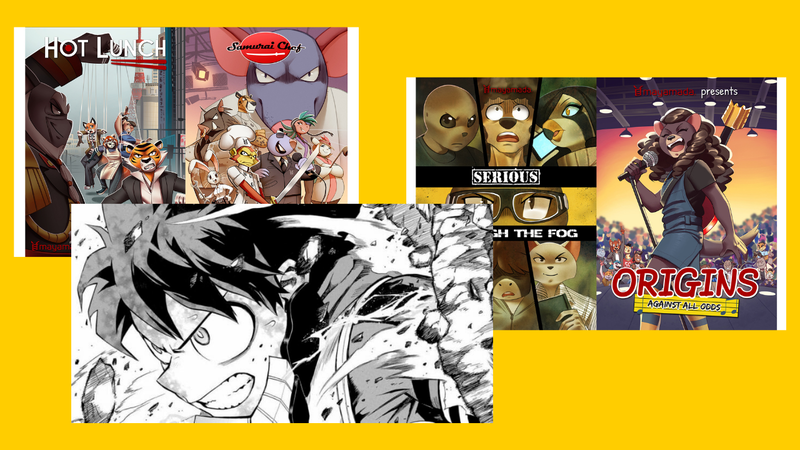
Nigel Twumasi is the co-founder of mayamada, a manga creator producing titles set in an anthropomorphic universe of characters suitable for all ages. They currently have four established standalone stories (Samurai Chef, Serious, Hot Lunch, and Origins: Against All Odds), with more volumes to come. The stories feature recurring themes of characters taking on seemingly impossible odds in pursuit of their goals.
-
10 brilliant books for children who love video games
Mia and the Lightcasters author Janelle McCurdy has always loved video games – and they were a big influence on her book. Here, she recommends more great reads for young gamers…
-
11 excellent graphic novels to try
Author-illustrator Chris Mould recommends some favourite graphic novels to engage young readers.
-
Ten terrific comics and graphic novels for children
Mega Robo Bros creator Neill Cameron believes that there’s a comic out there for everyone – from reluctant readers to bookworms. Here are ten of his top recommendations for some graphic novels and comics that all children can enjoy.