5 compelling narrative non-fiction reads
Author Stephen Davies recommends five books that bring science to life.

Stephen Davies
Australopithecus afarensis was a species of early human relative that lived in eastern Africa during the late Pliocene epoch.
I know, right? Was a duller sentence ever typed? It’s such a pity about the dust-dry species name and that weird word that sounds like Plasticine, because Australopithecus afarensis really was a marvel. It could swing through the trees like an ape, but it could also walk upright like a professor. It ate insects and ostrich eggs. It felt love, hope and fear. Tell me a story about a day in the life of this creature and it is possible that a flicker of interest will ignite my addled brain.
Teachers know this better than anyone. Children yawn at names and dates, but tell them an amazing true story and their cheeks go slack with wonder. Give them surprising twists and rising stakes. Give them characters worth caring about and mysteries worth solving. They remember the details better if there’s a narrative.
If narrative can bring history to life, why shouldn’t it do the same for science?
Here are five examples of narrative non-fiction gems:
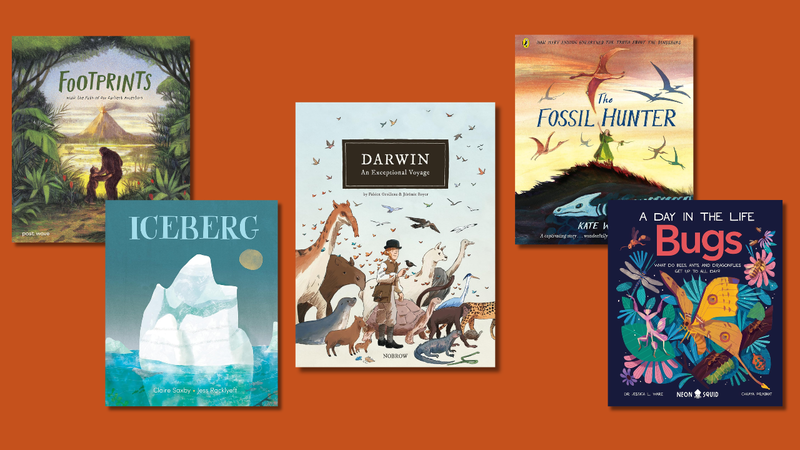
Iceberg by Claire Saxby, illustrated by Jess Racklyeft
Claire Saxby is the queen of narrative non-fiction. The science is solid and the writing is poetic and memorable. Her other books Tree (2024), Volcano (2025) and Storm (2026) are all excellent, but Iceberg (2021) is sublime. It paints a vivid picture of the Antarctic and follows the life of a single iceberg all the way from its ‘calving’ (yes, this is the technical term!) to its melting.
The Fossil Hunter by Kate Winter
Mary Anning was a gutsy and fiercely intelligent young woman. She found astonishing fossilised creatures on the beaches around Lyme Regis and practised palaeontology before the word even existed. There are dozens of children’s books about her, but this gorgeously illustrated storybook stands out from the crowd.
Bugs: A Day in the Life by Jessica Ware, illustrated by Chaaya Prabhat
This book follows bees, ants and dragonflies through a 24-hour period in the style of a nature documentary. Chaaya Prabhat’s vibrant, graceful illustrations turn the hidden lives of insects into a series of tiny dramas.
Darwin: An Exceptional Voyage by Fabien Grolleau, illustrated by Jérémie Royer, translated by Serafina Vick
Narrative non-fiction takes many forms. This one is a graphic novel, depicting Charles Darwin as an eager, curious, slightly gawky young naturalist. The book is totally immersive – we’re right there on HMS Beagle with Charles, seeing his eyebrows shoot up at each wonderful new discovery.
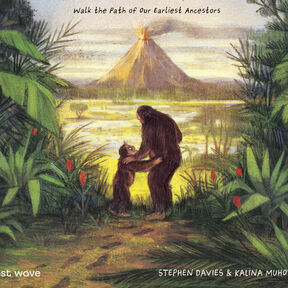
Footprints by Stephen Davies, illustrated by Kalina Muhova
Here’s a true story for you. One evening in 1976, two young scientists, Andy and Kaye, were playing dodgeball on an African plain. They had no ball, but there was plenty of sun-dried elephant poo around, perfect for flinging at a friend. Andy dived to the ground and lay there, nose to dust. “Kaye!” he yelled. “Come quick! I’ve found something!” It was three parallel tracks of human-like footprints preserved in prehistoric ash.
My book Footprints is two stories in one. It’s the story of that incredible discovery. It’s also the story of the people who made those footprints – a realistic glimpse of their exciting, dangerous lives under African skies. And yes, the name Australopithecus afarensis does appear, but only right at the end.
Footprints by Stephen Davies, illustrated by Kalina Muhova, is out now.
Explore more books like these
-
Non-fiction graphic novels, comics and picture books
These formats can also be a wonderful way into learning about the world around us: pictures can help break down big ideas, and speech bubbles and captions keep information clear and concise.
-

Non-fiction and fact books for age 8+
Getting children to love reading isn’t necessarily about fiction and fairy tales. There are loads of brilliant non-fiction books that can teach a child about the world, as well as being entertaining, funny and gorgeous to look at. Sometimes non-fiction is also a fantastic way to tempt a reluctant reader into sitting down with a book. Here are just a few of our favourites to get them excited to read.
-
Historical fiction for younger children
Young children should be captivated by these exciting stories, set in different historical periods.
-
Animal non-fiction
Surprising facts, statistics, similarities, differences, relationships, habitats, behaviours and more that make our natural world so unique