10 Caribbean children’s books celebrating culture, comfort and connection
Author Summer Edward recommends 10 fantastic stories from the Caribbean.

Summer Edward is a children’s author
This vibrant selection of forthcoming children’s books offers a vivid tapestry of Caribbean life, lore, and legacy.
Spanning genres and book formats, these works reflect the region’s cultural richness – exploring everything from ancestral memory and culinary traditions to festive celebrations, folkloric retellings and contemporary adventures.
Richly imagined and variously illustrated – whether with luminous watercolours or bold mixed media – these stories offer something for every age and are perfect for classrooms, libraries, and families seeking fresh, inclusive reads.
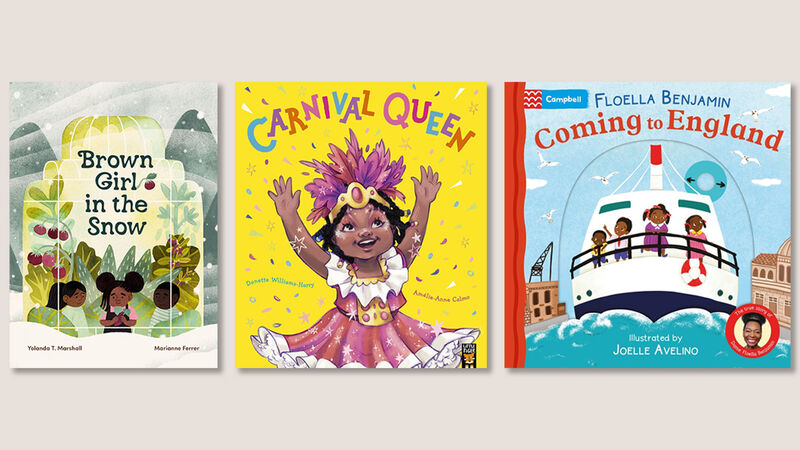
1. Brown Girl in the Snow by Yolanda T. Marshall, illustrated by Marianne Ferrer
Heartsick from the loss of the kitchen garden she used to grow back in her Caribbean homeland, a young girl named Amina finds solace in her snowy town’s library.
A book about gardens leads to her discovery of a local greenhouse, where she cultivates sweet potatoes, patience, and friendship with other homesick children hailing from warmer climes.
Watercolour illustrations in a palette of earth tones do justice to Amina’s journey of adjustment and personal growth. An author’s note highlights the book’s autobiographical roots and elucidates the “Brown Skin in a Ring” Afro-Caribbean children’s song that Amina makes her own. A verdant tale of new beginnings and belonging.
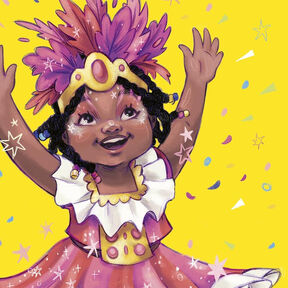
2. Carnival Queen by Donette Williams-Harry, illustrated by Amélie-Anne Calmo
Kayla is thrilled to be a Carnival Queen – until her glittery costume rips on the big day. With help from her Granny, Mummy, and a whole community of carnival-goers, she learns that courage, joy, and togetherness matter more than appearances or perfection.
Inspired by London’s Notting Hill Carnival, this vibrant picture book bursts with lively, colourful, cartoony illustrations capturing the music, dance and energy of Caribbean carnival traditions. The back matter offers fascinating facts about carnivals worldwide, deepening appreciation for their history and cultural significance.
3. Coming to England by Baroness Floella Benjamin, illustrated by Joelle Avelino
This vibrant board book tells the inspiring true story of Floella, a young girl from sunny Trinidad who travels to England to reunite with her family. The journey is filled with emotion, challenges and hope, ending in a joyful moment when her dream of meeting the Queen comes true.
Bright digital illustrations bring her journey to life, while interactive tabs to push, pull, and slide reveal hidden details and character actions, engaging children’s curiosity, fine motor skills and hand-eye coordination. Rounded page corners prevent accidental injury, making this an engaging and safe book for the youngest of readers.
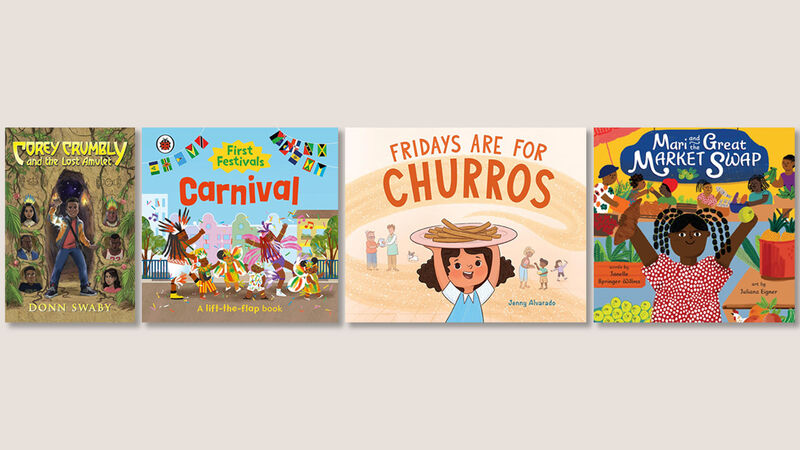
4. Corey Crumbly and the Lost Amulet by Donn Swaby
12-year-old Corey discovers a powerful Taino amulet while visiting Jamaica for a family reunion. The amulet offers protection, but also attracts enemies, including Reginald Jameson, a ruthless impostor.
Corey faces bullies, supernatural threats, and life-threatening situations, including a collapsing cave, all while battling an ancient Amazonian god, Jurupari. The book blends adventure and personal growth, delivering an engaging narrative that will capture readers’ imaginations from start to finish.
5. First Festivals: Carnival by Ladybird Books, illustrated by Kim Thompson
This board book is a colourful and interactive introduction to the vibrant cultural celebration of Caribbean Carnival.
The simple non-fiction text offers short, expository descriptions of key traditions, such as steel-pan bands, masquerades and traditional foods. Each double-page spread features a flap, creating anticipation and fostering inferencing and prediction skills.
Energetic, full-colour illustrations capture the excitement of the festival in this fun, accessible Carnival primer for the pre-school crowd.
6. Fridays are for Churros by Jenny Alvarado
Every Friday, Emi and her Papi make churros, a beloved Cuban dessert, to share with family. But after moving to the city, their Friday tradition fades – until Emi decides to bring the joy of churros back by enlisting the help of her neighbours.
Bright, full-colour, cartoony illustrations convey the warmth of the story, which is accompanied by a glossary of Spanish words and a churro recipe.
This sweet tale highlights community, culture and the comfort of food, making it a perfect read for young readers exploring new beginnings and cultural traditions.
7. Mari and the Great Market Swap by Janelle Springer-Willms, illustrated by Juliana Eigner
When a sugarcane truck overturns and blocks the main road to the market in Barbados, Mari and her granny are left with piles of sweet guavas and no customers. Instead of giving up, Mari comes up with a clever idea: the vendors can trade their goods with each other in a lively market swap.
Full-colour illustrations in a Naive art style bring the island’s vibrant culture and close-knit vendor community to life. Back matter includes information on Bajan Creole, market life, trading customs, and a glossary of culturally significant Caribbean foods.
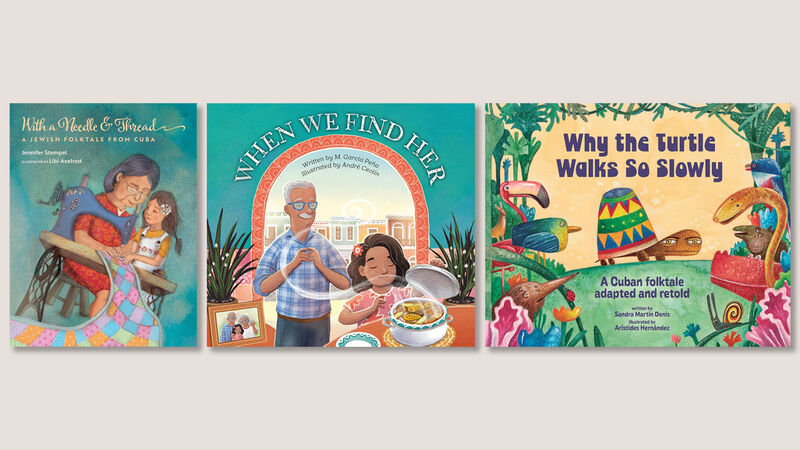
8. With a Needle and Thread: A Jewish Folktale from Cuba by Jennifer Stempel, illus. by Libi Axelrod
Guided by her abuelita, Romi, a young girl living in Cuba, learns to upcycle discarded fabrics into treasures that connect generations.
Blending Jewish and Cuban cultures, this heartwarming picture book highlights how small contributions – like a prayer shawl or a chuppah – can strengthen community bonds, emphasising resourcefulness, love, and shared legacy.
Warm, mixed-media illustrations show rich details of life in the historic city of Santiago de Cuba and capture the spirit of the Jewish diaspora. Back matter includes a postface on Cuba’s Jewish community, a map of the island, and a glossary.
9. When We Find Her by M. García Peña, illustrated by André Ceolin
In this heartfelt story set in Puerto Rico, young Lila and her grandfather, Abuelo Carlos, seek to honour the memory of Lila’s late grandmother, Abuela Ana, by recreating her favourite recipe for sancocho.
As they shop for ingredients and reminisce, Lila holds on to precious memories of her abuela, ultimately finding joy in the process of cooking together.
The illustrations, a vibrant blend of watercolour and digital painting, are radiant and alive with cultural details. The book includes an illustrator’s note and back matter featuring a sancocho recipe.
10. Why the Turtle Walks So Slowly by Sandra Martín Denis, illustrated by Arístides Hernández
This story is a distinctive retelling of a Cuban folk tale about Turtle, who dreams of gaining power and admiration by acquiring a magical drum. As his greed leads to chaos, he learns a humbling lesson in patience and true leadership.
The writing style has the ring of oral dictation, with the well-known Afro-Cuban onomatopoeic invention “sóngoro cosongo” evoking the sound of drumming, and playful repetition that mirrors Turtle’s obsession with becoming the fastest and most respected in the village.
Vibrant illustrations, with bold tropical colours, capture the folkloric, rural island setting, enhancing the cultural richness of this engaging tale.