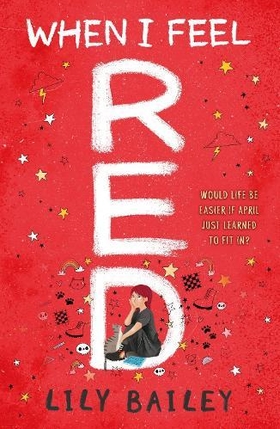
When I Feel Red
by Lily Bailey
Interest age: 9 to 11
Reading age: 9+
Published by Orion, 2024
About this book
12-year-old April is animal-mad. When she’s not watching vet programmes on TV or looking for stray cats to help, she’s losing herself in ‘animal rescue’ role play with her cuddly toys in the safety of her bedroom.
However, she is on the brink of teenagerdom, and at school, times are definitely changing. Year 8 is a strange new world where people are suddenly obsessed with going out with each other. Plus April, who has dyspraxia, struggles with reading, writing and organisation. And when she finds herself panicking about failing to keep up, she’s prone to start doing imaginative doodles instead, making matters worse.
Thankfully, lovely teachers like Mr M offer support and helpful resources, but one unpleasant teacher actually seems to enjoy picking on her. And, when faced with injustice, April struggles to control the red rage inside her. All in all, it’s not easy - especially when even dependable Ben has started acting weird…
This isn’t really a book about dyspraxia, but about the universal challenge of striking a balance between fitting in and being able to be yourself. It’s about learning the importance of growing up at your own pace and understanding that what works for others may not be right for you – socially or academically.
A touching and accessible story which is an effective standalone as well as a sequel to When I See Blue, which focuses on Ben who, like the author, has OCD.
More books like this
-
When I See Blue
by Lily Bailey
9 to 14 years
-
Minotaur Boy
by Shane Hegarty, illustrated by Ruby Fresson
9 to 14 years
-
The Hexton Chronicles: The Trouble with Magic
by Amy Wilson, illustrated by Eric Deschamps
9 to 14 years
-
The Neverland Thieves
by Kevin Tsang and Katie Tsang
9 to 14 years
Lists of recommended reads
-
Books on wellbeing for teens
Teenagers sometimes need guidance, whether they want to admit it or not. Fiction is a subtle way to show them characters in similar situations, while non-fiction is more direct in offering suggestions and advice. This list is a combination of the two, for when they might benefit from an objective viewpoint.
-
Books with neurodivergent characters
A range of books that feature neurodivergent characters, including those with OCD, ADHD, dyslexia and dyspraxia, as well as autistic protagonists