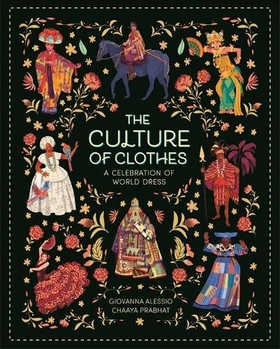
The Culture of Clothes: A Celebration of World Dress
by Giovanna Alessio, illustrated by Chaaya Prabhat
Interest age: 7 to 10
Reading age: 8+
Published by Templar Books, 2021
About this book
Traditional clothing is worn by people all over the world as a celebration of their cultural identity. In some countries, traditional dress is still worn on a daily basis. In others, people only wear their traditional dress for special occasions such as festivals, weddings or birthdays. The style, colour and material of this clothing speaks volumes about the wearer’s culture – from where they live to what their role in society is and what their beliefs are.
Organised into sections detailing the national dress of countries and cultures from Asia, North America, South America, Europe, Africa and Oceania, this wonderful, colourful book details traditional dress as diverse as: the Bavarian Lederhosen (first used in the 16th century to distinguish the peasant class from merchants and lords); the South Korean Hanbok, a loose garment which dates back to between 37 BCE and 668 CE; and the dress of the Cameroon Bamileke masquerade dancer, which includes an elaborate mask that allows the wearer to borrow the appearance of an elephant.
Perfect for young fashion enthusiasts as well as children interested in world cultures, this is a fascinating read with lots of inspiration for art and crafts, as well as school projects.
More books like this
-
Tutankhamun's Treasure
by David Long, illustrated by Stefano Tambellini
5 to 14 years
-
Return to Factopia
by Kate Hale, illustrated by Andy Smith
5 to 14 years
-
Atlas of Amazing Architecture
by Peter Allen
5 to 14 years
-

Football School: Epic Heroes
by Alex Bellos and Ben Lyttelton, illustrated by Spike Gerrell
5 to 14 years
Lists of recommended reads
-
Books about geography around the world
Learning about geography isn’t just memorising maps and flags; it also encompasses the study of people and their relationship to the places they live. In this booklist, we have collated a selection of contemporary books which share the brilliant diversity of our planet. Some explore physical features of the world like volcanoes, mountains and water systems, while others look at the human side of geography: exploring the cultural histories, similarities and differences which make up our global society.