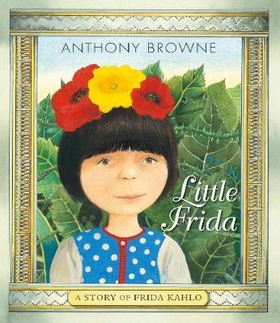
Little Frida: A Story of Frida Kahlo
by Anthony Browne
Interest age: 4 to 8
Reading age: 6+
Published by Walker Books, 2019
About this book
Although long celebrated, Frida Kahlo has seen a surge of popularity in the last few years (it's even been called "Fridamania").
The masterstroke of this picture book, by former Children's Laureate Anthony Browne, is to focus on the artist's childhood and see the little girl behind the icon.
Anthony Browne takes us back to a significant trauma in Frida Kahlo's early life: getting polio at 6 years old, which leaves her with a limp and frail leg. The other children tease her, cruelly: 'I was different and being different made me an outsider.' But Frida soon discovers a secret power she didn't even know she had. With just her mind, she can create other worlds, imaginary friends, and even fly.
This dreamy story reveals more – and rewards more – the longer you look at the illustrations. You feel like you have stepped into one of Frida Kahlo's own paintings. Everywhere, there are surreal little touches (a cactus with arms, a plane made of fruit); everything infused with a sunburnt, stone-baked palette.
Not only will any grown-up Frida Kahlo fans love this book, but plenty of children will relate to its themes of bullying and belonging, imagination and hope.
About the author

More books like this
-
Frida Kahlo
by Ma Isabel Sanchez Vegara, illustrated by Gee Fan Eng
5 to 9 years
-
The Snowman
by Raymond Briggs
2 to 9 years
-
The Velveteen Rabbit: Or How Toys Become Real
by Margery Williams, illustrated by Sarah Massini
4 to 9 years
-
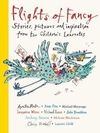
Flights of Fancy: Stories, Pictures and Inspiration from Ten Children’s Laureates
by Quentin Blake, Anne Fine, Michael Morpurgo, Jacqueline Wilson, Michael Rosen, Julia Donaldson, Anthony Browne, Malorie Blackman, Chris Riddell and Lauren Child
5 to 14 years
Lists of recommended reads
-
Art and creativity
Books are a wonderful way to introduce children to art and creative exploration. They can encourage readers to see their own potential and break down barriers to creativity by demonstrating that everyone is an artist, no matter their experience level. Many stories also highlight the power of expression and its positive effect on emotional wellbeing – something which is especially important for children who find it hard to discuss their feelings.