Reading for pleasure is one of the most powerful drivers of children’s development – but to achieve the greatest impact, we must start in the earliest years of life.
In our submission to the Education Select Committee’s Reading for Pleasure Inquiry, we set out why shared reading in the early years must be embedded across health, early years and education policy, drawing on our decades of insight and evidence about how families read together and why starting early delivers the greatest benefits. We also responded to the inquiry’s wide-ranging questions on the role of libraries, schools, the national curriculum, and more.
BookTrust’s own evidence and insight highlights why starting early matters so much. We have found that children who are read with from birth are more likely to continue being read with as they grow, enabling them to experience more of the wide-ranging benefits of reading for longer.
These benefits evolve and change as children grow, which is why sharing stories from the earliest days ensures children experience them as early as possible and over the course of childhood.
An example of just one of these benefits is the impact shared reading can have on quality interactions between a child and their caregiver, the subject of our recent research briefing.
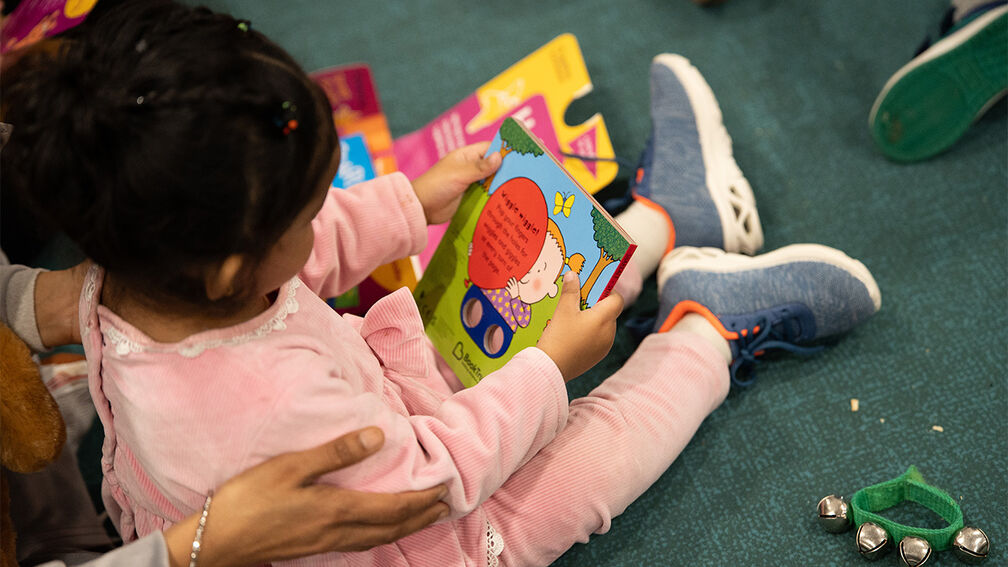
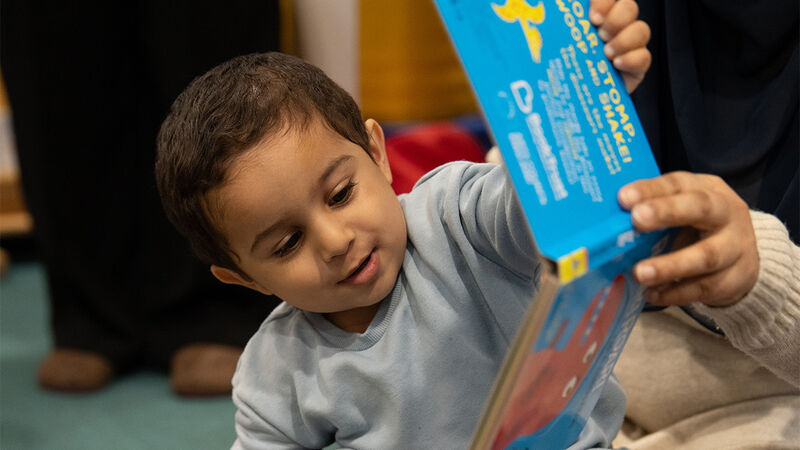
Research consistently shows that when babies and young children share books with a trusted adult, it creates moments of closeness, supporting bonding and attachment between them. These interactions can, over time, support emotional regulation, early communication and overall wellbeing.
The power of physical books
Our inquiry submission strongly emphasises that, in the early years, these interactions are best supported through shared reading experiences with physical books.
Unlike digital content, a book can be easily slowed down, explored and adapted in the moment, letting an adult respond to a child’s reactions. This gives children agency during storytelling and allows adults to build on children’s interests, which boosts their engagement and enjoyment.
Importantly, it also ensures that shared reading proceeds at the child’s pace, which is critical for their brain development and co-regulation.
Features such as textures, flaps and illustrations also invite touch and curiosity, helping support motor skills and cognitive development whilst making for a more interactive experience.
While it can be valuable for older children to read in whatever way they most enjoy, in the early years shared reading with physical books stands out for the unique benefits it provides.
How the government can support families to overcome barriers to reading
Even though there is a deep evidence base for sharing physical books from the earliest age, we know that many families face barriers to embedding reading into daily life.
Most parents and carers know reading is important – but a lack of time, confidence and access to books can make it difficult for them to read routinely with their child.
We know from our own research – including our forthcoming Family Survey, an incredibly rich and representative poll of parents and carers across the country – that one in four (24%) parents and carers said work limited their time to read with their children, and that for 72% of parents and carers on low incomes, Bookstart Baby books were among the first they owned for their child.
We therefore argue in our submission to the inquiry that Government action is needed to make sure every child can benefit from shared reading from birth.
We’ve called on Government to take several steps to help us get there, including (but not limited to):
- Including shared reading in all relevant early years guidance, frameworks and funding – and making sure early years settings, health visitors and other professionals have clear guidance for supporting families to read together at home.
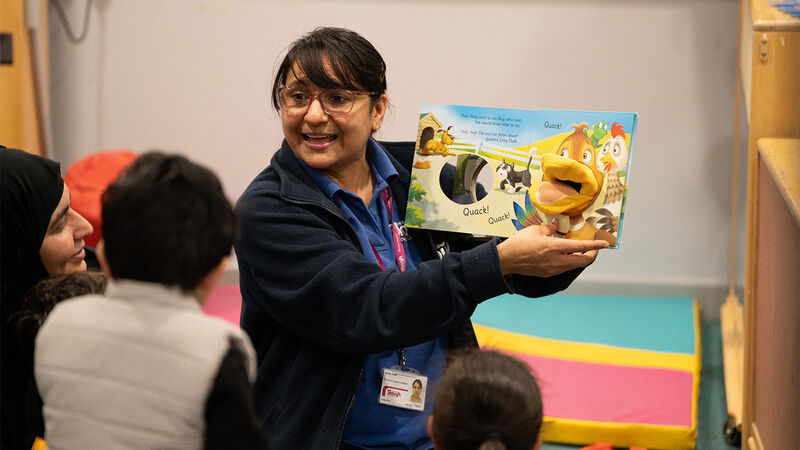
- Providing an early years workforce strategy and training pathways – including for health visitors, midwives and early years professionals – that build understanding of the benefits of reading and help professionals to confidently model exciting and engaging ways to share books and stories.
- Investing in programmes like Bookstart, Story Explorers and Letterbox Club to ensure access to books for all families.
The key message of our submission is clear: reading for pleasure, and all of the benefits it brings, begins long before children can read independently, and is about so much more than just literacy.
By prioritising shared reading with physical books in the early years, and by supporting families to enjoy sharing books together from birth, policymakers can unlock the widest and deepest benefits of reading.