There’s a shift happening in children’s literature: a long-overdue recognition that stories should reflect the vibrant, complex reality of every reader’s mind. At Spondylux Press, we believe that neurodivergent children shouldn’t just see themselves in books, they should feel empowered to tell their own stories, too.
Nurturing neurodivergent creativity
16 February 2026
N.E. McMorran is the award-winning author of the Moojag series and founder of Spondylux Press. In this article, she highlights the importance of authentic representations of neurodiversity in children’s books, and gives advice on how to support neurodivergent children to thrive as readers and writers in the classroom and at home.
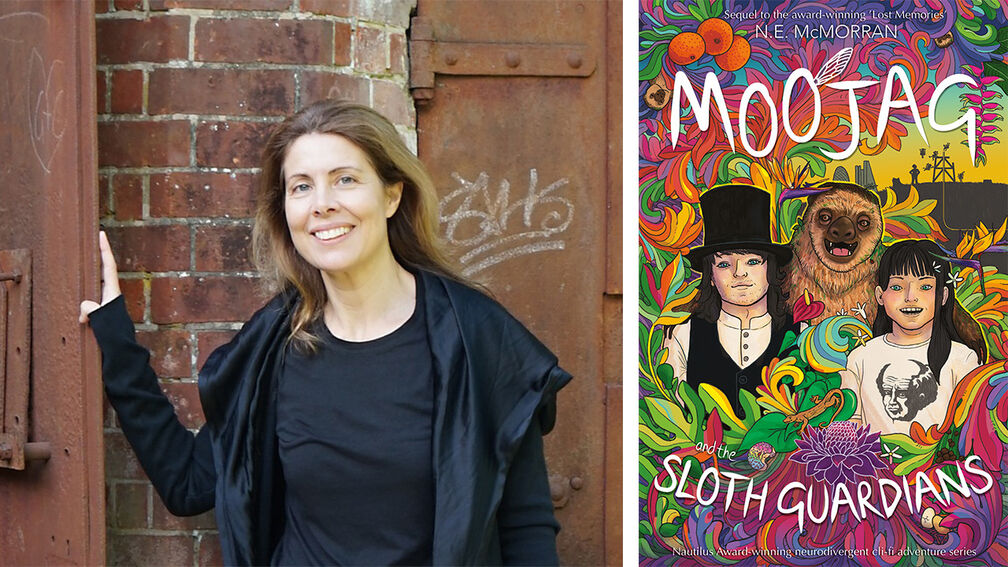
N.E. McMorran is the author of the Moojag series and founder of Spondylux Press, a neuro-affirming editing and mentoring service.
Beyond the “overcoming” narrative
For too long, neurodivergent characters in books have been used as plot devices or lessons to be learned. In the Moojag series, we do things differently. Our protagonists – who are autistic, dyslexic, ADHD, and bipolar – navigate a utopian world where their neurotype is a source of unique ingenuity.
For a child who often feels “too loud”, “too slow”, or “too different”, seeing a character like Moojag succeed because of their unique wiring, not despite it, is transformative. It moves the needle from fitting in to belonging.
Why own voice books matter for young readers
We often hear from parents searching for “books for autistic children”. What they are usually looking for is authenticity. Readers are savvy; they can tell when a character has been written from the outside looking in.
Our books are own voice, meaning they are created by neurodivergent professionals who understand the internal experience of sensory joy, executive dysfunction, and hyper-focus. As Daniel Aubrey expressed in his early review of Sloth Guardians:
“Brilliant, important, exhilarating! As someone who has ADHD, I wish I’d had this book as a kid.”
Daniel Aubrey, author of the Orkney Mysteries series
The Sloth Hero Process: a model for home and school
One of the biggest hurdles for neurodivergent children in and out of the classroom is the pressure of the standard creative pace. In my latest book, Moojag and the Sloth Guardians, I introduce the Sloth Hero Process. This isn’t just a story element; it’s a methodology we use at Spondylux that parents and teachers can adopt to support emergent readers and writers.
The Sloth Hero approach reframes “slowness” or the need for breaks as a strength. Here is how you can apply it:
Sensory regulation first: Prioritise a regulated nervous system over a word count or targeted outcome. In the classroom, this might mean allowing a child to use fidget tools or noise-cancelling headphones while brainstorming to prevent sensory overwhelm.
Intentional pace: Instead of rigid, timed writing blocks, the Sloth Hero model celebrates the incubation period. Sometimes, doing nothing is actually the brain processing complex story structures.
Accommodating the cycle: Neurodivergent creativity often comes in bursts followed by periods of fatigue. By managing this natural cycle, rather than fighting it, we unlock a child’s true potential without the cost of burnout.
Teacher’s tip: Try removing the “ticking clock” element from creative writing exercises. When we remove the anxiety of the deadline, we often see the most profound own voice storytelling emerge.
Ditch the desk: Let children read under a table, on a beanbag, or while pacing. Comfort + space = Comprehension.
Audio is reading: Listening to books like Moojag builds vocabulary and confidence without the visual stress of text.
- Celebrate special interests: If a child only wants to read about one specific topic, lean into it! Passion is the best engine for literacy.
Building a neuro-affirming future
At Spondylux Press, our mission is to ensure that the roughly 20% (likely more) of the population who are neurodivergent see their full spectrum reflected on every school bookshelf. We are creating a roadmap for how to nurture the next generation of thinkers, writers, and creators.
By embracing the Sloth Hero spirit, we can move away from “correcting” neurodivergent children and toward celebrating the incredible, imaginative worlds they can share with us.
To find out more about this important work, visit www.spondyluxpress.com
-
Books with neurodivergent characters
A range of books that feature neurodivergent characters, including those with OCD, ADHD, dyslexia and dyspraxia, as well as autistic protagonists
-
Books featuring characters with ADHD
Books are a way to provide glimpses into other people’s experiences. This booklist is a range of excellent picture books and fiction that feature characters with ADHD, and several non-fiction titles about neurodiversity too. Every child will enjoy reading them.